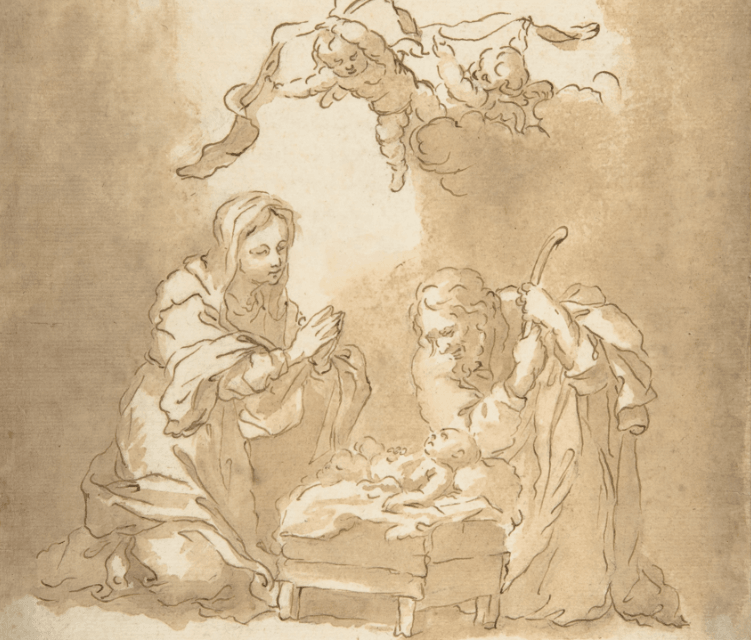


The image’s deceptive simplicity is of an order accomplished only by a master. Brown ink pen strokes. Brown wash. Traces of black lead. The economy is illusory, the effect alluring. Just so is Bartolomé Estebán Murillo’s drawing of the Nativity (c 1665) which I spotted in an otherwise disappointing corridor of frequently changed exhibits at New York’s Metropolitan Museum.
The composition isn’t groundbreaking. Baby Jesus lies in a small manger. On the right, at His head, Joseph kneels, leaning on a staff, bent to look into the Child’s face. He exudes protection. At Jesus’s little feet kneels Mary. Prayerful hands thrust forward, she leans in. She is the epitome of longing. Overhead, chubby putti unfurl a ribbon banner. Were it adorned, we would read, “Glory to God in the highest.” The Child lies back comfortably, rather in the manner of one who has just enjoyed a good meal, near left arm languid, head pillow-propped. You can just see the fingers of His far left hand resting by His belly-button. He gazes straight at His mother.