


The arrival in Rome of the controversial American technology investor Peter Thiel has drawn attention in Italian media after it emerged that he is delivering a series of private lectures on the theme of the Antichrist and the future of western civilisation.
The meetings, organised by the Vincenzo Gioberti Cultural Association, began on March 15 and have taken place largely behind closed doors in the Italian capital.
According to reporting by Nico Spuntoni for the Italian newspaper Il Giornale, the location of the first lecture was not disclosed to guests until the morning of the event. Those invited were directed to Palazzo Orsini Taverna, a historic complex in Rome’s Ponte district, where the meeting was scheduled to begin at 3pm.
Spuntoni reported that Thiel arrived later than planned after meeting with selected participants before the formal lecture began. The billionaire then delivered an address lasting roughly an hour before taking part in a discussion and answering questions from those present.
During the lecture Thiel reportedly argued that pressures to limit technological development should be understood in theological terms. He said that progress is “a biblical precept” and suggested that movements which attempt to restrain technological growth risk playing the role traditionally associated with the Antichrist.
He reportedly linked these pressures to what he described as modern “apocalyptic visions”, identifying environmentalist narratives as one example. The activism associated with Greta Thunberg was cited as representing a wider cultural outlook that warns of technological danger and promotes limits to development.
Thiel also argued that evidence of stagnation can already be seen in contemporary industry. Spuntoni reported that he told the audience that “planes are built slower today than those built a few decades ago”, presenting the remark as an illustration of declining technological momentum in modern societies.
Although he discussed apocalyptic themes, Thiel did not attach a precise timeline to them. According to the report, he suggested that the end of history could be approaching but avoided predicting any specific date.
The lectures have been organised as a short series hosted by the Vincenzo Gioberti Cultural Association, a cultural group that frames the discussions as part of a wider reflection on politics, civilisation and Christianity in Europe.
In a statement announcing the events, the association said the theme of the Antichrist has been neglected in modern debate despite its historical importance. It described the topic as “forgotten, caricatured, and dramatically important” and argued that it still offers a framework for interpreting the crises facing western societies.
The statement also linked the subject to wider political concerns. It claimed that many communities across Europe feel increasingly marginalised by centralised political systems and warned against what it described as the rise of ever larger states and the prospect of global political structures.
According to the association, confronting these questions requires a reconsideration of political traditions rooted in classical and Christian thought. Its statement referred to the ideas of ancient philosophers such as Plato, Aristotle, Cicero and Polybius, who wrote about the rise and decline of political systems.
The organisers argue that political forms inevitably change over time and that contemporary Europe may be approaching a period of transformation. Alongside this, they emphasised themes such as subsidiarity, the importance of intermediate institutions and the role of Europe’s Christian heritage in shaping its political culture.
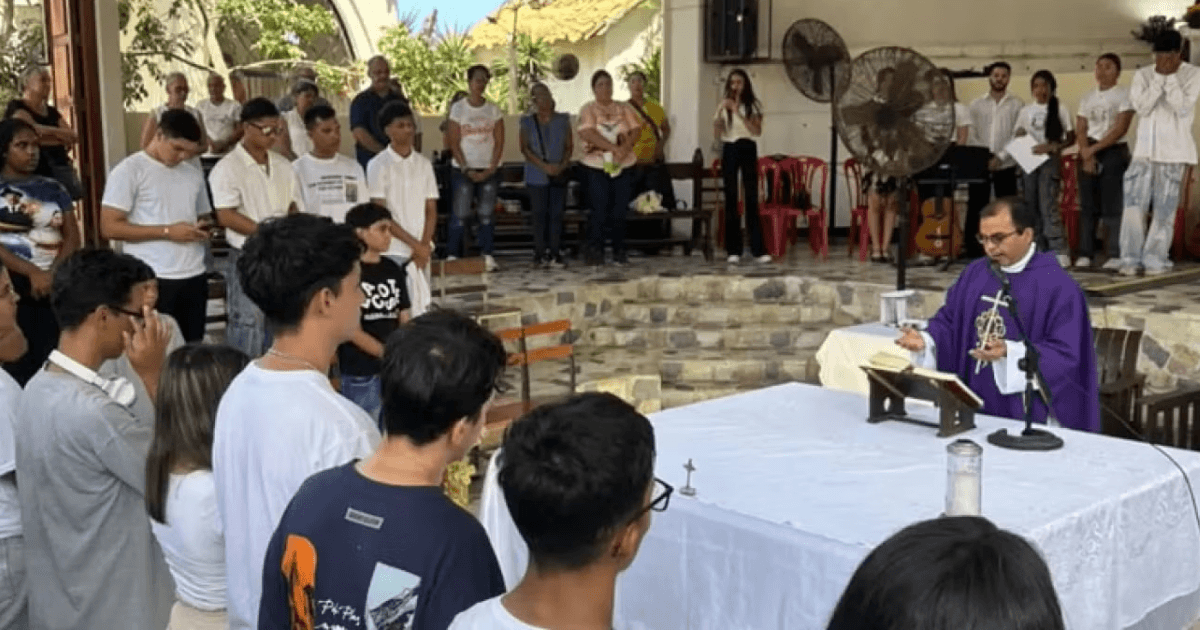
The lectures were also expected to include a traditional Latin Mass connected to the event. A private traditional Latin Mass had originally been planned at the Roman basilica of San Giovanni dei Fiorentini.
However, the arrangement was cancelled shortly before it was due to take place after permission was withdrawn by those responsible for the basilica. The change led to confusion about whether Thiel would attend another Holy Mass elsewhere in the city.
Italian journalists gathered outside the church of Trinità dei Pellegrini, a parish served by the Priestly Fraternity of St Peter and known for the celebration of the traditional Latin liturgy. The press had been informed that Mass would be celebrated there at 6.30pm and assumed that Thiel might attend.
The church was filled with worshippers and observers, but the American billionaire did not appear. Reports later suggested that the expectation had been based on speculation following the cancellation of the original Mass.
The American technology investor and entrepreneur is best known for co-founding PayPal and the data analytics company Palantir Technologies, as well as being the first outside investor in Facebook.
In recent years, he has gained notoriety for a series of lectures exploring Christianity, politics and technology. Dubbed the “anti-Christ lectures”, they are nexus of eschatology and technology and initially took place in a four part series in San Francisco.