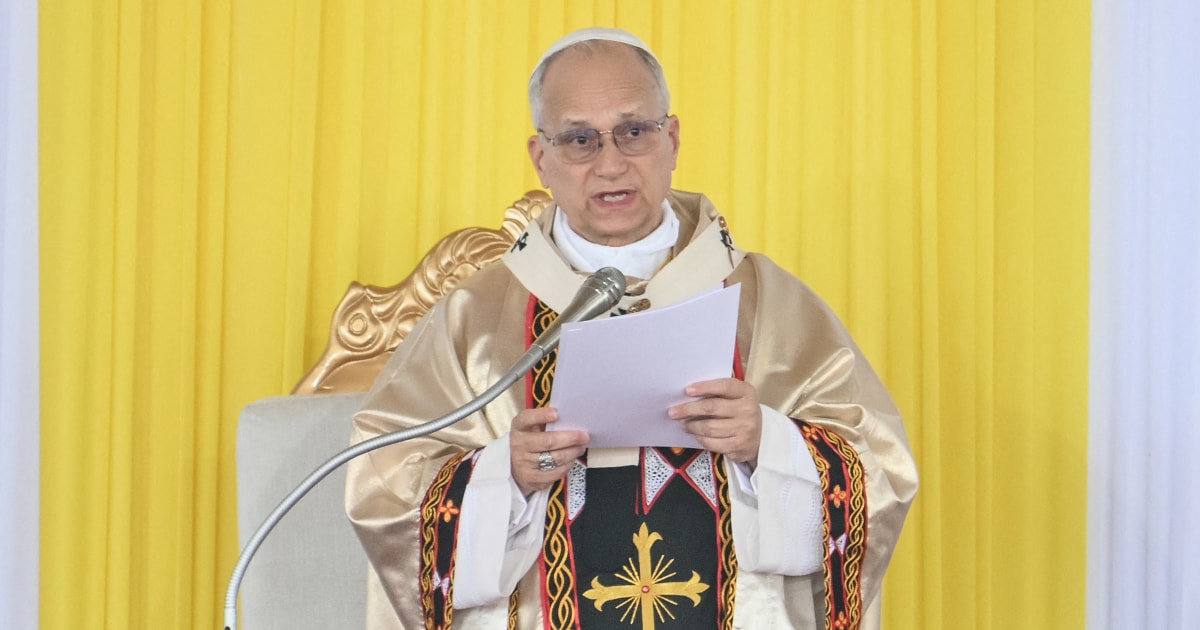
Pope Leo XIV has condemned world leaders who spend vast sums on warfare, warning that the world is “being ravaged by a handful of tyrants”, during a visit to Cameroon.
Speaking in the north-western city of Bamenda, the centre of a long-running separatist conflict, the Pope criticised what he described as the global prioritisation of war over human need. “The masters of war pretend not to know that it takes only a moment to destroy, yet often a lifetime is not enough to rebuild,” he said.
His Holiness added: “They turn a blind eye to the fact that billions of dollars are spent on killing and devastation, yet the resources needed for healing, education and restoration are nowhere to be found.”
The Pope also warned against the exploitation of poorer nations, saying: “Those who rob your land of its resources generally invest much of the profit in weapons, thus perpetuating an endless cycle of destabilisation and death.”
In a further rebuke, he criticised the misuse of religion to justify violence. “Woe to those who manipulate religion and the very name of God for their own military, economic and political gain,” he said.
The visit to Cameroon took place amid ongoing conflict between Anglophone separatists and the country’s predominantly Francophone government, which began in 2017. The fighting has left at least 6,000 people dead and displaced hundreds of thousands.
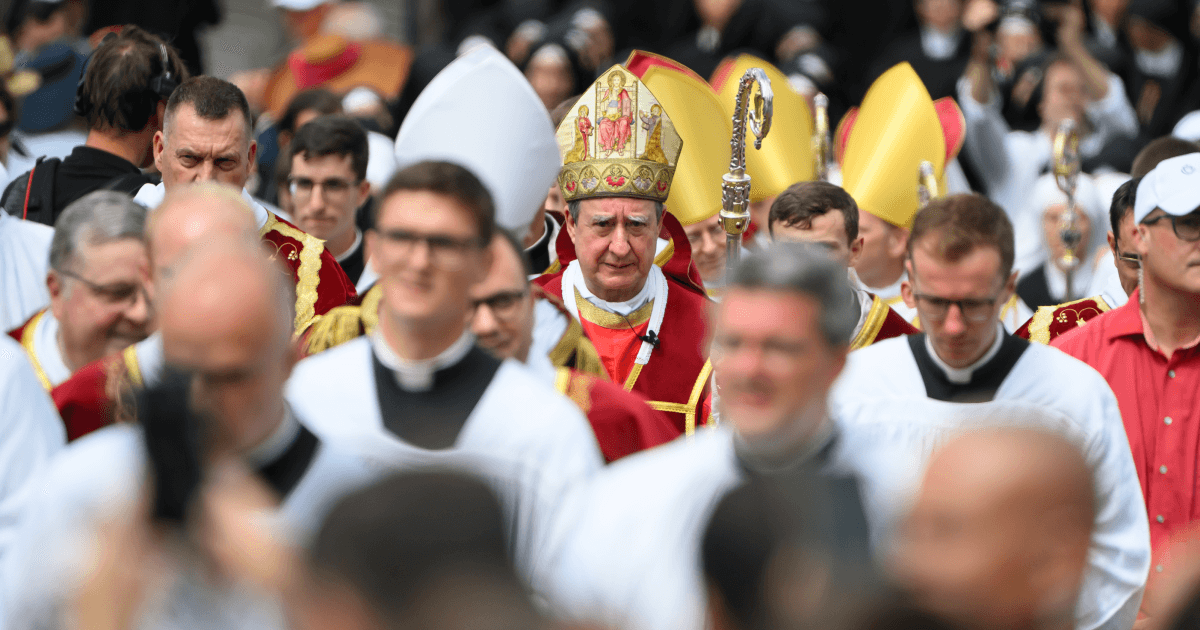
Separatist groups announced a temporary pause in hostilities to coincide with the papal visit, allowing large crowds to gather in Bamenda. Thousands lined the streets as the Pope travelled to St Joseph’s Cathedral, many carrying “peace plants” as a sign of their desire for an end to the violence.
At a meeting for peace, the Pope released doves alongside community representatives in a symbolic gesture marking his call for reconciliation. Addressing those gathered, he said: “Peace is not something we must invent: it is something we must embrace by accepting our neighbour as a brother and as our sister.”
Local Church leaders have played a role in efforts to mediate the conflict, encouraging dialogue between separatists and the government. Religious representatives from other communities were also present during the visit.
The Pope’s journey forms his second major foreign visit since his election. The continent is home to more than 288 million Catholics, accounting for over a fifth of the global Catholic population.
Large crowds have attended events during the visit, including a Mass in Bamenda which drew tens of thousands of worshippers. Further gatherings are expected in other cities, including Douala, where significantly higher numbers are anticipated.
Africa has been a consistent focus of papal travel in recent decades, with predecessors including Pope John Paul II and Pope Benedict XVI making multiple visits to the continent. Their journeys frequently included appeals for peace and reconciliation in regions affected by conflict.
The remarks came days after a public dispute with President Donald Trump over the war involving Iran. The Pope had previously warned that threats of destruction could lead to catastrophic consequences, while insisting that religion could not be used to justify conflict. During Palm Sunday Mass in St Peter’s Square, he said: “This is our God: Jesus, king of peace, who rejects war, whom no one can use to justify war.” Quoting the Book of Isaiah, His Holiness added: “Even though you make many prayers, I will not listen: your hands are full of blood.”
Trump responded in a series of social media posts, describing the Pope as “WEAK on Crime and terrible for Foreign Policy”, and later told reporters that Iran remained “a threat to the world”. “The Pope can say what he wants – and I want him to say what he wants, but I can disagree,” he said outside the White House.
Asked about the criticism, the Pope said he had “no fear” and would continue to speak out against war.