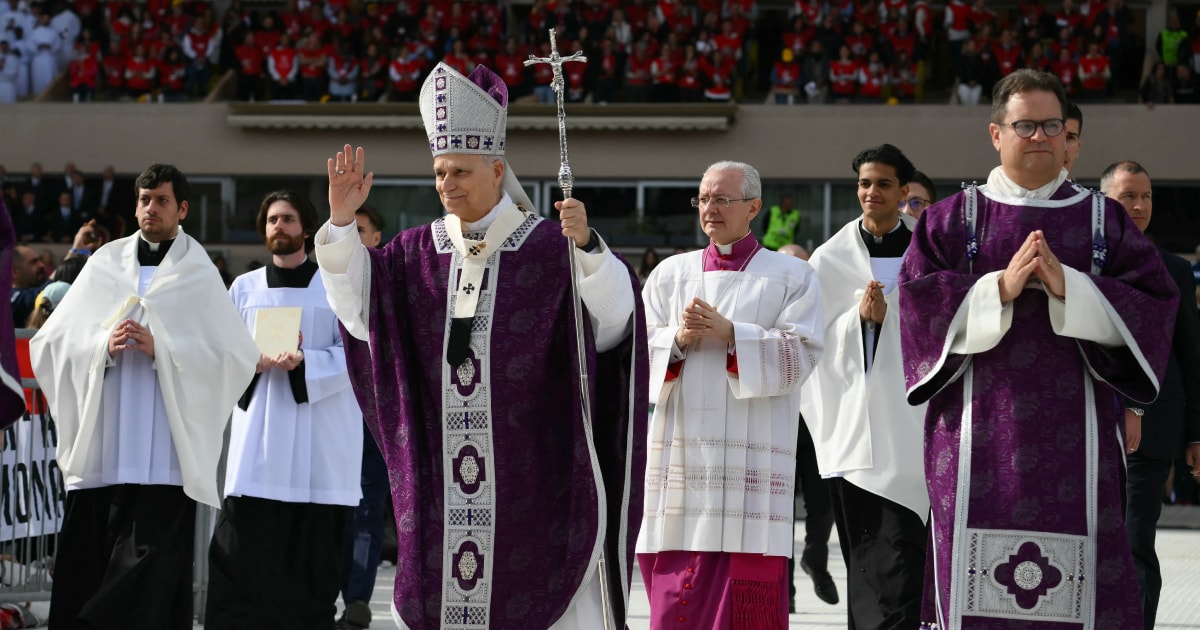

Pope Leo XIV has praised Monaco’s status as a Catholic state during a one-day apostolic visit, urging the wealthy principality to place its prosperity at the service of justice and the common good, while warning against the moral dangers of power and excess.
The Pope arrived by helicopter on Saturday morning, March 28, at the heliport of the Principality, where he was welcomed by Prince Albert II of Monaco before proceeding to the Prince’s Palace for official talks. The encounter was followed by a public greeting to thousands gathered in the square.
In his address, Pope Leo XIV drew attention to Monaco’s distinctive constitutional identity, noting its place among the few countries in the world that formally recognise Catholicism as the state religion. His Holiness said: “You are among the few countries in the world to have the Catholic faith as a state religion. This faith places us before the sovereignty of Jesus, who calls Christians to become in the world a kingdom of brothers and sisters, a presence that does not cast down but raises up, that does not separate but connects, always ready to protect every human life with love, at any time and in any condition, so that no one is ever excluded from the table of fraternity.”
The Pope’s remarks amounted to a clear endorsement of Monaco’s religious settlement, while also framing it as a responsibility rather than a privilege. He went on to situate Monaco within a wider global context marked by inequality and instability, warning against entrenched systems of injustice. “The Kingdom of God, to which Jesus dedicated his life, is close, for it comes among us and shakes up the unjust configurations of power, those structures of sin that create chasms between the poor and the rich, between the privileged and the discarded, between friends and enemies.”
His Holiness also said the principality should deepen its commitment to the Church’s social doctrine and carry it forward at an international level, particularly at a time when secularisation has left many societies struggling to sustain hope.
Referring to Monaco’s geographical position on the Mediterranean, the Pope described it as having a “vocation to promote encounter and to foster social friendship”, a phrase closely associated with recent papal teaching on fraternity and dialogue. He suggested that the country’s size and wealth together impose a moral obligation: “The gift of smallness and a living spiritual heritage invite you to put your prosperity at the service of law and justice, especially at a historical moment when the display of power and the logic of oppression are harming the world and jeopardizing peace.”
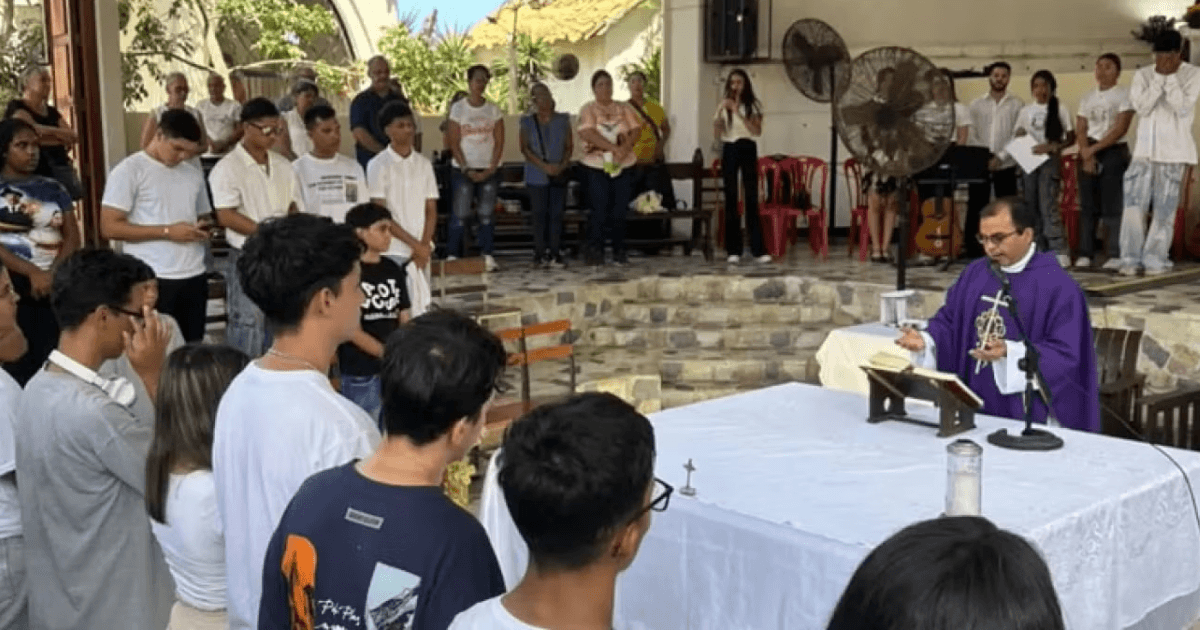
The Pope’s visit included the celebration of Holy Mass, during which he offered a more pointed critique of materialism and its spiritual consequences. In his homily, he said: “Idolators are narrow minded people who look at what captivates their gaze. The great and wonderful things of the earth are turned into idols, bringing about forms of slavery. Not for those who lack these things, but for those who gorge themselves leaving their neighbours in misery and sorrow. Liberation from idols is that deliverance from powers understood as dominions, from wealth turned into greed, and from vanity masquerading as beauty.”
The remarks appeared to be directed, at least in part, towards the moral risks inherent in a society defined by exceptional wealth. Monaco, long associated with financial privilege and luxury, provided a fitting backdrop for a warning that riches, when detached from responsibility, can become a form of bondage rather than freedom.
The Pope also addressed the persistence of violence in the contemporary world, linking it to a broader disregard for human life. He said: “Even today, how many plots are devised around the world to kill the innocent! How many excuses are made to justify their elimination! Yet, despite the persistence of evil, God’s eternal justice always rescues us from our graves, as it did with Lazarus, and gives us new life.”
The visit marks a notable moment in relations between the Holy See and Monaco, a country whose Catholic identity has remained intact despite wider European trends towards secularisation.
In November last year, Prince Albert II, the country’s reigning monarch since 2005, made headlines when he refused to sign a bill passed by the National Council that would have legalised abortion in the Principality.
Commenting on his decision, the Prince explained: “I believe the current system expresses who we are, considering the role of the Catholic religion in our country, while ensuring safe and humane support.”
With one of the world’s smallest populations, at just under 40,000, the country remains one of the most Catholic. Eighty-six per cent are Christian, with the vast majority being Catholic. The country is served by the Archdiocese of Monaco under the French archbishop, Dominique-Marie Jean Michel David.
Monaco enjoys a special relationship with the Holy See and is one of only two countries where Catholicism is named in the constitution as the official religion, the other being Malta. The relationship stretches back to 1247, when Pope Innocent IV authorised the first independent parish to be established in Monaco-Ville.
In 1868, Pope Pius IX separated Monaco from the parish of Nice, and in 1887 Pope Leo XIII created Monaco as its own diocese. Not part of any ecclesiastical province, the diocese is the world’s smallest geographically.
Monaco is one of the European Catholic monarchies afforded the il privilegio del bianco, whereby the principal woman in a Catholic monarchy is permitted to wear white during a meeting with the Pope. Princess Charlene, the wife of Prince Albert II, was therefore pictured wearing white during the visit.