


It wasn’t especially long ago that any sentence beginning with “the Norwegian Catholic” would have sounded faintly ridiculous. For centuries, Norway was among the most thoroughly Lutheran countries in Europe, with Catholicism almost completely expunged from public life during the Reformation. Even Norway’s constitution – one of the oldest in Europe still in effect – contained a specific ban on Jesuits until 1956. By the time religious toleration became the norm, the Catholic Church had been absent from Norwegian society for so long that it seemed less a living institution than a historical curiosity.
The recent appointment of a married Norwegian Catholic priest – and former Lutheran minister – to lead England’s most prominent Catholic university gives us a chance to explore the little-known but curiously flourishing world of contemporary Norwegian Catholicism. The Rev Fr Dr Øystein Lund was a priest of Norway’s Lutheran state Church – of which the King of Norway was head until 2012 and which was made independent of the state without hindering its status as the established Church. The fact that he is a married Catholic priest is hardly news. Thanks to the Ordinariate and the waves of convert clergy in the 1990s and 2000s, while married Catholic priests are not widespread in these parts, they are far from unknown. The more curious factor is Lund’s being Norwegian.
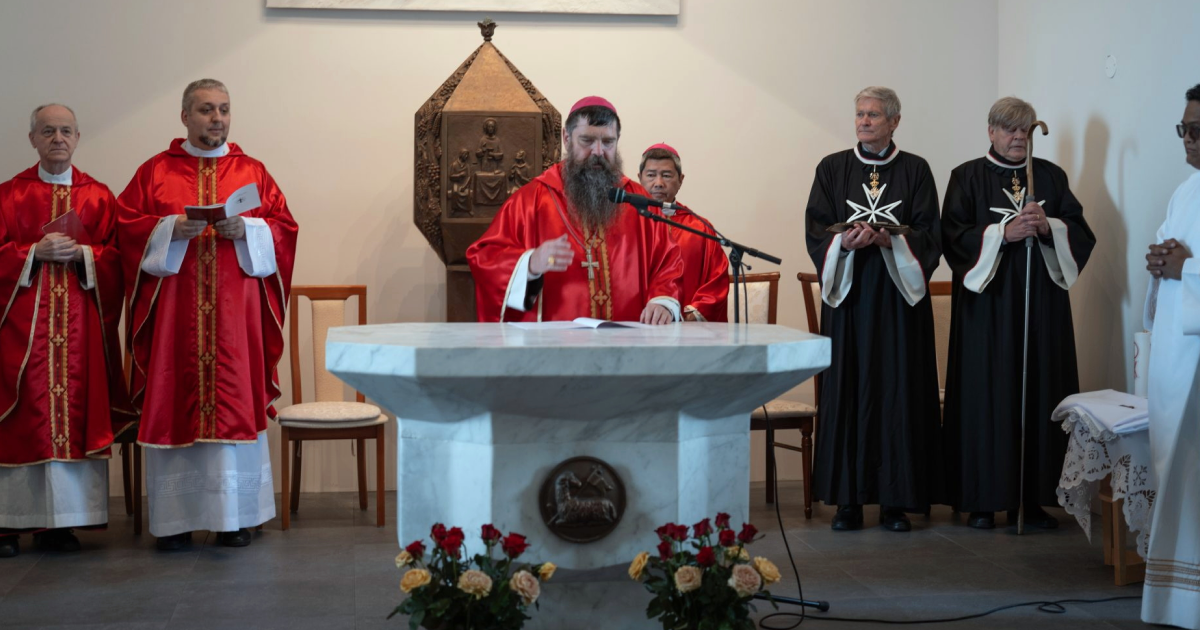
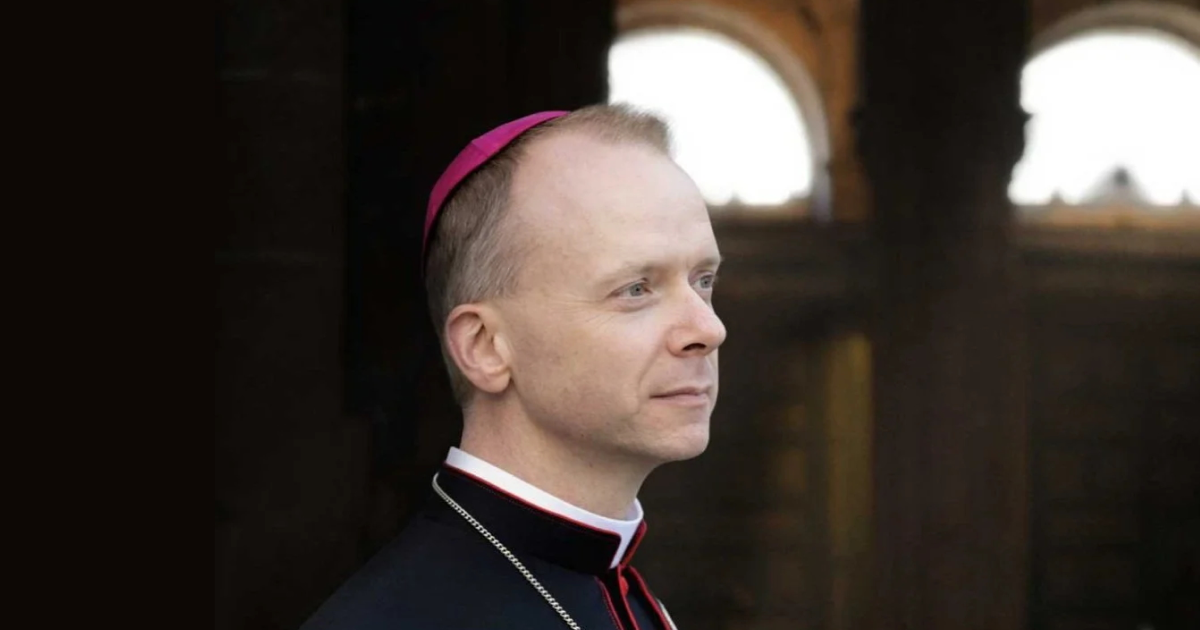
Great Britain has already experienced the leadership of a Norwegian Catholic in the figure of the Trappist monk and intellectual Erik Varden, today the bishop-prelate of Trondheim but formerly the abbot of Mount St Bernard Abbey in Leicestershire. He is not only a gifted and thoughtful writer, but has become one of Europe’s best-known bishops, despite leading a diocese that would scarcely register on the map. This year Pope Leo XIV even invited him to give the Lenten retreat for the Roman Curia. Varden has come to embody contemporary Norwegian Catholicism – the public face of a Church that is used to being small, but fostering a bigger impact.
There is an easy calm about Bishop Varden that is difficult to manufacture; doubtless the combined product of intense study and intense prayer. His books move effortlessly between Scripture, the Desert Fathers, literature and the ordinary experiences of modern life. He writes as a monk first, a bishop second and an intellectual third – perhaps that is why readers far beyond Norway have found him so compelling. In an age when Christians feel pressured either to retreat from the world or to shout at it, Varden does neither. He speaks calmly and thoughtfully from within the Christian tradition, trusting that the truth possesses its own quiet attractiveness.
That confidence seems characteristic of the Norwegian Church more generally. It is not a confidence born of heft or bulk – only three per cent of Norway’s population are estimated to be members of the Catholic Church. A disproportionate number of these, however, have exerted a broader cultural influence in Norwegian society, not just today but across the past century.
Any account of modern Norwegian Catholicism must begin with Sigrid Undset. When the future Nobel laureate entered the Catholic Church in 1924, she did so at considerable personal cost. In a country where Catholicism remained unfamiliar and frequently misunderstood, hers was not a fashionable conversion. It was an intellectual and spiritual conclusion reached after years of study, reflection and historical imagination. Readers often remember Undset for Kristin Lavransdatter – her profoundly Catholic magnum opus depicting the life of a young woman of the lower nobility in 14th-century Norway. Medieval Catholic Norway is not simply the setting of the trilogy (usually printed in English as a single volume): it is its entire moral universe.
Long before most Norwegians had begun to rediscover their country’s pre-Reformation inheritance, Undset had already done so in literature. Her conversion established a pattern that would recur throughout the 20th century. Norwegian Catholicism would seldom grow through mass movements or dramatic revivals. Instead, it gathered around individuals: scholars, artists, diplomats, clergy and converts who found in the Church not an escape from modernity but a deeper account of it.
In Norway, where a largely conformist culture has only recently begun to be challenged by immigration, there is little sense of performing Catholicism for effect or of imagining oneself engaged in an existential culture war. The faith tends instead to be worn with a certain Nordic reserve: serious without solemnity, intellectually curious without ostentation, and friendly to tradition without becoming antiquarian. Whether this reflects the national temperament or the peculiar circumstances of being Catholic in Norway is difficult to say.
Immigration has indeed boosted the numbers locally. Today, Sunday Mass in Oslo may be celebrated in half a dozen languages. The congregation may include descendants of old Norwegian converts sitting alongside recent arrivals from Poland, Vietnam, Eritrea or the Philippines. Cradle Catholics and converts, students and diplomats, Religious sisters and young families all find themselves sharing parishes that have grown rapidly without losing their sense of intimacy. More noteworthy are the developments that are qualitative rather than quantitative. Norway has become a country where – on a small scale – Catholic thought, liturgy and monastic life gently flourish with a quiet assurance.
The Norwegian Catholic Church has never had the luxury of taking itself for granted. For generations it has lived as a minority: small enough to know its own fragility, secure enough to avoid the temptations that sometimes beset larger Churches. It has attracted converts who have arrived not through family inheritance or social expectation, but through deliberate conviction. And perhaps because it has always existed a little apart from the mainstream, it has produced an unusually thoughtful and self-possessed Catholic culture.
There is little appetite for the ecclesiastical tribalism that sometimes consumes Catholics in our world. They tend to wear their learning lightly, their convictions without embarrassment and their Catholicism without performance. Few, however, can simply assume the faith as part of the national furniture. It has almost always involved a deliberate act of belonging.
That has shaped the Church’s contribution to public life as well. The number of Catholic figures involved in the political and intellectual life of Norway is striking. Lars Roar Langslet (1936–2016) served as a Conservative government minister, was named to the Norwegian Academy and was granted a life scholarship by the state. Today, Prof Janne Haaland Matláry is a political scientist who served as a minister in Norway’s foreign affairs department. Having contributed to Christian Democratic thinking, she has spoken at the Vatican and is a member of the Pontifical Academy of Social Sciences and the Pontifical Council for Justice and Peace.
Should you be unfortunate enough to find yourself injured and hospitalised in Oslo, you might find yourself availing yourself of the services of the hospital chaplain, Fr Per Kværne, who happens to be Norway’s leading Tibetologist and was for more than 30 years Professor of the History of Religion at Oslo University. Dr Bernt Oftestad, a layman, is another prominent convert to Catholicism in the world of Norwegian academia.
Hans Frederik Dahl, meanwhile, is a historian, journalist and scholar whose biography of Vidkun Quisling remains the standard work on Norway’s leading Nazi collaborator. Dahl was originally a Marxist who had been elected president of the Norwegian Students’ Society on a socialist slate but found his way into the Catholic Church in his early 60s.
What is striking about Norway’s prominent Catholics is not that they are particularly alike, but that they seem to inhabit the faith with a certain unselfconsciousness. Norway is, after all, a prosperous, stable and highly educated country. It is perhaps unsurprising that a small Catholic community should produce articulate converts, thoughtful clergy and the occasional public intellectual. Yet plenty of other affluent European countries possess tiny Catholic minorities and few seem to have developed quite the same atmosphere as Norway’s.
The quiet flourishing of its Catholic community reminds us that the Church’s influence has never depended solely upon numbers. It depends upon the depth of its witness, the quality of its institutions and the holiness of its people. For a country whose Catholic life was once thought little more than a historical footnote, that is no small achievement. Erik Varden’s name was widely suggested as a potential Archbishop of Westminster. Now perhaps our leading Catholic university will be led by a Norwegian cleric who likewise has extensive experience in the United Kingdom. We can share his joy that one of Europe’s smallest Catholic communities has quietly become one of its most intellectually interesting.