July 20, 2026

Six saints for the Spain-Argentina World Cup final

Christine Rousselle
More
Related
Min read
share

Spain and Argentina meet in the FIFA World Cup final today. While the two nations will be rivals on the football pitch, they share rich Catholic traditions and a host of saints whose lives are closely associated with their countries.

Here are some saints whose intercession you might ask for while watching the final. May the best team win!

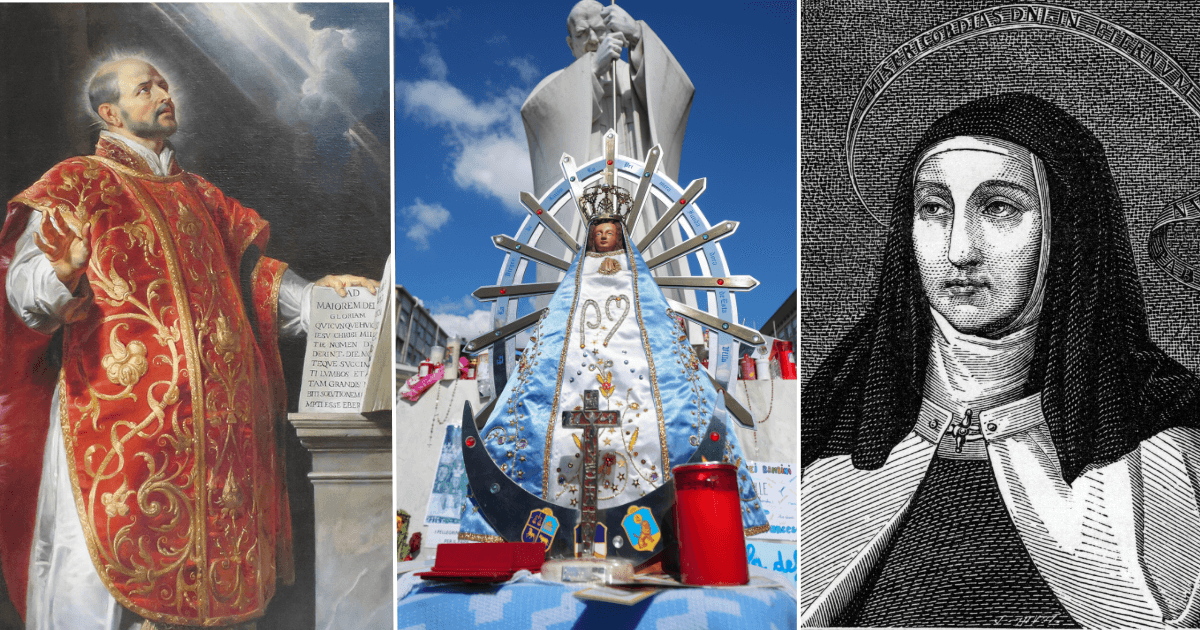
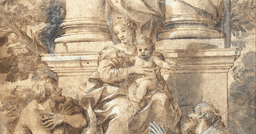
Our Lady of Luján

The patroness of Argentina, Uruguay and Paraguay, Our Lady of Luján's history dates back to 1630. That year, Antonio Farías de Sá, a Portuguese settler living in Córdoba, asked a friend in Brazil to send him a statue of the Blessed Virgin Mary for a shrine he wished to build. His friend sent two statues: one of the Immaculate Conception and another of the Virgin and Child.
The statues were shipped to Córdoba and eventually loaded onto a caravan of ox-drawn carts for the final stage of the journey. According to tradition, when the caravan reached the banks of the River Luján, the cart carrying the statues would not move. Only after the crate containing the statue of the Immaculate Conception was removed did the oxen begin to move again.

Those present concluded that the Virgin desired to remain at Luján, and the statue was placed there while the second statue continued on to Córdoba. The image became known as Our Lady of Luján.

As news of the event spread, pilgrims travelled to Luján to venerate the image, and a hermitage was soon built. Pope Pius XI formally declared Our Lady of Luján patroness of Argentina, Paraguay and Uruguay on September 8, 1930.

The Basilica of Our Lady of Luján was completed in 1935, and the statue remains there today.

Argentina's national football team has a longstanding devotion to Our Lady of Luján. Following its victory at the 2022 FIFA World Cup, the team brought the trophy to the basilica in thanksgiving.

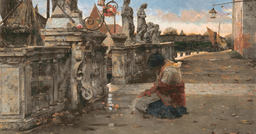
St José Gabriel del Rosario Brochero

Known as the “Cowboy Priest”, St José Gabriel del Rosario Brochero was born on March 16, 1840, in Córdoba, Argentina. The fourth of 10 children, he grew up in a devout Catholic family. He entered the seminary at the age of 16 and was ordained a priest for the Archdiocese of Córdoba on November 4, 1866.

Brochero spent much of his priestly ministry serving around 10,000 people scattered across a territory of some 1,675 square miles. Travelling almost exclusively on horseback to visit his parishioners earned him his famous nickname.

In addition to his pastoral work, Brochero established postal stations and telegraph offices, built roads, helped plan a railway and provided basic medical care for people living in isolated communities.

He eventually contracted leprosy while ministering to the sick and died on January 26, 1914, aged 73. Pope Francis canonised him on October 16, 2016.

Blessed Eduardo Francisco Pironio

The youngest of 22 children, Blessed Eduardo Francisco Pironio was born in Buenos Aires on December 3, 1920. He was ordained a priest on December 5, 1943, and consecrated a bishop on May 31, 1964.

From 1975 until his retirement in 1996, Pironio served in several senior positions in the Roman Curia, including Prefect of the Congregation for Institutes of Consecrated Life and Societies of Apostolic Life and President of the Pontifical Council for the Laity. He was created a cardinal by Pope St Paul VI on May 24, 1976.

Pironio died of bone cancer in Rome on February 5, 1998, and was buried at the Basilica of Our Lady of Luján.

He was beatified at the basilica on December 16, 2023. The following day, Pope Francis described him as “a humble and zealous pastor, a witness of hope, defender of the poor. He collaborated with Saint John Paul II in the promotion of lay people and World Youth Day. May his example help us to be a Church that goes out, that accompanies everyone on their way, especially the weakest.”

St James the Greater

St James the Greater, also known as James, son of Zebedee, was the brother of St John the Apostle and one of the first disciples called by Jesus. Together with St Peter and St John, he witnessed the Transfiguration, the raising of Jairus' daughter and Christ's agony in the Garden of Gethsemane.

Tradition states James became the first of the Twelve Apostles to be martyred, and was executed on the orders of King Herod Agrippa I.

The patron saint of Spain, St James is traditionally believed to be buried at the Cathedral of Santiago de Compostela in Galicia. Hundreds of thousands of pilgrims each year walk the Camino de Santiago, following routes across Spain, France and Portugal to venerate his tomb.

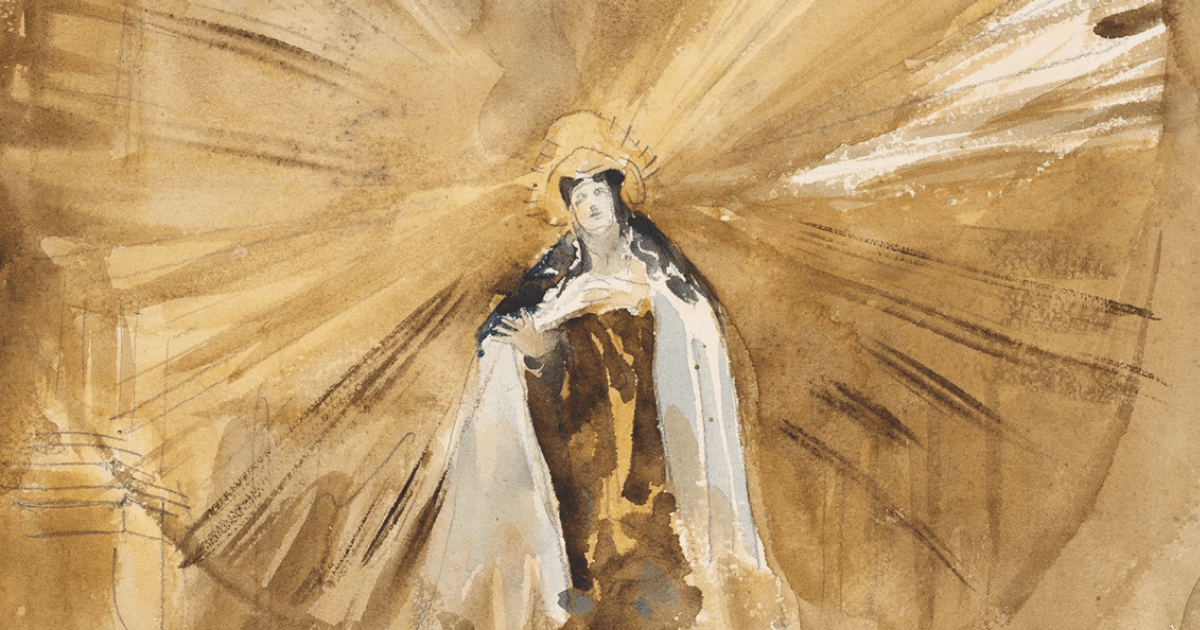
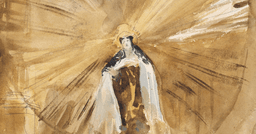
St Teresa of Ávila

A Doctor of the Church, St Teresa of Ávila was born on March 28, 1515, in Ávila, Spain. A devout child, she reportedly ran away with her brother at the age of seven in the hope of being martyred.

At the age of 20, Teresa entered the Carmelite Convent of the Incarnation in Ávila. Soon afterwards, she became seriously ill and was bedridden for almost a year, at one point coming close to death. During her illness and recovery, she read the writings of St Augustine, deepening her relationship with God and experiencing a series of mystical visions of Christ.

Teresa later founded the Convent of St Joseph in Ávila as part of her efforts to restore a stricter observance of Carmelite life. Together with St John of the Cross, she helped establish the Discalced Carmelites. In all, she founded 17 convents throughout Spain.

She also wrote extensively, including her autobiography, The Life of Teresa of Jesus, and The Interior Castle, both regarded as classics of Catholic spirituality.

Teresa died on October 4, 1582, and was canonised 40 years later. In 1970, Pope St Paul VI declared her the first female Doctor of the Church.

St Ignatius of Loyola

The founder of the Society of Jesus was born in the Basque Country in 1491. In 1521, after being seriously wounded in battle against the French, Ignatius spent months recovering in bed. During this time, he read books about the life of Christ and the saints, which the Jesuits say he found “unexpectedly riveting”.

The following year, he made a pilgrimage to the shrine of Our Lady of Montserrat, where he laid his sword before the altar and gave his fine clothes to a poor man before dressing in simple garments and sandals. During this period, he began writing what would become the Spiritual Exercises. He later resumed his education before studying for the priesthood.

In 1534, Ignatius and six companions founded the Society of Jesus, taking vows of poverty, chastity and obedience. Pope Paul III formally approved the order in 1540.

Ignatius died on July 31, 1556, and was canonised by Pope Gregory XV on March 12, 1622.

Continue reading with a free account

Create a free account to read up to five articles each month
Create free account

You have # free articles remaining this month.

Subscribe to get unlimited access.
Sign up

subscribe to the catholic herald today

Our best content is exclusively available to our subscribers. Subscribe today and gain instant access to expert analysis, in-depth articles, and thought-provoking insights—anytime, anywhere. Don’t miss out on the conversations that matter most.
Subscribe