
In the introduction to After Secularisation: the Present and Future of British Catholicism (CTS Press, 2025), Prof Stephen Bullivant points out that if secularisation is the process of religion ‘declining steeply in power, popularity and plausibility’, then it cannot go on forever. It might end when religion disappears completely from society, but more plausibly it will leave some remnant behind. The green shoots of growth that the authors of this book discern in various parts of the Church in Britain suggest there may be a significant remnant. They go on to ask what it will look like, and how the Church can make the most of it.
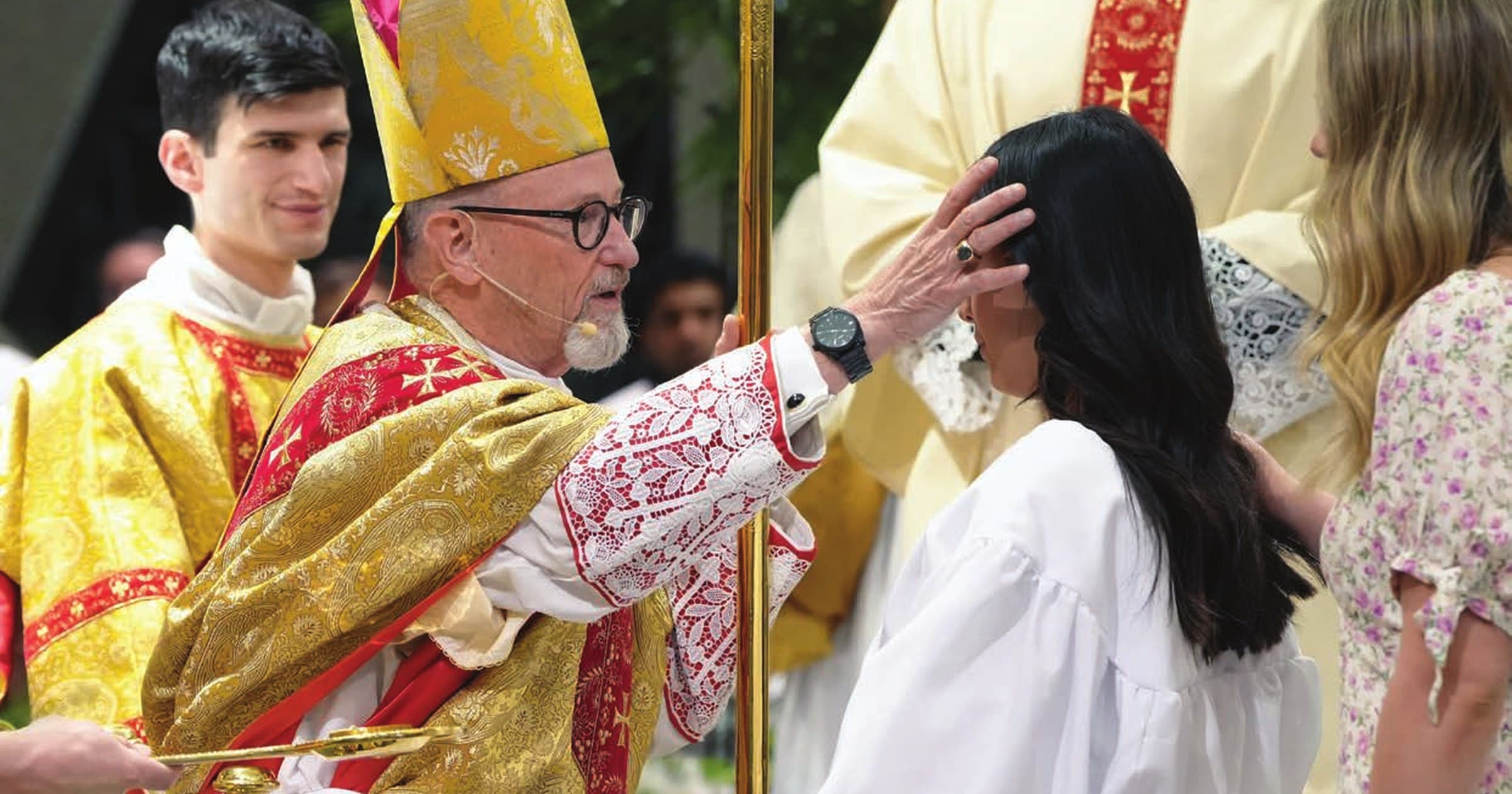
The book – written with co-authors Hannah Vaughan-Spruce and Bernadette Durcan – focuses on five parts of the Church: parishes, youth apostolates, ‘diasporas’ (immigrant communities maintaining a distinct pastoral and/or liturgical character), university chaplaincies and the Traditional Latin Mass (Vetus Ordo), the last of these alongside other minority Latin Rite options such as the Ordinariate.
They approach these phenomena not theologically or liturgically, but as sociologists, and the insight they derive from their field research is that Catholicism can thrive in a variety of contexts if it gives practitioners something distinctive, which can form the basis of a sense of community. The Syro-Malabars, Youth 2000, zealous CathSoc members under a theologically conservative chaplain and the adherents of the Vetus Ordo all have this in common. Catholics who have found themselves in an alien, and sometimes openly hostile, environment can either seek to blend in, or seek each other out and lean into what makes them distinctive. The logical conclusion of blending in with mainstream 21st-century British culture is ceasing to believe or practise religion, but a group of people prepared to stand out, with a strong sense of common values, can not only survive but grow.
This message is simple and perhaps obvious, but it needs to be stressed because it goes against many decades of policies and attitudes at all levels of the Church. Catholics were told that distinctiveness was a barrier to outsiders hearing the message of the Gospel, and should be jettisoned for the sake of pastoral effectiveness. This was part of the justification for the soft-pedalling of devotion to the Blessed Virgin Mary in the 1970s, and the embarrassment of some priests and bishops over Eucharistic adoration, pilgrimages to holy places, sacred liturgical languages, traditional vestments and Gregorian chant – to say nothing of the traditional liturgy itself. It turns out that each of these things is well suited to serve as markers of identity and anchors of devotion for Catholic communities able to attract new adherents.
The 1970s model of evangelisation was ill considered for any era, but it is also the case that circumstances have moved against it. Pope John XXIII famously opposed the ‘prophets of gloom’ when he opened the Second Vatican Council in 1962, as the Church seemed at that time to be emerging from a period in which it was treated with suspicion, at least outside the Communist bloc. The situation looks very different today. The Archdiocese of Edinburgh, in its 2022 synod report, quoted the theologian Dr Sara Parvis, who had taken part in preparatory meetings with young people, contrasting the experience of her parents’ generation, ‘where Christianity was normal’, with that of today’s university students, ‘for who[m] to be Christian at all is to be effectively an everyday martyr’.
Young Catholics can keep their faith in these conditions, and the experience of conflict may even lead them to deepen it, if they are comfortable about being different from everyone else. Evidently, as Bullivant points out: ‘it is much easier to be distinctive, and proudly so, when one belongs to a mutually validating and reinforcing “tribe” of like-minded others.’
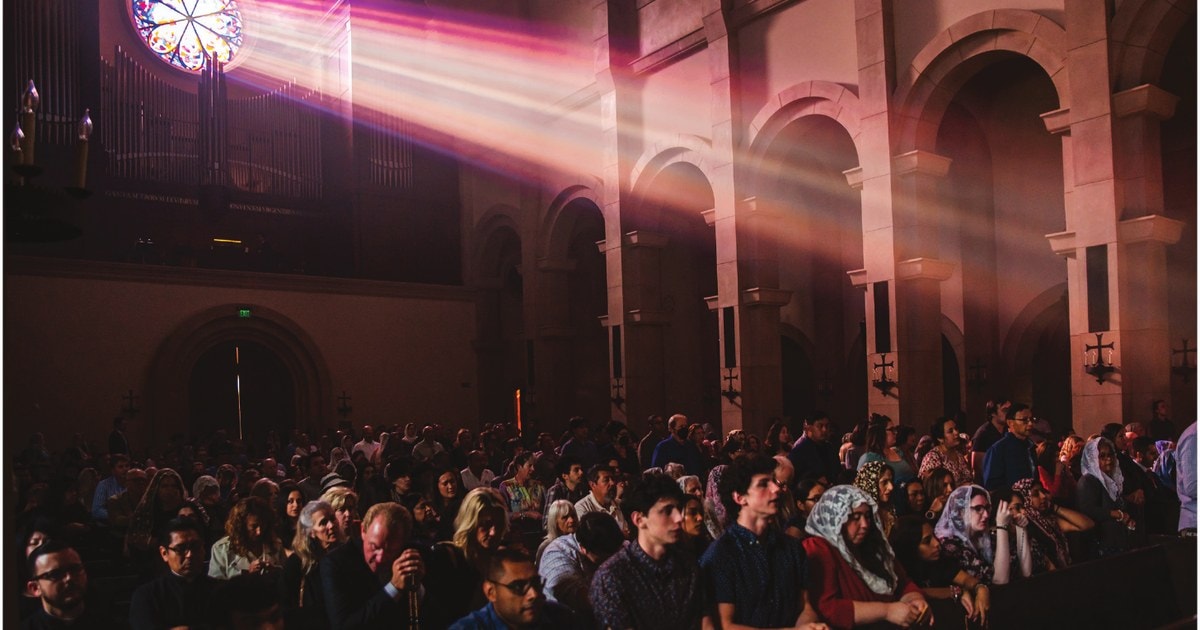
The standard model for a Catholic parish (as the book describes it) is that it covers everyone in a geographically defined area, and serves as a kind of spiritual ‘filling station’ where people can drop in for the sacraments. The successful parishes that the authors identify, by contrast, draw people from a wider area on the basis of something distinctive, whether it be the liturgy or an apostolate to the homeless of Soho, and offer them not only a succession of sacramental encounters, but a deeper level of engagement. This may include catechesis for whole families, mentoring for young people or the kinds of parish groups that many thought had disappeared half a century ago.
The diaspora communities, in their own way, very naturally foster a sense of belonging by giving their members a distinctive cultural and spiritual experience. University chaplaincies can do so, certainly not by avoiding difficult questions or trying not to be noticed, but through discussion groups and book clubs in which young Catholics can combine friendship, faith and a sense of identity.
The authors are to be commended for their work in establishing their conclusions. I would like to end with two notes of caution.
One is that I had the uneasy feeling reading this book that it could have been written at any point over the decades of the Church’s relentless decline. However bad things are, there are always small areas of growth, often inspired by young, zealous priests. Twenty years ago we heard a lot about the New Movements; twenty years before that, about the Church’s contribution to social justice. We are at a very early stage of any post-Covid revival, and it could easily go the same way as the others.
What went wrong before? With hindsight we can see that some of the things that seemed so exciting in 1980, 1990 or 2000 were theologically wrong-headed (liberation theology). Others were defeated by their own contradictions, such as attempts to graft conservative novices onto liberal religious communities. Others again were undermined by founders who were abusive or corrupt: the Legionaries of Christ are a sobering example.
Some simply lacked the capacity to be scaled up: what worked locally, perhaps because of an energetic and charismatic priest, could not be rolled out nationally. Others again were thwarted by a Catholic establishment that did not like the direction of travel: sometimes for reasons that were understandable, but not always.
The authors of this book acknowledge that it will be painful to reorient parishes from the old, failing model to the one they think has a chance of success. It is possible that priests and bishops simply will not allow it to happen. The rotation of clergy can be lethally effective in preventing the development of distinctive parish communities, since a new priest who does not chime with whatever is distinctive about it can destroy the work of decades in a few weeks.
Then again, the authors note that one official attitude towards diaspora communities is that whatever special arrangements might be made for them should be regarded as temporary, and a matter of easing them into the mainstream. This attitude was expressed explicitly by Pope Francis with regard to Catholics attached to the Vetus Ordo, who were to be granted a limited number of celebrations to give them the chance ‘to return in due time to the Roman Rite promulgated by Saint Paul VI’. On such views, only the universal, beige parish option should be allowed to exist.
It will be a hard battle to allow today’s green shoots a chance to grow.