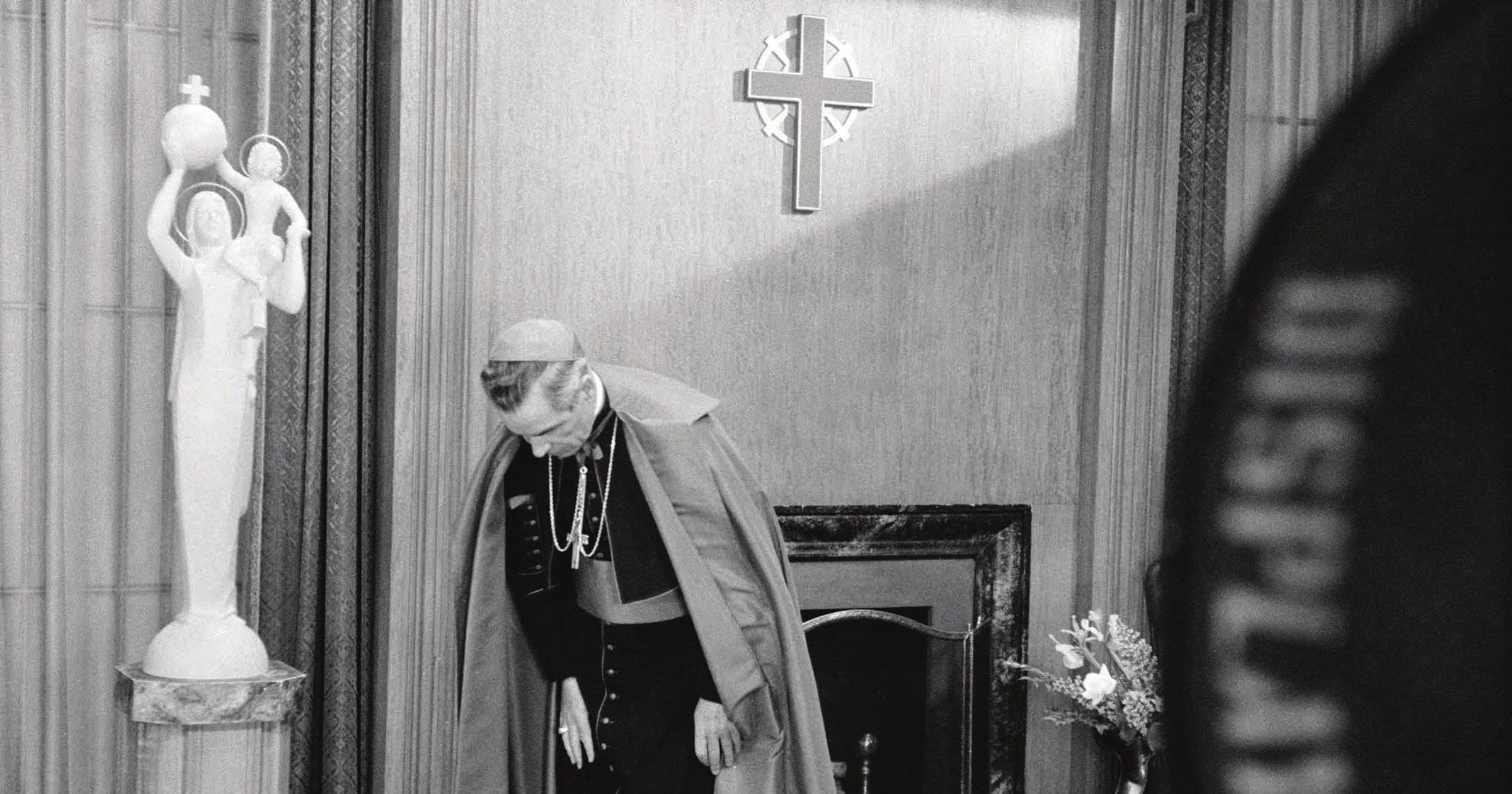

The decrees of the Second Vatican Council were not accepted by all Catholics. Some were content with critical statements, but Bishop Marcel Lefebvre, who also served as Archbishop of Dakar, rejected key reforms initiated by the Council, including the declaration Nostra aetate, which addressed the new relationship between the Church and the Jews. He also rejected the 1965 liturgical reforms and the ecumenical movement.
His strict rejection met with fierce resistance within the Church. To institutionalise his conservative stance, he founded the Society of St Pius X in 1970. Through the mediation of the then prefect of the Congregation for the Doctrine of the Faith, Cardinal Joseph Ratzinger, a compromise was reached, but in 1988 Lefebvre consecrated four bishops, an act considered schismatic by the Church and resulting in his excommunication. Benedict XVI lifted this ecclesiastical penalty through grace while upholding canonical and theological views.
Not only has Bishop Lefebvre died, but two of the bishops he consecrated have also died. The two remaining bishops are quite old, so there is a risk that their deaths will leave no bishop to ordain priests, which would lead to the extinction of the priesthood of the Society of St Pius X. To prevent this, new bishops are to be consecrated on July 1, 2026. This plan is meeting with resistance within the Church. We spoke about this resistance with Cardinal Gerhard Ludwig Müller, the former prefect of the Congregation for the Doctrine of the Faith.
Lothar C Rilinger: Can you describe which decisions of the Council Bishop Lefebvre and the Society of St Pius X reject?
Cardinal Gerhard Ludwig Müller: Especially with regard to the doctrine of religious freedom as a fundamental right before God alone, without state coercion and ideological indoctrination, to follow the truth that makes sense to one’s conscience, they see a deviation from the Catholic conviction that only the Catholic Church fully proclaims and presents to be believed the revelation of God in Christ.
The Society of St Pius X interprets religious freedom in line with the relativistic liberalism of the 19th century, which rejects revelation and reduces religion to a matter of taste and subjective feeling rather than truth. In contrast, the Catholic state is obligated to promote the Catholic religion as the only true one and deny error any right to exist in the public sphere.
In the declaration on religious freedom Dignitatis humanae, however, the Council makes precisely the distinction between religious freedom as a natural human right and the freedom of man to respond to the revealed word of God with reason and freedom and to recognise in Christ the fullness of the truth of God and man.
Under today’s conditions of a pluralistic society, and especially in anti-religious socialist or radical Islamist states, we can be thankful if public authorities do not interfere in matters of religion and morality. Invoking freedom of religion and conscience, Catholics, particularly in the unfortunately often anti-Christian EU, can assert their right to reject abortion, euthanasia and the relativisation of marriage between a man and a woman.
To still speak of Catholic states that should enforce the still valid doctrine of the necessity of the Catholic Church for salvation through state measures seems quite anachronistic.
Likewise, the objections of the Society of St Pius X to the ecumenical search for the unity of all Christians in the one Catholic Church, which finds its visible expression in the Pope, miss the point of the Second Vatican Council. The Council in no way called into question the uniqueness of the Church of Christ, as affirmed by the Congregation for the Doctrine of the Faith’s declaration Dominus Iesus of 2000 under Cardinal Ratzinger. Rather, it was about acknowledging non-Catholic Christians who had not personally separated from the Catholic Church, but who, in good faith, clung to the truth claims of the denomination in which they were raised, and about seeking with them ways to rediscover unity in faith, the sacraments and the constitution of the Church, as Jesus himself, the founder of the Church, intended and which is the visible expression of his unity with the Father.
Rilinger: What dogmatic consequences arise when a Catholic priest is no longer willing to represent the complete doctrine of the Church?
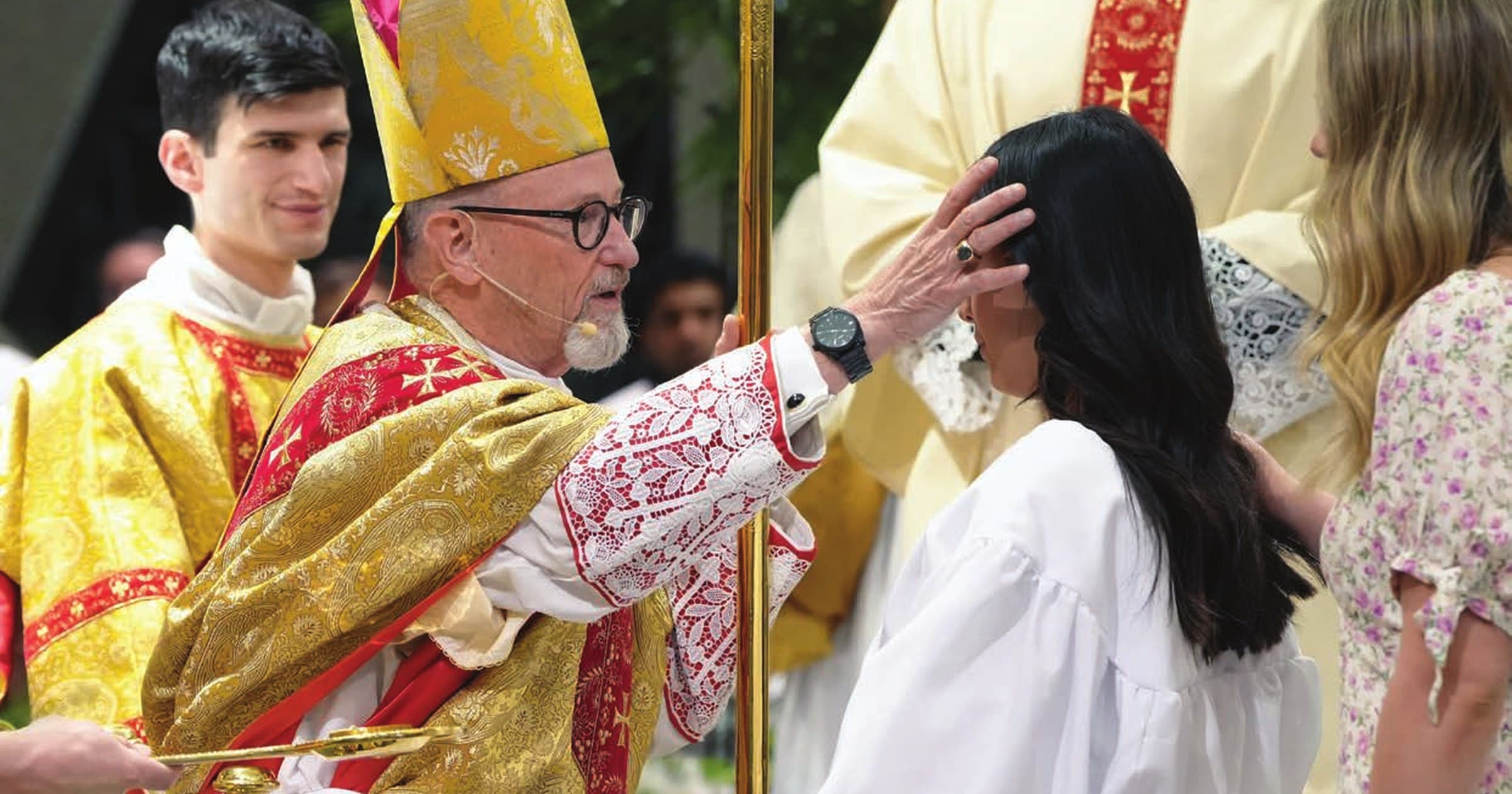
Cardinal Müller: Bishops, priests and deacons are inwardly and outwardly bound by the Sacrament of Holy Orders to proclaim the faith of the Church in word and to bear witness to it with their lives. If they deviate significantly and evidently from this and do not heed the admonitions of their superior, canonical penalties may be imposed upon them, depending on the circumstances, up to and including exclusion from their offices. However, because of the objective efficacy of the sacraments – Baptism, Confirmation and, here, Holy Orders – they do not lose the character imprinted upon them at their ordination. This is the famous distinction between the illicit but valid administration of the sacraments.
St Augustine had already stated to the Donatists that the efficacy of the sacraments does not depend on the personal holiness, morality or ecclesial status of the minister administering them, because Christ is the one truly active in the sacraments. The Catholic Church recognises the sacraments in the Orthodox Church because it has validly ordained bishops and priests, even though the Orthodox Church does not fully and completely acknowledge the primacy of the Roman Catholic Church and is not in full communion with the successor of St Peter, the Pope.
Rilinger: Archbishop Marcel Lefebvre (1905-1991) was excommunicated by Pope John Paul II in 1988. This ecclesiastical penalty was later lifted. What legal and canonical consequences arise for a Catholic from excommunication?
Cardinal Müller: The excommunication of the four bishops he had consecrated was lifted by Pope Benedict XVI in January 2009 to facilitate the reintegration of the Society of St Pius X into the Catholic Church, after discussions had suggested this possibility. However, an unexpected controversy arose against Pope Benedict when it subsequently emerged that Bishop Williamson had denied or at least downplayed the Holocaust. The question of ecclesiastical punishment and the personal stance of one of the four protagonists on the Holocaust are, in themselves, unrelated.
However, the Society of St Pius X did not achieve full canonical integration because it maintained its accusations against the Second Vatican Council and, due to post-conciliar developments, but also actual deviations from the Catholic faith by individual bishops and theologians and abuses in the liturgy, accused the Church as a whole of no longer being fully Catholic in the sense of tradition, as the Society of St Pius X claimed it to be the only valid tradition, which it insisted it had to interpret – if necessary, even against the Pope. They seem, however, to be oblivious to the contradiction with the Catholic faith that the Roman Pontiff is, in cases of doubt, the ultimate deciding criterion of catholicity.
Rilinger: Does the lifting of excommunication have the same function as the reversal of a conviction in state criminal procedure, which constitutes complete rehabilitation because the criminal charge is withdrawn in its entirety? Does the lifting of excommunication, therefore, simultaneously deem the grounds for excommunication to be invalid?
Cardinal Müller: This cannot be compared to state criminal law. Church penalties are to be distinguished from the punishments for sins, which only God imposes and forgives, especially in the Sacrament of Penance; from the Church’s disciplinary punishments, which aim to admonish the offender and lead him back to the right path; and from so-called coercive punishments. Similarly, a lifelong ban on exercising the priesthood is not about atonement for the act, which is dealt with civilly by the state and ecclesiastically in the Sacrament of Penance, but rather about protecting the faithful from further misconduct by a clergyman or church employee who cannot hide behind his ecclesiastical authority.
Rilinger: If the lifting of excommunication does not constitute rehabilitation, then what does it mean?
Cardinal Müller: As I said, this was the unusual path of leniency taken by Benedict XVI, who hoped that lifting the excommunication would bring about the insight and conversion of the disciplined bishops of the Society of St Pius X, and who did not expect that some would interpret his great concession as weakness.
The Pope, in his office to guarantee or restore the unity of the Church, will always go to the limits of what is possible, while those who have strayed, in their spiritual pride, seize this as an opportunity to impose conditions. The Pope can make certain concessions on secondary matters, but not on the substance of the faith, the sacraments and the sacramental constitution of the Church, built upon the foundation laid by the Apostles with Peter at their head – that is, the bishops and the Roman Pontiff. For the sake of unity, the Pope can readily grant the Society of St Pius X the right to celebrate Holy Mass and the other sacraments in the liturgical form that existed before the liturgical reforms. For one must distinguish the dogmatic substance of the sacraments from the various rites in which they are celebrated.
With great wisdom, Benedict distinguished within the Latin Rite: the renewed liturgy as the ordinary form and the so-called “Tridentine” celebration according to the 1962 Missal as the extraordinary form within the same Latin Rite. Besides the Latin Rite, there are many other legitimate rites within the Catholic Church, especially in the Eastern Catholic Churches.
The liturgy itself is not the problem, but rather the inaccurate accusation by the Society of St Pius X that the Catholic Church, under Popes Paul VI, John Paul II, Benedict XVI, Francis and Leo XIV, has deviated dogmatically from the Catholic faith, even if they completely misguidedly include the Mass in the renewed rite, which in their opinion contains dogmatic errors, such as the claim that its sacrificial character has been obscured, if not denied, in favour of a mere memorial meal.
Rilinger: The accusation of not representing the complete doctrine of the Church therefore remains even after the lifting of the excommunication. But why did the Church not explicitly speak of a schism after the consecration of four bishops by Bishop Lefebvre, even though the denial of even a part of the doctrine is generally considered a schism?
Cardinal Müller: Some have spoken of a schism, others have not. Officially, the matter was left unresolved so as not to solidify, through harsh formulations, the very situation that one was trying to overcome. Part of a schism is that those involved consciously distance themselves from the Catholic Church, its teachings and the criteria for its unity, especially in the Roman Pontiff. The Society of St Pius X has not yet formally expressed this view; rather, they see themselves as a community of necessity, maintaining their distance until the millions of Catholics who have succumbed to modernism, the thousands of bishops and priests, and the current Pope have returned to the Church that the Society of St Pius X preserved as the holy remnant of the one true Catholic Church.
In a declaration to Pope Leo XIV in May 2026, they called for a departure from the conciliar and post-conciliar “errors” that contradicted the “pre-conciliar tradition” and had crept into the Church despite its warnings, and against which the Magisterium had failed to intervene. The self-understanding they emphasised – that the Catholic Church is the only community in apostolic tradition that can claim to be founded by Christ – was, of course, never questioned by the Magisterium. Regarding their repeated demand that there should be no religiously neutral state and that the Church must submit the state to Christ and itself, the Society of St Pius X should name the states where they intend to implement this programme.
Of course, for every Catholic, the spiritual authority of the Pope, the guardian of truth, peace and human dignity, stands above secular authorities, which are driven by interests, power and influence. But much is already achieved when states refrain from interfering in the question of truth and respect the fundamental natural rights of their citizens, especially their freedom of religion and conscience, and do not – against all common sense – define marriage, for example, as anything other than the union of a man and a woman. All orthodox Catholics rightly say that the purported blessings of same-sex couples or couples living in other irregular relationships are objectively sinful, but that pastoral care for such individuals is necessary in the name of the Good Shepherd so that they may follow the path of discipleship to Christ in accordance with his commandments. However, the Society of St Pius X should raise this voice within the Church, not against it, thereby creating the impression that heretical deviations into the atheistic rainbow ideology have been granted some kind of right to exist within the Church. Athanasius and Augustine did not distance themselves from the Church as long as it had not yet definitively overcome Arianism and Donatism.
Rilinger: The leading representatives of the Society of St Pius X repeatedly state that they consider themselves an integral part of the Roman Catholic Church, even though, for dogmatic reasons, they are unable to accept certain decisions of the Council, although they generally follow most of its decrees. Why is the Church unwilling to tolerate the theology of the Society of St Pius X – especially given that the Society is perceived as attractive by many devout Catholics and its liturgical practices are recognised as legitimate by the Church?
Cardinal Müller: One cannot be a good Catholic if one subjects binding pronouncements of the Church’s Magisterium to one’s own subjective standard. The Monophysites claimed to be faithful to the Council of Ephesus (431) and the teachings of the Church Father Cyril of Alexandria, and then rejected the teaching of the Council of Chalcedon (451), which taught the unity of the divine and human natures of Christ in the divine person of the Son in the Trinity. The legitimate differences between theological schools – Thomists, Scotists – and the intellectual originality of individual theologians, such as Romano Guardini or Hans Urs von Balthasar, are not to be confused with the necessary unity in the teaching of the Apostles and the Church, as it was formulated above all at the councils.
The Society of St Pius X would have to explain the difference between their position and Luther’s statement during the Leipzig Disputation of 1519, which shattered the unity of the Church and undermined its authority, when he said: “Even councils can err!” He thereby called into question the ultimate authority of the Pope and placed condemned heretics, who were rehabilitated as better interpreters of revelation, above the Magisterium.
The entire hermeneutics of the Catholic faith – already developed by Irenaeus of Lyon against the Gnostics, that is, the know-it-alls of all times – would be shattered if, outside the teaching office of the bishops in communion with the Pope, one had to recognise another human authority that, according to subjective feeling and discretion, feels authorised to establish the unity of the most recent council with the preceding teaching office.
From a purely human and theological perspective, it cannot be the case that at the Council two thousand bishops and all popes up to that point had erred in dogmatic questions or deviated from the apostolic tradition, except for a single bishop who, solely through illegal episcopal consecrations, secures the existence of the Church that Jesus promised to the Apostle Peter, whom he considers the rock of his Church.
Rilinger: The priests of the Society of St Pius X reject, among other things, the new liturgy established by the Second Vatican Council and insist on celebrating Mass according to the Tridentine Rite, which was in use for almost 500 years before the Council. This rite is highly valued, especially in France, and attracts many Catholics, particularly since Benedict XVI and Leo XIV, unlike Francis, publicly expressed a strong affinity for it. Could this old rite, or a combination of the old and new rites, offer possibilities for encouraging more believers to attend church services?
Cardinal Müller: The old or new rite is not the problem.
On both sides, unfortunately including the authoritarian hardliners in the Roman Dicastery for Divine Worship, the theological difference between the substance of the sacraments and the various liturgical forms is not properly appreciated. A purely disciplinary suppression of the old rite and the general suspicion of its adherents as deniers of the Second Vatican Council is not only pastorally questionable, but also dogmatically untenable.
I myself considered the restriction on the celebration of Mass in the old rite to be pastorally very unwise, not because I am a follower of the old liturgy, but because as a Catholic, and especially as a theologian, one must also acknowledge the spiritual richness of the older rite, and there is no right to arrogantly elevate oneself above one’s friends. Incidentally, the liturgical reform did not create a new rite, but merely simplified the existing rite, which itself arose from a not always homogeneous process of growth, so that the faithful could participate more easily, both inwardly and outwardly, in the vernacular.
Rilinger: The Society of St Pius X is planning new episcopal consecrations to ensure that further priests can be ordained in the future, thus guaranteeing the continued existence of the Society. Why are these consecrations rejected by the Church and considered a cause for schism, even though the consecration of the original four bishops by Bishop Lefebvre, while deemed illegitimate, was not considered invalid and did not constitute grounds for schism?
Cardinal Müller: No one has a right to episcopal consecration, which belongs to the Church and not to individual groups, in order to guarantee the continued existence of its organisation according to purely human rights. Otherwise, the Church would disintegrate into interest groups.
Even if the consecration by a schismatic bishop – even in open contradiction to the Pope – is valid, it cannot be dogmatically and morally justified by appealing to the salvation of one’s own congregation. Only in a state of extreme persecution, when contact with the universal Church and with Rome is completely excluded, would the consecration of a bishop be morally justified in conscience before God and in unity with the Pope presupposed by faith.
The appropriate solution would be for the Society of St Pius X not to presume to dictate to the Pope the conditions for its full reintegration into the Catholic Church, but rather for it to recognise, in accordance with the First Vatican Council, to which it so readily appeals, that one cannot be fully Catholic without full communion with Pope Leo XIV. And the Pope’s supreme teaching authority does not derive from the sociological truth that in every community someone must have the last word, but from the Pope’s appointment as the successor of Peter and from the Holy Spirit, who assists him in the exercise of his teaching office and his service to the unity of the Church.
Rilinger: Should a schism occur, the Church would have to separate itself from many believers, which would represent a considerable loss. Can the Church afford such a loss?
Cardinal Müller: Yes, that would be very sad and a wound inflicted on the Body of Christ, which is the Church. But there have also been many schisms throughout church history, especially in the 16th century, when the Protestant Reformation led not to a reform of the Church, but to a division of Christendom.
It is to be hoped that the Society of St Pius X will not remain in its own self-contained circle, but will look at the Church as a whole and learn from the mistakes of Church history. They should not follow the path of the Donatists, the Jansenists and the Old Catholics. One extreme does not justify the other.
Neither so-called progressivism, which exposes the revealed truth of Christ to the changing currents of the spirit of the age, nor traditionalism, which reduces the entire tradition of the Church to a few fixed ideas, can be the way of the Church, which the risen Lord chose as a sacrament, that is, as a sign and instrument.
Rilinger: Do you see any possibilities for an agreement, also considering that this would preserve the self-understanding and unique character of the Society of St Pius X? Or can you only imagine an agreement if the Society completely abandons its own path?
Cardinal Müller: It could certainly be recognised as a kind of personal prelature if, like every Catholic, it acknowledges Church doctrine in its entirety, including the decrees of the Second Vatican Council, which can only be authentically declared binding by the bishops in unity with and under the Pope.
Rilinger: The current Pope is not only the head of the Roman Catholic Church, but also of other Eastern Catholic Churches, whose constitutions, however, differ from that of the Roman Catholic Church. Would it therefore be possible to grant the Society of St Pius X the same theological and canonical rank as the Eastern Churches?
Cardinal Müller: The constitution of divine law of the one Catholic Church in its various rites is everywhere the same, so that every local church is led by a validly consecrated bishop in apostolic succession and tradition, but in unity with the entire college of bishops, headed by the Pope as the perpetual principle and foundation of the whole Church in revealed truth. Only human canon law, that is, its specific forms, differs in the various Eastern Catholic Churches, which are united in patriarchates, but by no means independently of the teaching authority and ministry of unity of the Pope.
The Society of St Pius X is not a local church that could claim special status. It is merely a loose association of priests and laypeople who see themselves as a bulwark against the supposed errors that, in their opinion, are promoted or tolerated by Rome. The basis for its claim to control the Pope is difficult for theological reason within the Catholic faith to comprehend.
Rilinger: Or can you imagine that the reformed Society of St Pius X, which deviates from the teachings of the Church in some aspects, could nevertheless be considered an integral part of the Roman Catholic Church?
Cardinal Müller: According to this view, the Catholic Church would only be a loose association of different doctrines, like the Anglican Church, whose unity is based solely on the will of a secular monarch. The unity of the Church relates primarily to faith together with hope and love, the seven holy sacraments and its sacramental, episcopal constitution.
The Church’s teaching contains varying degrees of binding force, depending on its relationship to the central tenets of revelation or to natural truths such as freedom of conscience or the unconditional right to life of every person. The pronouncements of social teaching are not on the same level as belief in the Trinity, the divinity of Christ or the sacraments as means of grace. Regarding religious freedom, a careful reading of the Vatican decree is necessary so that any differences in expression compared to earlier magisterial documents can be recognised not in the content itself, but rather in the intended audience.
Those who wish to remain in the unity of the Church will profess their faith in Christ, the true foundation of its unity, but also in Peter, who, together with the Apostles and their teaching, is the secondary foundation of its unity and its holding point, as Thomas Aquinas states in his Exegesis of the Apostles’ Creed. The General Teacher will hardly be accused of lacking fidelity to the Catholic faith or suspected of being a forerunner of Modernism when, in the same passage, he says with St Augustine that the Church can neither be destroyed by external enemies nor its truth undermined by internal errors. “One can fight the Church, but one cannot defeat her.”
And therefore, only the Church of Peter has always remained steadfast in faith and free from error. For what Jesus said to Peter, according to Thomas Aquinas, applies directly to his successor, Pope Leo XIV: “I have prayed for you, Peter, that your faith may not waver.”
Rilinger: Thank you very much for these explanations.
Article originally published in German by kath.net.