

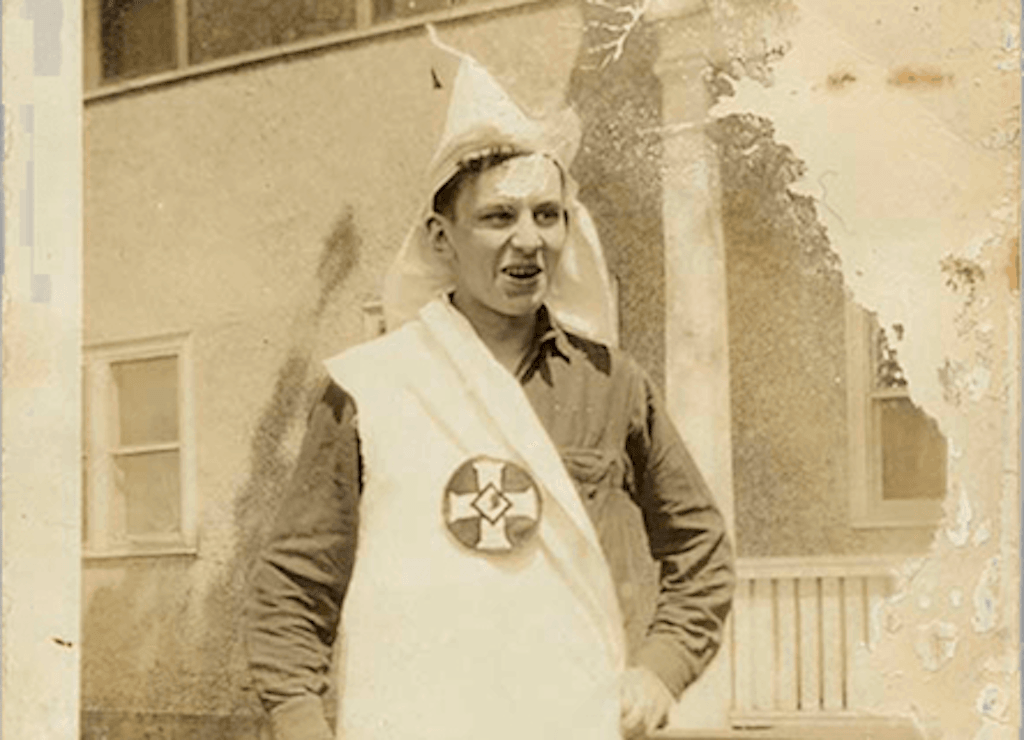
The Ku Klux Klan seems like a bit of a joke to most people today, but in the 1920s the organisation was extremely influential. In some states, such as Indiana, it operated as a political party, dominating local government and police forces.
So when a group of 500 university students banded together to disrupt a rally planned for South Bend, the racist organisation was left with more than black eyes and bloody noses: its reputation had been dragged through the mud.
The fact that these students were Catholic, from the University of Notre Dame, added insult to injury. Lacking a large black population to harass, the Indiana branch of the KKK aimed most of its rhetoric at “Papists”.
According to Tod Tucker, author of Notre Dame Vs. The Klan, a book on the South Bend riots that took place exactly 95 years ago on May 17, 1924, this was a rare instance of civilians standing up to the Ku Klux Klan. “Especially in terms of resistance in kind. People faced off against the Klan, for sure, the military and the police did, but as far as I could find this was really a unique occurrence in American history. It was really a perfect storm in a lot of ways.”
The rally was organized for a Saturday morning, with Klansmen coming in from several points of the State. The students’ response was more spontaneous. “It seemed to happen organically, it wasn't planned. The students started disrupting the Klan's activities, the parade, all they had going on. It was all kind of low-level violence and disruption”.
According to an article on the University website, as Klan members arrived many were greeted by smiling young men who offered to lead them to the rally but took them instead down back alleys, where they were beaten and had their robes and hoods stolen.
The remaining KKK were chased to their local headquarters, where the students delighted themselves by pelting a large “flaming cross” of red light-bulbs, using potatoes from a nearby grocery store.
“The students carried the day. They completely upset the Klan's plans”, says Tucker.
A couple of days later, the students rallied again to go in aid of a colleague who had supposedly been caught by Klansmen and was being beaten. They rushed into an ambush laid by the KKK with the help of the local police.
“This time the Klan was waiting for them, and it was a much more violent affair, with broken bones, swinging clubs, gunshots fired. Nobody was killed, but there was potential for real violence.”
Only the personal intervention of the University president, Father Walsh, kept the students from seeking their revenge. Broken bones aside, though, it was the KKK that suffered most lasting damage. A second parade was planned but never materialised. Its reputation irreparably damaged, the Klan never managed to control South Bend.
Among students, it was the initial success that became school legend. “I went to university in Notre Dame and the story was part of the folklore around the place”, Tucker explains. At the time, however, the board were unimpressed by their students’ victory.
12:00 AM
The day Catholic students took on the KKK - and won
the ku klux klan seems like a bit of a joke to most people today, but in the 1920s the organisation was extremely influential. in some state...
Filipe D'Avillez

4 min read



Already a subscriber? Sign in
5freearticles every month
Continue reading with a free account. No card needed.
- Five free articles every thirty days, on any device you sign in on
- The Catholic Herald newsletter, every morning
- Subscribe whenever you like for everything: every article and the magazine

subscribe to the catholic herald today
Our best content is exclusively available to our subscribers. Subscribe today and gain instant access to expert analysis, in-depth articles, and thought-provoking insights—anytime, anywhere. Don’t miss out on the conversations that matter most.
Subscribe



