


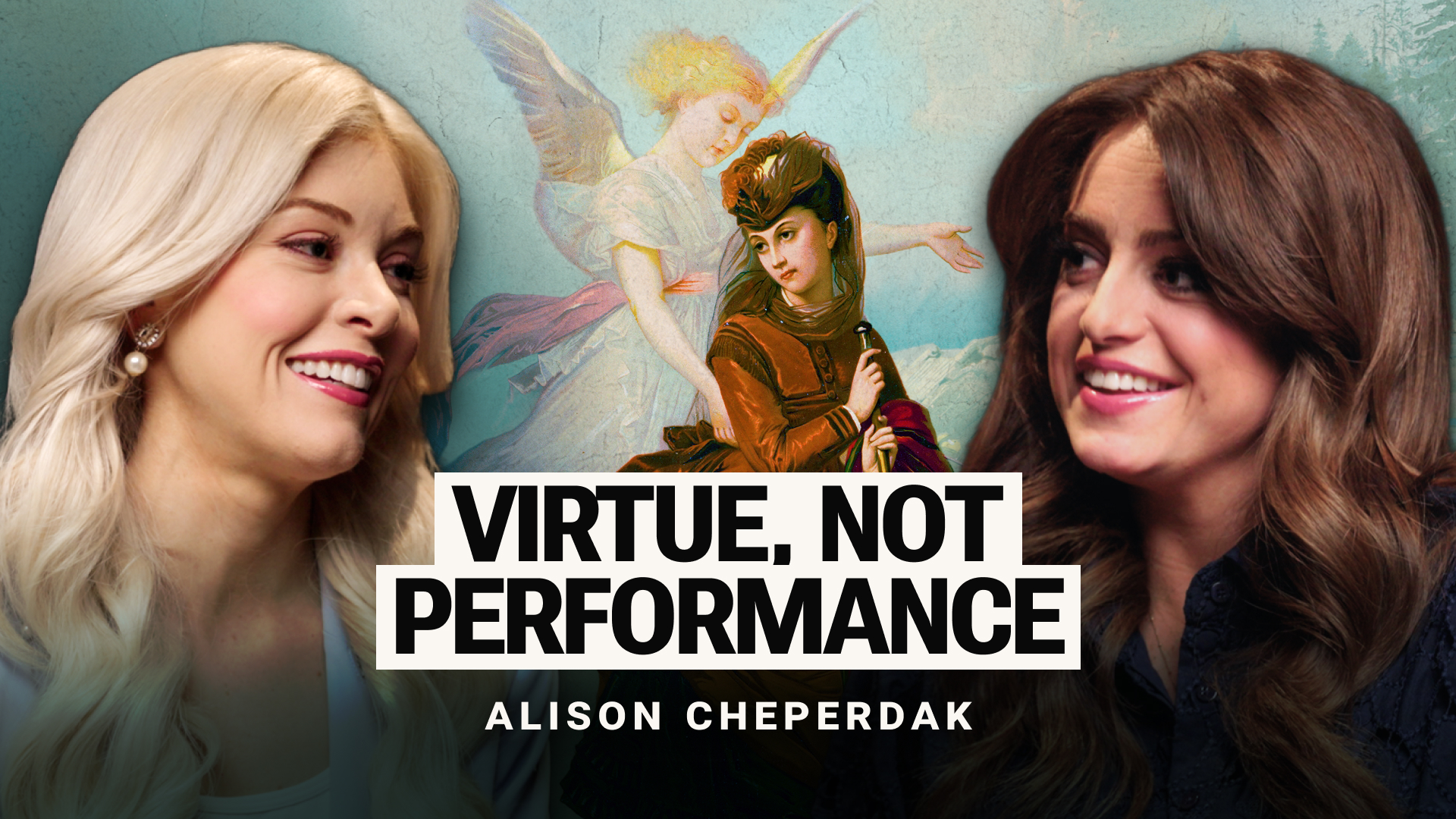


In this episode of In Conversation With, Mary Margaret Olohan sits down with Alison Cheperdak, etiquette author and former White House staffer, to explore what good manners are actually for, and why they may matter more now than at any previous point in living memory. Cheperdak is not a nostalgist. She is not teaching people which fork to use for its own sake. Her argument, made consistently across the conversation, is that etiquette is the outward form of something inward: integrity, honesty and respect for the person in front of you.
She traces an unlikely career path. A big Irish Catholic family in New England, Villanova, law school, a stint as a TV news reporter and anchor, and then the West Wing of the Trump White House, where she served in the first term. It was wedding planning, of all things, that first drew her to etiquette: a copy of the Amy Vanderbilt Complete Book of Etiquette, recommended by her mother, read cover to cover when she had only meant to look up the seating chart. The certification in British and North American etiquette came later, almost as an afterthought, something she pursued for personal growth during a quieter period after the White House. What surprised her was how much it resonated when she began posting about it on social media. There is, she believes, a genuine thirst for this knowledge, particularly among younger people who are ambitious, want to succeed and are looking, in her phrase, for a roadmap.
The White House years inform more than just her professional poise. She describes what she absorbed there: the capacity to take work seriously without taking oneself too seriously, to be calm and efficient simultaneously, to recover from almost anything because almost nothing, in retrospect, qualifies as an emergency. These are not merely professional habits. They are, she suggests, a way of moving through the world.
The conversation turns to the book, Was It Something I Said?, and to the broader question of why manners matter in a distracted, digital age. Her answer is unequivocal. Etiquette is not about showing off. The worst etiquette of all, she says, is pointing out someone else's bad etiquette. What it is about is making the other person feel at ease, giving people the confidence to contribute rather than worry about which fork to use, being the kind of person others want to sit next to at a wedding. She is direct on the question of technology: manners are something artificial intelligence can never replace. They are the signal that you are trustworthy, reliable and worth knowing.
She is equally direct on personal relationships. It is easy, she observes, to give the people closest to us what is left of us rather than what is best. Etiquette in intimate life is not about performance but about timing and care: picking the right moment for a difficult conversation, narrowing it to the specific rather than reaching for generalisations, making the other person feel heard rather than dominated. The same logic applies to hard political and moral conversations. Her advice is strategic as much as ethical. If the goal is genuinely to change minds, hostility is counterproductive. Curiosity works better. Ask how someone came to think that way. It is more effective and it is also simply kinder.
On dating, she writes a column for women in what she calls a season of singleness, and she is direct about a common mistake: the fear of scaring someone away leads people to avoid exactly the questions that matter. A date should not feel like an interrogation, but you are wasting your own time if you spend months with someone who was never a good fit. General questions, she suggests, tend to be illuminating enough without requiring you to ask about children in the first hour.
The episode closes on a note of genuine encouragement. Cheperdak sees among Gen Z and Gen Alpha, particularly among young women, something she finds striking: an earnestness, a return to older things, a renewed interest in faith and tradition. She does not fully account for it. But she sees it in the groups she is brought in to speak to, in what is trending on TikTok, in the number of young people she encounters who are asking serious questions and are open to answers. The singular narrative of what it means to be a woman, she argues, is breaking down. In its place, a multiplicity. And within that multiplicity, room for something that looked, not long ago, like it might disappear entirely.


