
Every country tells stories about its beginnings. Some are so familiar to us that they pass into legend – like the men who gathered in Philadelphia 250 years ago. There is much we can learn from these stories, but sometimes also much that they obscure. The story of America didn’t begin in 1776, but much earlier, and long before the United States came into being there were Catholic figures whose stories shed light on how the larger story of this great nation developed.
When the Pilgrims stepped ashore from the Mayflower in the winter of 1620, their prospects were bleak. Their passage across the Atlantic had taken much longer than intended; what’s more, they managed to land in the wrong place, with insufficient provisions and with almost no knowledge of the country they had arrived in. Within just a few months, almost half of them were dead. Had events carried on their natural course, Plymouth might have been another failed attempt at founding a colony like Roanoke.
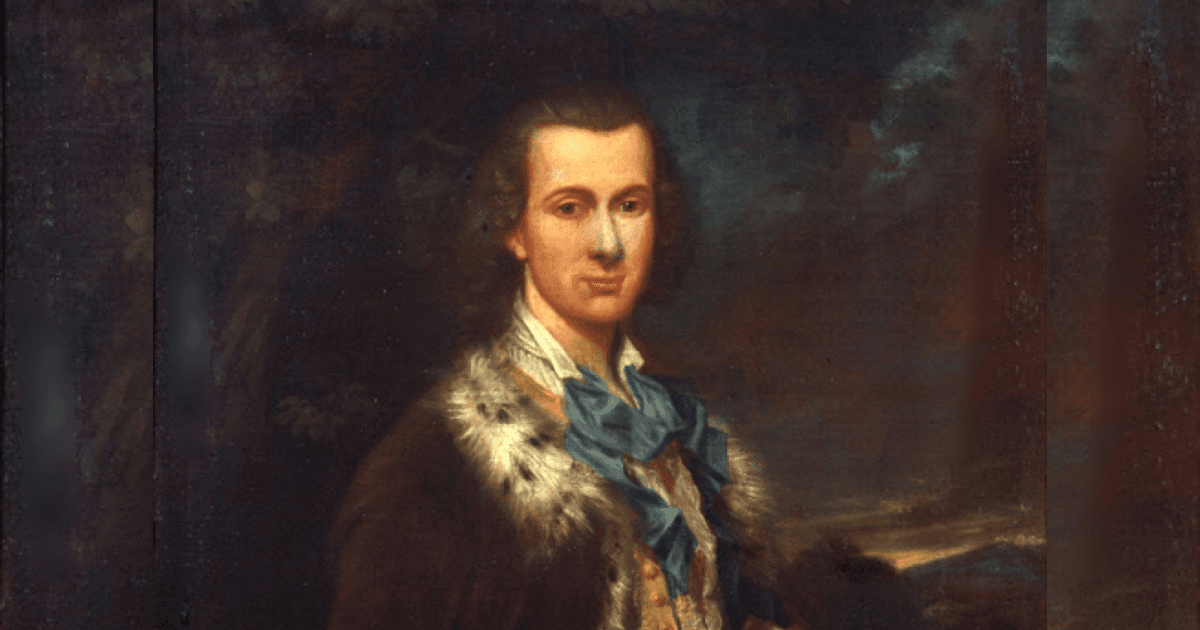
Instead, a man appeared to the Pilgrims who seemed almost providentially sent. The story of Tisqauntum – better known as Squanto – remains one of the most extraordinary in American history. A member of the Patuxet tribe, Squanto was kidnapped by the English adventurer Thomas Hunt in 1614 and transported across the Atlantic, where he was sold into servitude in Spain. As soon as Europeans arrived in the New World, great debates raged – usually advanced by learned clerics – about the nature of its inhabitants and how good Christians were required to treat them. Contemporary accounts claim that Spanish friars intervened, attempting to prevent the sale of the Native American captives, and rescued a number of them. Squanto must have been one of them, as he made his way to England, where he learnt the language and served in the household of the merchant John Slaney (sometimes spelt Slany or Slanie).
After just a few years, he took up the offer to join the adventurer Thomas Dermer on an expedition to New England and return home. During his exile, however, disease had swept through his people and devastated his native village. Family and friends were dead or diminished. The place to which he had hoped to return was almost empty.
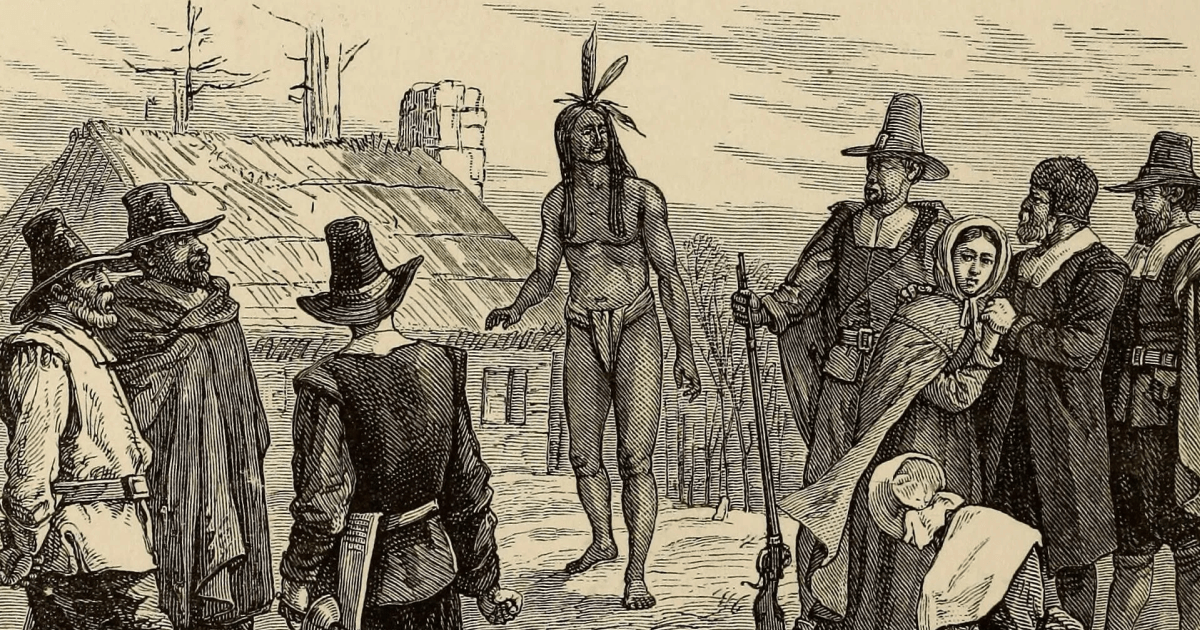
Within a year, the depopulated home of the Patuxet was exactly where the Pilgrims arrived and decided to establish their settlement. One day, a minor sagamore of the Abenaki named Samoset walked into the English hamlet, greeted the settlers in their native tongue and, according to various accounts, asked for beer. Samoset had learned English from visiting English fishermen and traders along the coast of what is now Maine, and a few days after casually strolling into Plymouth he brought along his friend Squanto and introduced him to the colonists.
It proved a fruitful meeting. Squanto taught the settlers how to cultivate maize, where to fish, how to use local resources and, perhaps most importantly, how to navigate the delicate diplomacy of the disputatious Indigenous inhabitants of Native America. The first years of Plymouth depended to an extraordinary degree upon the knowledge and mediation Squanto provided.
There does seem something insanely circumstantial about Squanto and the Plymouth colony. Had Squanto never been abducted, he would never have learned English. Had he not survived his European experience, he could not have acted as interpreter. Had the epidemic not destroyed Patuxet, the Pilgrims would probably have settled elsewhere – and Squanto himself may have died with his kinsmen. Had the Pilgrims arrived a little earlier or later, the opportunity for alliance Squanto negotiated for the settlers with the friendly chief Massasoit and his Wampanoag tribe might never have arisen. Remove any tiny link in the chain, and the whole fate of New England begins to look very different. Plymouth’s governor William Bradford had no doubt about the significance of Squanto, describing him as “a special instrument sent of God for their good beyond their expectation”.
But what did Squanto believe? His religion is one of the lesser-explored questions of his life. The evidence is fragmentary, but numerous stories hold that the Native American was a convert to Catholicism. We know he passed through Spain, where friars often intervened on behalf of enslaved natives brought to Europe and sought to instruct them in the Faith. We also know that he spent long periods in Christian households and lived at a time when the practice of religion permeated daily life more deeply than it does today.
The truth is that we simply do not know for certain whether Squanto was baptised. If he did indeed embrace Christianity within the Catholic world before returning to his homeland, then one of the most consequential figures in the survival of early Protestant New England may also have been one of the earliest Native American Catholics. The question may ultimately remain unanswered – but it reminds us of the richness of America’s early history. This story did not unfold, as is so often thought, in the isolation of a disconnected coastal woodland but within a wider Atlantic world linking Indigenous peoples, English merchants, Spanish friars and European courts in ways that still have the power to surprise.