

America before 1776 is still too little understood. The revolutionary generation and its aftermath grab the limelight, but there are countless figures from up and down the British Atlantic coast whose lives and contributions to American history deserve to be more widely known. Catholic America before 1776 is even less well known. Central to its story is the foundation of the Maryland colony by the Calvert family – and central to Maryland’s story is the decisive leadership of a Catholic woman named Margaret Brent, who rescued the colony at one of its most dangerous moments.
Margaret arrived in Maryland in 1638, not as the wife of a planter or the daughter of a colonial official, but as an unmarried gentlewoman accompanied by several of her siblings. The Brents were one of England’s old landed Catholic families, with most members remaining steadfast in their faith during a time when doing so carried real and punishing consequences. Catholics in England continued to live under a web of legal disabilities, financial penalties and political suspicion. They were banned from holding many public offices, their loyalty was frequently questioned, and their faith often had to be practised with discretion. Families such as the Brents learned resilience, careful estate management and quiet self-reliance simply as a matter of survival.
Maryland offered something different. Established under the patronage of the Catholic Calvert family, it was basically a project to establish a sort-of Catholic West of England in the New World. Persuading English Catholics – West Country or otherwise – to abandon their native land and help settle an unknown place across the Atlantic proved extremely difficult. English Catholics had enough problems as it was without adding the perils of a transoceanic colonial project.
As such, Protestants in Maryland soon outnumbered Catholics, and the colony depended upon cooperation between both communities if it was to flourish. Maryland did offer English Catholics something increasingly rare at home: the opportunity to own land freely and without restriction, participate in public life to an extent little known since the Reformation, and the freedom to worship with a degree of security that England itself no longer guaranteed.
Somehow, Margaret Brent proved exceptionally well suited to this new world. Unlike most women of her generation, she never married. Whether by conviction or circumstance, the decision afforded her an unusual degree of legal independence under English common law. She could acquire property, enter contracts, appear before the courts and conduct business in her own name. She did all these things with notable success. Within a few years she had accumulated extensive landholdings, managed her estates with evident skill and established a reputation as one of the colony’s most capable and dependable figures.
Maryland was still a small society. Reputation travelled quickly, and responsibility tended to fall upon those who had already demonstrated they could bear it. By the mid-1640s Brent had become one of the wealthiest landowners in the province, regularly appearing in court in her own right to pursue legal claims, recover debts and administer business affairs. Competence, more than birth or convention, commanded respect in a colony whose future remained far from secure.
That competence was tested in 1647. The first proprietary governor, Leonard Calvert, had died on June 9, only weeks after restoring order in Maryland after a period of rebellion and disorder known as “the Plundering Time”. Victory had come at a price: the force that restored the proprietary government consisted largely of soldiers recruited in Virginia, men who had fought on the understanding that they would be paid. Now the governor was dead, his successor insecure, the coffers of the provincial treasury were empty, and the proprietor, Lord Baltimore, was an ocean away in England.
Maryland found itself in an extraordinary constitutional vacuum. If the soldiers were not paid, there was every reason to fear that they would simply take what they believed they were owed, either by plundering the colony or by turning against the very government whose authority they had restored.
Before his death, Leonard Calvert had appointed Margaret Brent sole executrix of his estate, leaving her with the memorable instruction: “Take all, and pay all.” It was far more than the ordinary administration of a deceased man’s affairs. Calvert had effectively entrusted the immediate survival of his government to the person he considered most capable of preserving it.
The Provincial Court recognised that settling Calvert’s estate alone would not be enough. Because there was no possibility of obtaining instructions from Lord Baltimore in time, it appointed Brent attorney-in-fact for the Proprietor himself. She was now acting simultaneously in two capacities: as executrix of the late governor and as legal representative of the absent owner of the colony.
Brent moved with swift assurance. She collected outstanding rents owed to Lord Baltimore that had gone unpaid during the Plundering Time, purchased corn from Virginia to feed the troops, negotiated with the soldiers themselves and ultimately authorised the disposal of Lord Baltimore’s cattle to raise the money needed to meet their claims.
The decision undoubtedly exceeded what Baltimore himself would have wished. Writing from England later, he complained bitterly that she had interfered with property that was not hers. His criticism, however, came with the luxury of distance. Brent had been confronted with a choice he never faced. She may have sacrificed the proprietor’s cattle, but she managed to preserve the proprietor’s colony.
Lord Baltimore’s rebuke did not go unanswered. The Maryland Assembly replied that, after Leonard Calvert’s death, “the Colony was safer in her hands than in any man’s in the Province”. It added that no one else could have managed the soldiers with equal success. Coming from the very people whose government had been preserved, it is difficult to imagine a stronger vindication.
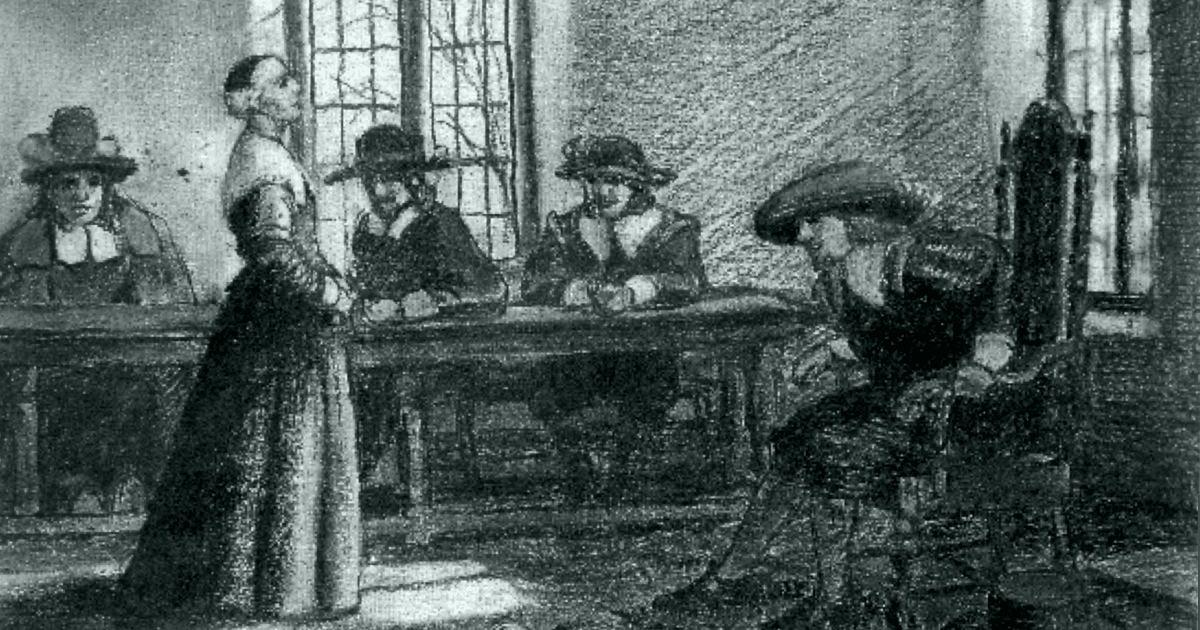
Having successfully steered her way through the crisis, Brent made an attempt to demand her due. She petitioned the Maryland Assembly asking for “voice and vote” – one vote as a landowner in her own right of qualifying substance, and another as Lord Baltimore’s legal representative.
“‘I’ve come to seek a voice in this assembly,’ Brent asserted. ‘And yet because I am a woman, forsooth I must stand idly by and not even have a voice in the framing of your laws.’”
Governor Thomas Greene – appointed on the deathbed of his predecessor – refused her request, even though the Assembly defended her against Lord Baltimore’s criticism.
Fashionable historiography likes to frame Brent’s petition as an early demand for women’s political equality. There is undoubtedly something remarkable about a woman requesting a vote in an English colonial legislature in the middle of the 17th century. Brent’s own argument, however, was more pragmatic and rested entirely upon the established working constitution of the colony. She was neither attempting to overturn the social order nor launching a campaign for universal political rights – far from it. Brent felt her rights as a gentlewoman and a landowner of sufficient substance – as well as her role representing the holdings of the Proprietor – meant her responsibilities needed to be matched by publicly acknowledged authority.
After all, the success of the colony depended upon the willingness of capable individuals to assume responsibilities that circumstance had unexpectedly laid upon them. Brent’s defence of the common good through swift and decisive action saved the day and ensured the continued existence of Maryland.
Long before the United States produced its celebrated statesmen, generals and presidents, a Catholic gentlewoman stood at the centre of a fragile colony and quietly prevented it from coming apart at the seams. She remains little known outside those of us who are enthusiasts for the early history of English Catholic America, but this says less about her importance than about history’s tendency to remember dramatic declarations more readily than steady competence. Without Catholic women like Margaret Brent, the story of early America might have unfolded very differently indeed.