July 3, 2026

Two Leos and America’s birthday

Fr Dwight Longenecker
More
Related
Min read
share

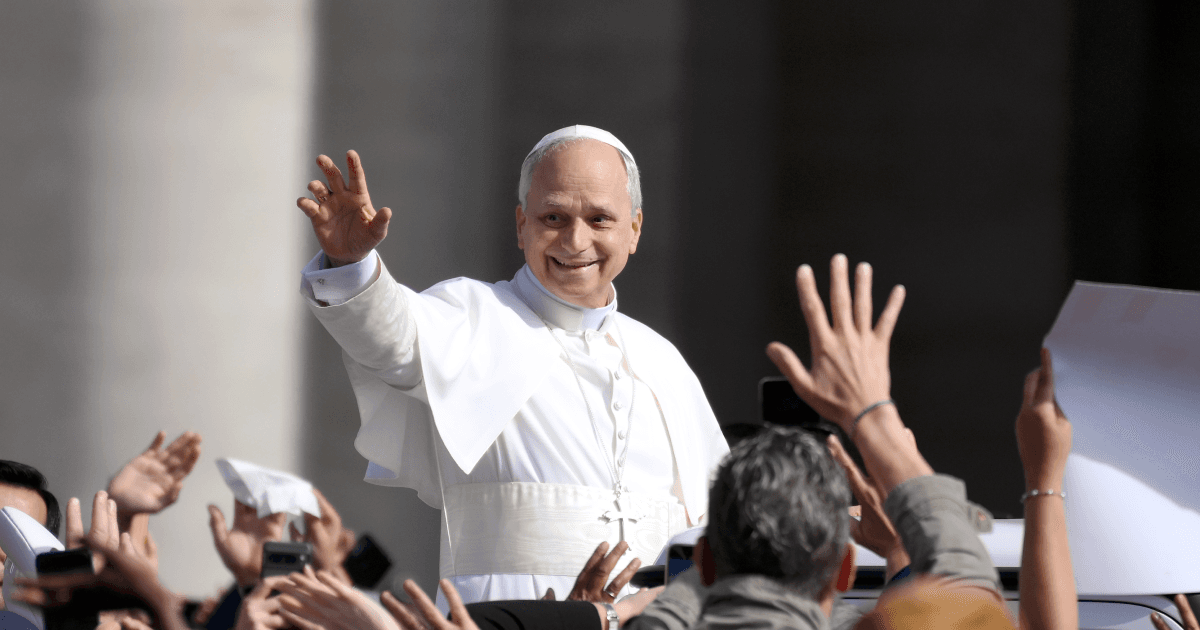
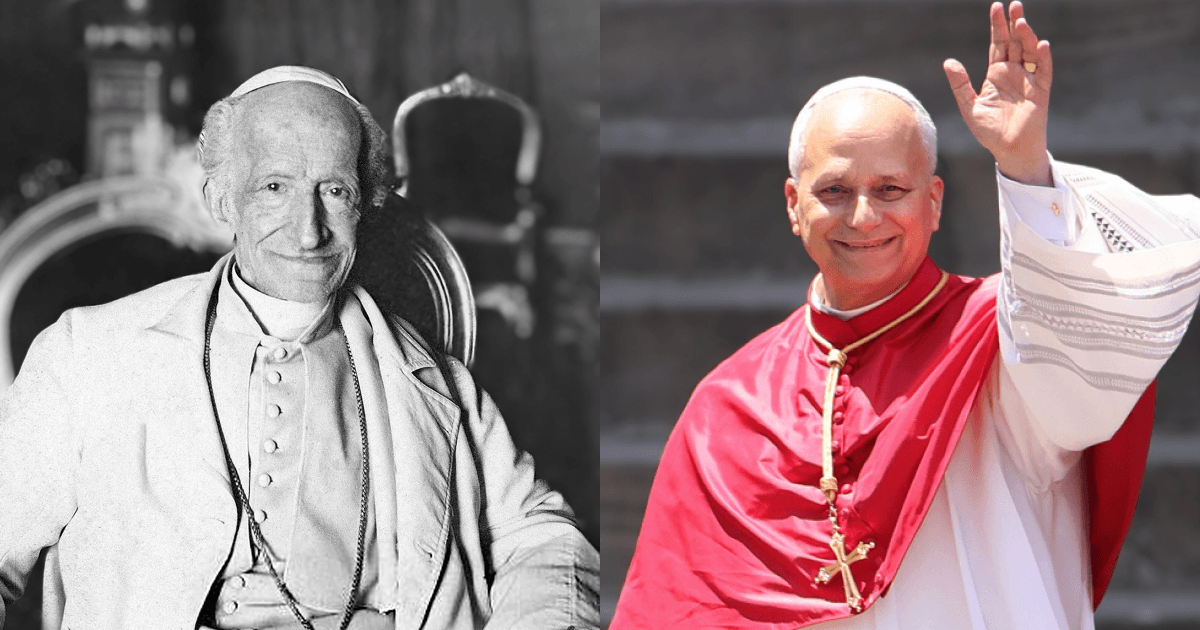
In 1878, just two years after the United States celebrated her centenary, Pope Leo XIII was elected to the throne of Peter. In 1899 he issued his apostolic letter, Testem Benevolentiae Nostrae, condemning what he perceived as a budding new heresy: Americanism. Now, in a stroke of historic irony, one hundred and fifty years after his own election, Pope Leo XIII is succeeded by an American who took his name out of admiration for Leo XIII – the pope who was against Americanism.

Of course, Leo XIII’s critique of Americanism was not a case of ethnic bigotry or nationalist envy. Far from a blanket condemnation of the American character or republic, Testem Benevolentiae Nostrae targeted a specific set of tendencies that threatened the integrity of Catholic doctrine and discipline by subordinating them to the spirit of the age.
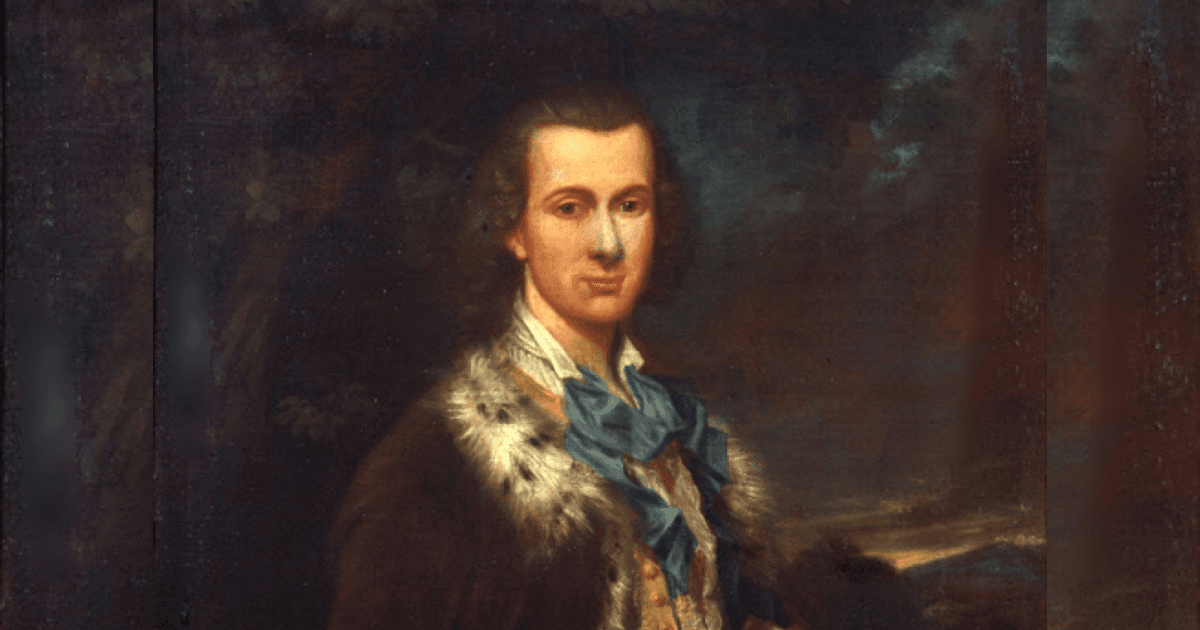
Leo XIII wrote Testem Benevolentiae to Cardinal James Gibbons, Archbishop of Baltimore, amid tensions sparked by a French translation of the biography of Fr Isaac Hecker, founder of the Paulist Fathers. European critics saw in Hecker and certain American bishops – notably John Ireland – an excessive eagerness to adapt Catholicism to democratic, individualistic American culture. Leo clarified at the outset that he did not condemn “certain endowments of mind which belong to the American people” or “your political condition and the laws and customs by which you are governed”. What he rejected was the exaltation of these traits into a theological programme that would make the Church in America “different from what it is in the rest of the world”.

The core error, Leo explained, rested on this principle: “in order to more easily attract those who differ from her, the Church should shape her teachings more in accord with the spirit of the age and relax some of her ancient severity and make some concessions to new opinions”. Many, he noted, believed such concessions should extend “even in regard to doctrines which belong to the deposit of the faith”. This was not legitimate pastoral accommodation of customs while preserving moral principles; it was a dangerous willingness to soften or omit revealed truth for the sake of relevance or numerical success.

Leo XIII further warned against an overemphasis on natural virtues at the expense of the supernatural. Proponents allegedly held that “natural virtues are more adapted to the present age” and better suited to modern needs than the “passive” virtues of humility, obedience and contemplation. Leo countered that all true virtue requires grace: “of what avail are natural virtues unless seconded by the gift of divine grace?” He rejected any sharp divide between active and contemplative life, affirming that religious vows and orders remain essential to the Church’s mission. Disparaging them as outdated or restrictive of liberty, he argued, contradicted the fuller freedom Christ grants through self-surrender.

Perhaps most pointedly, Leo addressed the confusion of civil liberty with ecclesiastical licence. He condemned the view that “such liberty should be allowed in the Church, that her supervision and watchfulness being in some sense lessened, allowance be granted the faithful, each one to follow out more freely the leading of his own mind”. This risked turning the Church into a merely human society governed by private judgement rather than the divinely instituted hierarchy with its infallible teaching authority. The result would be the “confounding of licence with liberty” and contempt for external guidance precisely when souls most need it.

American bishops, led by Gibbons, promptly assured Rome that they held none of these condemned opinions. The episode became known in some circles as the “phantom heresy”, yet its underlying concerns proved enduring. Leo XIII had identified a perennial temptation: the desire to remake the universal Church in the image of a particular culture – here, one shaped by Enlightenment individualism, voluntarism and suspicion of authority.

Today these temptations remain acute, and not just for American Catholics. Bringing the Church “up to date”, replacing the focus on salvation with social activism, substituting a beige indifferentism for rigorous, uncompromising Catholicism and watering down Catholic moral teaching for a promiscuous age are tendencies not only in the American Church but across Western Europe. It would seem that, along with McDonald’s and Coca-Cola, America has exported her own unique form of fast-food Catholicism – easy, tasty and of little nutritional value.

Leo XIII’s critique included the temptation for the Church to be governed by “democratic” policies and principles. This is where Leo XIII’s criticism is most relevant to the issues facing the Church today. Despite the assurances that it is not “democratic”, is not the “synodality” pushed by Pope Francis just the sort of people-power governance of the Church anticipated and condemned by Leo XIII? It seems clear that the “synodal path” is a method for an elite group to push a modern form of Catholicism which is very much adapting the Catholic Church to the zeitgeist.

By choosing the name of the pope who issued both Rerum Novarum and Testem Benevolentiae, one hopes the new Pontiff is signalling a vision of the Church that engages modernity without capitulating to it. His papacy offers all Catholics a global, modern faith that serves the common good under the guidance of revealed truth, building unity in the Church rather than allowing the Faith to become fissiparous through individualism, sexual ideologies and political activism.

Leo XIII’s warning echoes down to Leo XIV’s Church: that the Church does not exist to conform to any age or nation but to sanctify them or, as GK Chesterton put it, “We do not want a church that will move with the world. We want a church that will move the world.”

Fr Dwight Longenecker’s new book Bloodshed and Blessing: From Ancient Altars to the Holy Mass is published by Sophia Institute Press in August.

Continue reading with a free account

Create a free account to read up to five articles each month
Create free account

You have # free articles remaining this month.

Subscribe to get unlimited access.
Sign up

subscribe to the catholic herald today

Our best content is exclusively available to our subscribers. Subscribe today and gain instant access to expert analysis, in-depth articles, and thought-provoking insights—anytime, anywhere. Don’t miss out on the conversations that matter most.
Subscribe