



February 19, 2026

The return of Catholic clubland in London

Delphine Chui
More
Related
Min read
share

In an age defined by streaming, swiping and disposable digital connections, something quietly countercultural is taking place: people are seeking places where real relationships, rooted in shared identity, worldview and purpose, can flourish.

Sociologists have long spoken of the importance of “third spaces”: places that are neither home nor work, but where community, conversation and character are formed. It is no surprise that supper clubs, hobby groups and private members’ spaces are experiencing a quiet renaissance. Within this movement, one example is the resurgence of the Challoner Club in London, a Catholic private members’ club.
I recently met the club’s chairman, a young man named Calder (though much of the committee is made up of young adults), whose desire to revive the Challoner Club grew out of a deeply personal – and widely shared – experience. A recent convert to Catholicism, he approached his local parish with the enthusiasm of new faith, only to find a small, ageing congregation that bore little resemblance to his own stage of life. The question quickly became a practical one: where could he find friends, collaborators, potential business partners and even a future spouse who shared not only his faith, but his worldview, cultural references and ambitions?

The original Challoner Club was founded in 1949 at 59 Pont Street, Knightsbridge, and named after Bishop Richard Challoner (1691–1781), an 18th-century Vicar Apostolic of London who shepherded Catholics through persecution with pastoral care. The club was formally opened on September 20, 1949, by the Rev Edward Myers, then Coadjutor Archbishop of Westminster, and its first chairman was Michael Derrick, a respected Catholic journalist and editor.

Like many gentlemen’s and social clubs of its era, the Challoner Club provided a space where Catholics – lay and clerical – could gather, converse, celebrate their faith and build fellowship that went beyond the Sunday pews. It became a hub for social life rooted in shared values and mutual support.

However, the club closed in 1997 as the ways people connected became more atomised and transactional. In a world increasingly defined by individual autonomy, the notion of rooted membership and of being part of something larger than oneself seemed less compelling.

Last year, a new generation of Catholics rediscovered that impulse and re-established the club, this time welcoming both men and women. For many young Catholics, the Challoner Club has quickly become more than a networking space. It embodies something long missing from contemporary social life: community anchored in shared faith and tradition. Its existence is not political or ideological, but social and spiritual: to offer a Catholic presence within London’s clubland that fosters meaningful relationships and contributes to the common good.

The popularity of members’ clubs is not limited to Catholic circles. Across the UK and beyond, private social clubs are reporting renewed interest as people crave spaces of belonging and stability in an increasingly fragmented society. Experts suggest this trend reflects a deeper psychological and social need. Jay Van Bavel, an associate professor of psychology and neural science at New York University, explains that humans are “intrinsically groupish animals”. We derive identity, belonging and distinctiveness from association with a community that shares norms and values.

Modern life, by contrast, is marked by dislocation: endless mobility, fragmented social ties and the decline of neighbourhood life. Many of us are educated, employed and entertained largely in isolation, and yet the longing for tangible belonging persists. The desire to be a member of something real remains: a member of a family, a Church, a community, a place where one is known, needed and rooted.

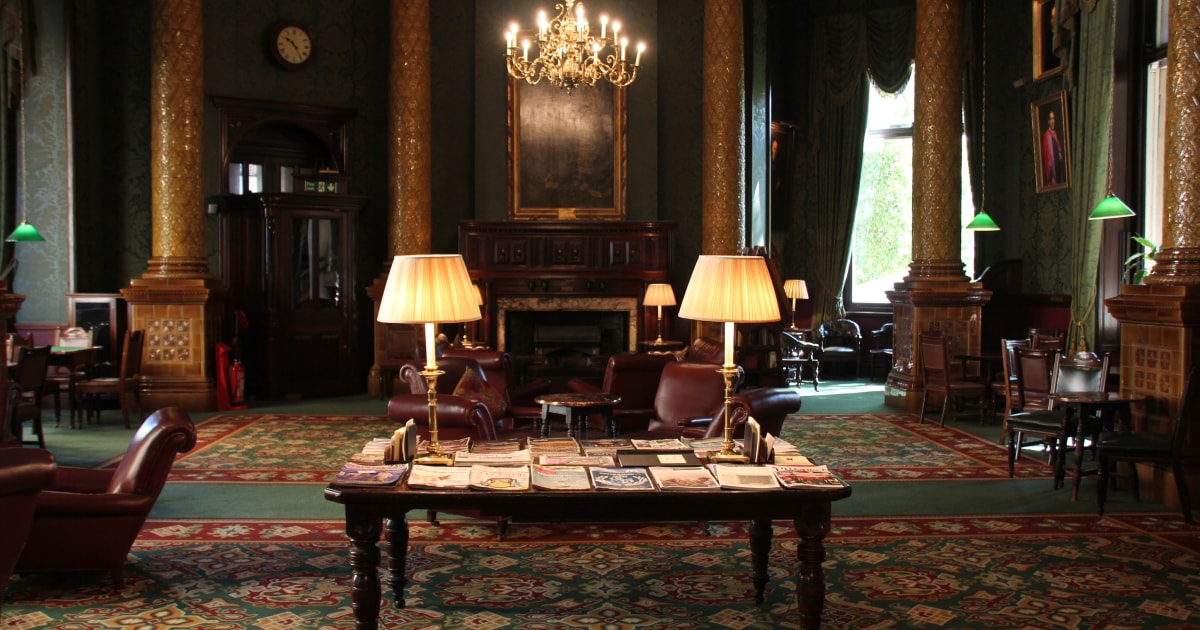
The revival of the Challoner Club is more than the return of an institution. Gathering in some of London’s most storied private members’ institutions – from the Oxford & Cambridge Club to the Travellers Club – it embodies a distinctly British reverence for tradition, beauty and hospitality. It is a sign that in a world marked by individualism, there remains a deep desire for belonging and mutual support, one that resonates precisely because it reflects the way human beings were made: for communion.

Membership, and a rightful pride in our heritage, is not something to shy away from. It is something we are increasingly recognising as intrinsic to human nature. We are formed within families, tribes, nations and the Body of Christ itself, and scripture reminds us that we are “no longer strangers and sojourners, but fellow citizens with the saints and members of the household of God” (Ephesians 2:19).

To belong is not a modern craving but a deeply biblical one. Membership answers a fundamental human need: not just to exist, but to be held within a story larger than ourselves.

In an age defined by streaming, swiping and disposable digital connections, something quietly countercultural is taking place: people are seeking places where real relationships, rooted in shared identity, worldview and purpose, can flourish.

Sociologists have long spoken of the importance of “third spaces”: places that are neither home nor work, but where community, conversation and character are formed. It is no surprise that supper clubs, hobby groups and private members’ spaces are experiencing a quiet renaissance. Within this movement, one example is the resurgence of the Challoner Club in London, a Catholic private members’ club.
I recently met the club’s chairman, a young man named Calder (though much of the committee is made up of young adults), whose desire to revive the Challoner Club grew out of a deeply personal – and widely shared – experience. A recent convert to Catholicism, he approached his local parish with the enthusiasm of new faith, only to find a small, ageing congregation that bore little resemblance to his own stage of life. The question quickly became a practical one: where could he find friends, collaborators, potential business partners and even a future spouse who shared not only his faith, but his worldview, cultural references and ambitions?

The original Challoner Club was founded in 1949 at 59 Pont Street, Knightsbridge, and named after Bishop Richard Challoner (1691–1781), an 18th-century Vicar Apostolic of London who shepherded Catholics through persecution with pastoral care. The club was formally opened on September 20, 1949, by the Rev Edward Myers, then Coadjutor Archbishop of Westminster, and its first chairman was Michael Derrick, a respected Catholic journalist and editor.

Like many gentlemen’s and social clubs of its era, the Challoner Club provided a space where Catholics – lay and clerical – could gather, converse, celebrate their faith and build fellowship that went beyond the Sunday pews. It became a hub for social life rooted in shared values and mutual support.

However, the club closed in 1997 as the ways people connected became more atomised and transactional. In a world increasingly defined by individual autonomy, the notion of rooted membership and of being part of something larger than oneself seemed less compelling.

Last year, a new generation of Catholics rediscovered that impulse and re-established the club, this time welcoming both men and women. For many young Catholics, the Challoner Club has quickly become more than a networking space. It embodies something long missing from contemporary social life: community anchored in shared faith and tradition. Its existence is not political or ideological, but social and spiritual: to offer a Catholic presence within London’s clubland that fosters meaningful relationships and contributes to the common good.

The popularity of members’ clubs is not limited to Catholic circles. Across the UK and beyond, private social clubs are reporting renewed interest as people crave spaces of belonging and stability in an increasingly fragmented society. Experts suggest this trend reflects a deeper psychological and social need. Jay Van Bavel, an associate professor of psychology and neural science at New York University, explains that humans are “intrinsically groupish animals”. We derive identity, belonging and distinctiveness from association with a community that shares norms and values.

Modern life, by contrast, is marked by dislocation: endless mobility, fragmented social ties and the decline of neighbourhood life. Many of us are educated, employed and entertained largely in isolation, and yet the longing for tangible belonging persists. The desire to be a member of something real remains: a member of a family, a Church, a community, a place where one is known, needed and rooted.

The revival of the Challoner Club is more than the return of an institution. Gathering in some of London’s most storied private members’ institutions – from the Oxford & Cambridge Club to the Travellers Club – it embodies a distinctly British reverence for tradition, beauty and hospitality. It is a sign that in a world marked by individualism, there remains a deep desire for belonging and mutual support, one that resonates precisely because it reflects the way human beings were made: for communion.

Membership, and a rightful pride in our heritage, is not something to shy away from. It is something we are increasingly recognising as intrinsic to human nature. We are formed within families, tribes, nations and the Body of Christ itself, and scripture reminds us that we are “no longer strangers and sojourners, but fellow citizens with the saints and members of the household of God” (Ephesians 2:19).

To belong is not a modern craving but a deeply biblical one. Membership answers a fundamental human need: not just to exist, but to be held within a story larger than ourselves.

subscribe to
the catholic herald

Continue reading your article with a subscription.
Read 5 articles with our free plan.
Subscribe

subscribe to the catholic herald today

Our best content is exclusively available to our subscribers. Subscribe today and gain instant access to expert analysis, in-depth articles, and thought-provoking insights—anytime, anywhere. Don’t miss out on the conversations that matter most.
Subscribe