



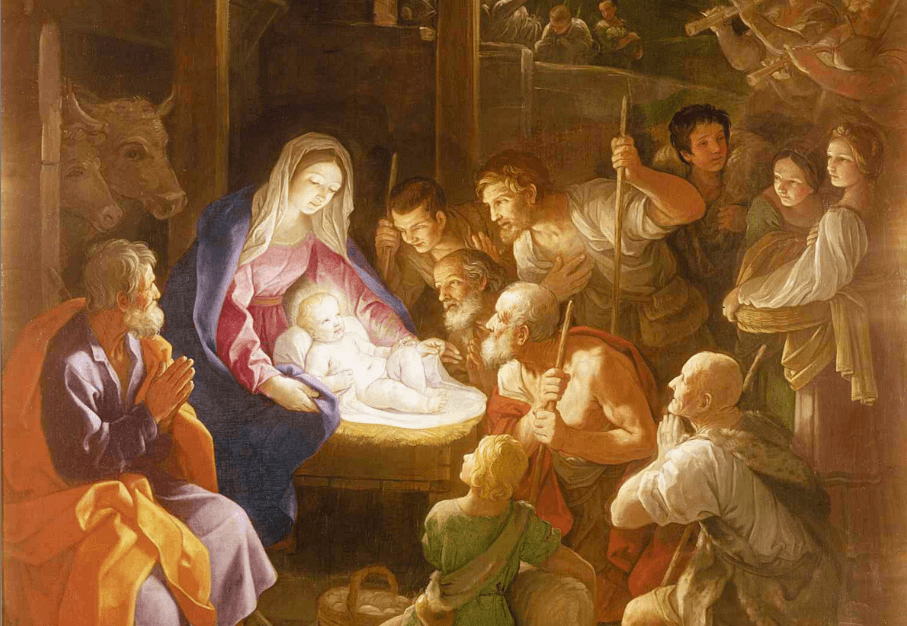
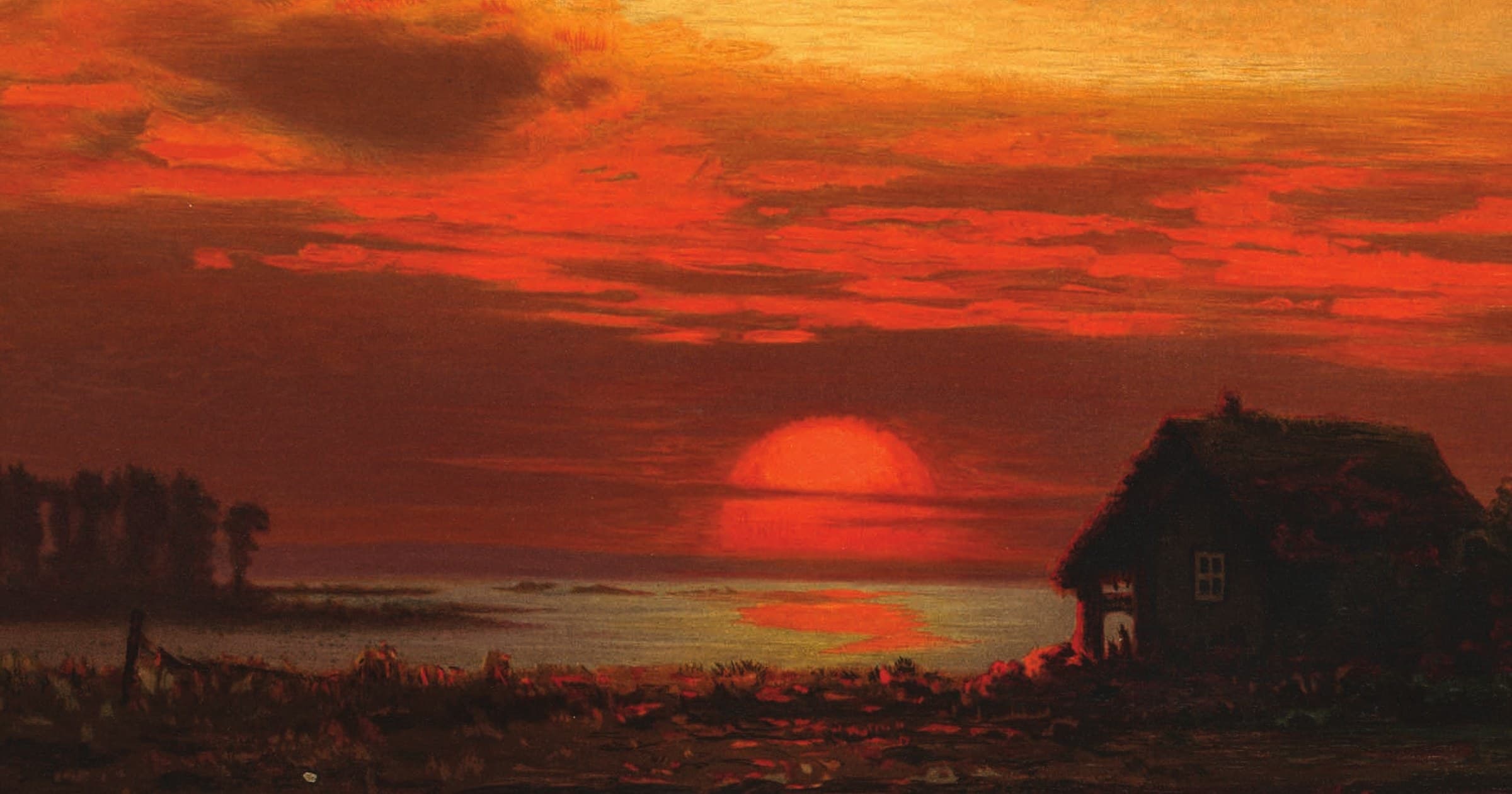
This Christmas reflection by Joseph Ratzinger was first published in the Bavarian Catholic journal Hochland (1959/60: 97–100). It has been translated by Professor Tracey Rowland of the University of Notre Dame (Australia). We publish it with the approval of the Personal Secretary of His Holiness Pope Emeritus Benedict XVI. The Christmas lights are again shining over our streets, and Christmas shopping is in full swing. For a moment one also lets the Church participate in the heightened economy. In the holy night the places of worship are tightly packed with all the people who then again, for a very long time, will pass by the church portals as something far away and strange that does not concern them. But in this night, for a moment, the Church and the World appear reconciled. It’s so beautiful: the lights, the frankincense, the music, the sight of the people who can still believe, and finally the mysterious ancient message of the child who was once born in Bethlehem and is called the Saviour of the world. That moves us, and yet the concepts that we hear at this time such as redemption, sin and salvation sound like words from a long-gone world. Maybe this world was beautiful, but it is in any case no longer ours. Or is it? The world in which Christmas came was dominated by a feeling very similar to our own. It was a world in which Götterdämmerung was not a slogan but a real event. The old gods had suddenly become unreal. They did not exist any more. Man could no longer believe what had given meaning and support to life for generations. However, man cannot live without meaning, he needs it like his daily bread. So after the extinction of the old stars he had to keep looking for new lights. But where were they? A broad movement offered him, as a way out, the cult of the “undefeated light”, the sun, which travels its way over the earth day by day, strong and confident in victory, a visible god of this world, as it were. The 25th of December, located in the midst of the winter solstice days, would be annually commemorated as the birthday of the ever–reborn light, a bright promise that from all destructions a path leads to a new beginning. The liturgy of the sun religion had thus very cleverly appropriated for itself the primeval human fear and primeval hope. The primitive man, who at one time experienced the coming of winter in the long nights of autumn with the ever diminishing power of the sun, had once again wondered with dread: does the golden sun really die? Will it return again? Or will it be defeated by the evil forces of the darkness, sometime, in this or one of the future years, and never return again? The annual winter solstice finally promised its ever renewed victory. It is the festival that encompasses the hope, yes, the certainty of the indestructibility of the lights of this world. The time when Roman emperors with their cult of the undefeated sun gave new faith to their subjects, new hope – a new meaning in the midst of the unstoppable demise of the old gods – coincided with the time when the Christian faith wooed the heart of the Greco-Roman people. The Christian found in the cult of the sun-god one of his most dangerous opponents. For this sign was far more visible and temptingly erected before the eyes of men than the sign of the Cross, in which the Christian announcement came. Nevertheless, Christianity’s invisible light prevailed over the visible message with which ancient paganism sought to assert itself. The Christians very soon claimed December 25, the birthday of the undefeated light, and celebrated it as the birthday of Christ, in whom they had found the true light of the world. They said to the Gentiles: the sun is good, and we rejoice in its ever-new victory no less than you. But it has no power of its own. It can only be and only has power because God created it. So it manifests light to us from the true light, from God. And one must celebrate the true God, the source of all light, not his work, which would be powerless without him. That’s not all, not even the most important thing. For maybe you have not yet discovered that there is a darkness and cold coming from the darkened heart of man: hatred, injustice, cynical abuse of truth, cruelty and the dishonour of man … At this point it suddenly becomes apparent how exciting this is, how the Christian’s conversation with the Roman sun worshipper is at the same time the dialogue of the believer of today with his unbelieving brother, the incessant dialogue between faith and the world. True, the primitive fear that the sun would one day die does not move us any longer. Physics has long stifled such fears with the cool touch of its clear formulas. The primitive fear has gone – but has the fear disappeared completely? Or is man still a creature of fear, so much so that today’s philosophy refers to fear as the “basic existential” of man? What period of human history was more afraid of its own future than our own? Maybe today’s human being is bogged down in the present just because he cannot stand to face the future; just thinking about it causes him nightmares. Again: we no longer fear that the sun, conquered by the darkness, could not have returned, only to discover the true darkness which is more terrible in this century of inhumanity than the generations before us could ever conceive of it. We fear that the good in the world will be overcome. We fear that it gradually no longer makes sense to try to seek truth, purity, justice, love, because in the world the law of the strongest prevails, because the passage of the world is right for the unrestrained and the brutal, but not for the saint.
12:00 AM
The undefeated light: Joseph Ratzinger on the true meaning of Christmas
this christmas reflection by joseph ratzinger was first published in the bavarian catholic journal hochland (1959/60: 97–100). it has been t...
The Catholic Herald

11 min read



Already a subscriber? Sign in
5freearticles every month
Continue reading with a free account. No card needed.
- Five free articles every thirty days, on any device you sign in on
- The Catholic Herald newsletter, every morning
- Subscribe whenever you like for everything: every article and the magazine

subscribe to the catholic herald today
Our best content is exclusively available to our subscribers. Subscribe today and gain instant access to expert analysis, in-depth articles, and thought-provoking insights—anytime, anywhere. Don’t miss out on the conversations that matter most.
Subscribe



