January 19, 2026
January 19, 2026

Three nights in a German monastery will do you the world of good

Min read
share

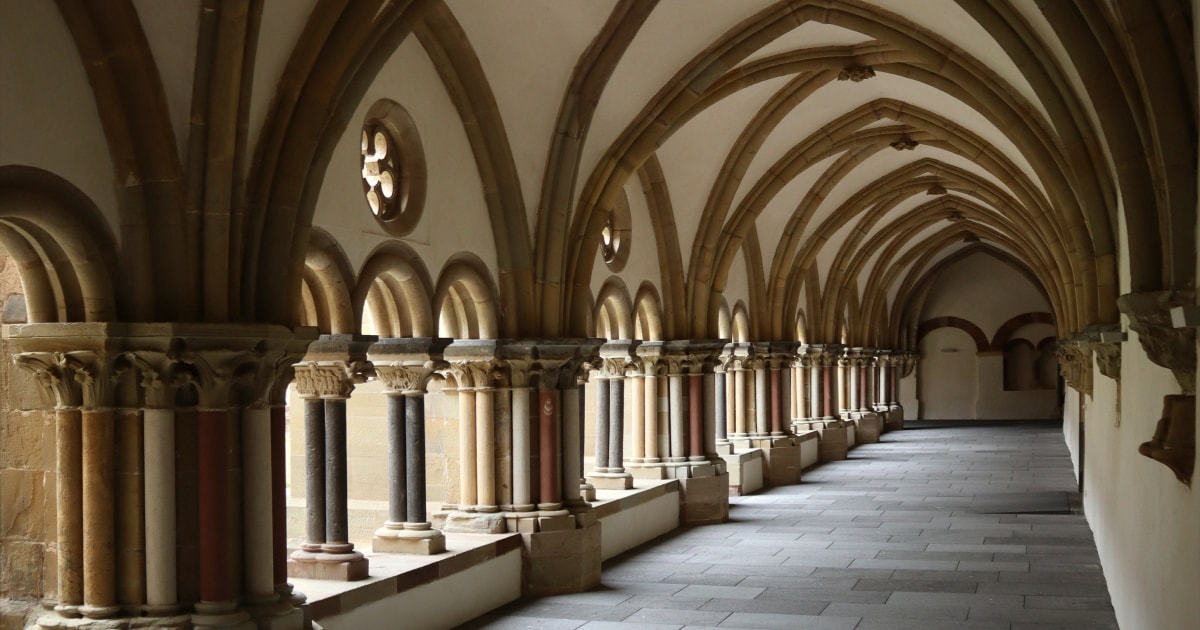
Winter darkness had fallen over the German city of Trier, and not far off I could see what looked like snow beginning to fall on the surrounding dark hills. Arriving at the gates of the Abbey of St Matthias, having reserved a room for three nights, I had a better sense of what pilgrims of old must have felt: I had arrived at the monastery and found refuge just in time.

I was met at the entrance by the monk with whom I had exchanged emails to make the reservation, €50 per night including breakfast, who took me to my room. I had no idea what to expect. Perhaps it would be a stark cell comprising a small bed with a crucifix above it. I did not much care either way. After trudging nearly 40 kilometres along the Jakobsweg, the German stretch of the Camino de Santiago, my ordeal including three hill climbs and much of it spent limping after a huge blister on my right heel burst the day before, I was shattered and simply wanted to rest my head and escape the cold darkness.
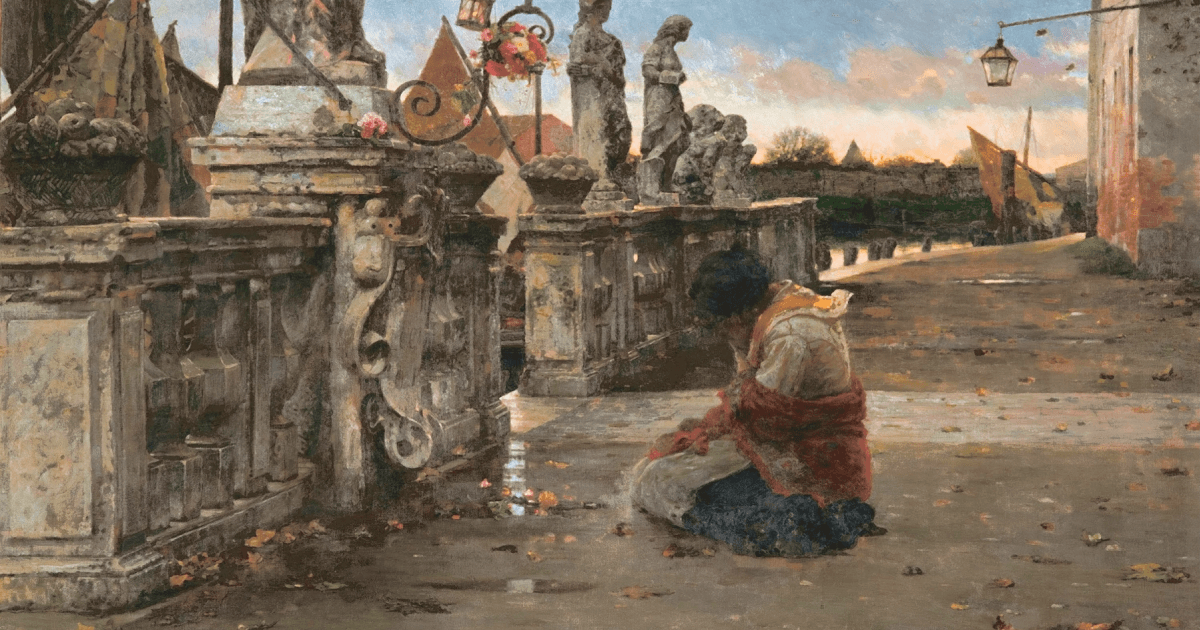
My circumstances that wintry afternoon were literal, though others may recognise them in a figurative sense when confronted with the state of the declining Western world and what the German philosopher Friedrich Nietzsche termed “the curse of modernity”.

“Um wie viel Uhr morgens ist Laudes?” I asked the monk on the way to my room. What time is Lauds tomorrow? He checked a noticeboard listing the various Offices of the Day, the routine of prayers monks carry out daily. I followed his finger down the list of timings. Oh goodness, I thought to myself. I had arrived on a Thursday. Lauds on Friday morning was at 5.30 a.m.

Fortunately, the monk, like the rest of his Benedictine order, was a practical man, and he could see my bedraggled state. Removing his finger from the noticeboard, with its somewhat disturbing information, he shook his head and replied in German with words to the effect of: “That’s far too early. Don’t worry. You need to rest.”

We live in a culture obsessed with activity, rushing and what the South Korean-born German philosopher Byung-Chul Han calls “achievement”. Han is Catholic, and his Catholicism subtly but effectively informs his writing, though non-Catholics might not even notice it. In his book The Burnout Society, Han argues that we increasingly take activeness to an absurd level that avoids living a real life. Instead, life “becomes bare and radically fleeting”, while lacking meaning. The response to this situation, for many, takes the form of “hyperactivity, hysterical work and production”.

Hence the corresponding obsession with mindfulness, meditation and self-help books. Almost everyone turns to the same remedies, none of which seem to work. So try something different. Go and stay with a religious community. It could be a formal retreat, or simply a few days, as I did, to sort oneself out. In addition to letting my raw heel recover, I had some journalistic work to do.

Many religious houses, both monasteries and convents, offer such opportunities, often driven by economic necessity. It is a genuinely counter-cultural opportunity, grounded in an increasingly rare quality in modern society: contemplation. As Han notes, it is contemplation that has driven philosophical inquiry and helped forge the Christian civilisation of the West.

Attending Lauds, which I managed on Saturday morning at the more sociable hour of 6.45 a.m., or Vespers in the evening, with a group of monks in black cassocks surrounded by ancient stone, is an unreal experience, unlike anything encountered in ordinary life.

First, there is the stillness, combined with reverence. The silence in the abbey church is so intense it can feel almost shocking, especially for modern people conditioned to constant stimulation.

Then there are the prayers themselves, structured to sanctify the day and unite the community in reaching out to God. Even simply listening, particularly when the Hours are sung in Latin by a monk with a strong voice, draws one into another sensory world.

“This is so different from any normal experience, that it makes the stranger suspect that he has been the beneficiary, in spite or in the teeth of recalcitrance or scepticism or plain incapacity for belief, of a supernatural windfall or an unconsciously appropriated share in the spiritual activity that is always at work in monasteries,” wrote the travel writer Patrick Leigh Fermor in A Time to Keep Silence, his short book about several sojourns in some of Europe’s oldest monasteries.

“Listening to the singing of the Hours in the language of fifth- or sixth-century Western Christendom, one can forget the alterations of the twentieth and feel that the lifeline of notes and syllables between the early Church and today is still intact: that these, indeed, might have been the sung words to which King Aethelbert and Queen Bertha listened when St Augustine first set foot on the Isle of Thanet,” he wrote.

Despite the deep spirituality that permeates monastic life, a little name-dropping to feather one’s nest is much the same inside monastery walls as outside them. As the monk took me to my room, I mentioned that I had attended a school run by Benedictine monks in England. “Ampleforth?” he guessed correctly.

Whether or not this was the effective playing of a monastic trump card, the following day the monk approached me after evening Mass and invited me to join the community for lunch.

Along with a group of German university students also staying at the monastery, I took my place in a wood-panelled refectory that brought back memories of monastic education, as a monk in an apron brought out large pans of soup. It was simple but hearty fare: a thick vegetable soup, followed by another containing slices of wurst, sausage, with fresh bread.

During the table conversation, I decided to put my time as a part-time editor for the Catholic Herald to use and raised the topic of Cardinal Gerhard Ludwig Müller, one of the German Church’s most outspoken traditionalist figures. I suggested he seemed an interesting character, given his forthright public statements, and asked what the monks thought of him.

The monk sitting opposite me put down his spoon and gave me a steely look.

“He’s a bit of a hardliner for our tastes,” was his assessment. I decided to leave Cardinal Müller there and ceded the conversation back to the German students.

I should not have been surprised. A Benedictine monk is unlikely to align himself with a powerful cardinal, given the Rule of Saint Benedict that governs monastic life. This collection of 73 short chapters is renowned for combining spiritual guidance with practical common sense and a deep understanding of human nature, alongside advice on how a community can function well.

The Rule stresses moderation in all things, eating, drinking, sleeping, working and praying, to ensure reasonableness in human relations and harmony in communal life. It proved highly effective. On its foundation, Benedict established one of the most successful monastic orders in history, which helped bring education and learning to Europe.

Although the number of monasteries across all denominations is now tiny compared with what once existed, especially following the Reformation in the UK, they still exist. Some remain ready to receive those who need to recalibrate their relationship with moderation and contemplation.

“The outer world seemed afterwards, by contrast, an inferno of noise and vulgarity entirely populated by bounders and sluts and crooks,” Leigh Fermor wrote after leaving the Abbey of St Wandrille de Fontanelle to return to Paris. “This state of mind, I saw, was perhaps as false as my first reactions to monastic life; but the admission did nothing to decrease its unpleasantness.”

Author bio:
James Jeffrey is a former British Army officer. He is a writer, editor and a Camino guide.

Winter darkness had fallen over the German city of Trier, and not far off I could see what looked like snow beginning to fall on the surrounding dark hills. Arriving at the gates of the Abbey of St Matthias, having reserved a room for three nights, I had a better sense of what pilgrims of old must have felt: I had arrived at the monastery and found refuge just in time.

I was met at the entrance by the monk with whom I had exchanged emails to make the reservation, €50 per night including breakfast, who took me to my room. I had no idea what to expect. Perhaps it would be a stark cell comprising a small bed with a crucifix above it. I did not much care either way. After trudging nearly 40 kilometres along the Jakobsweg, the German stretch of the Camino de Santiago, my ordeal including three hill climbs and much of it spent limping after a huge blister on my right heel burst the day before, I was shattered and simply wanted to rest my head and escape the cold darkness.
My circumstances that wintry afternoon were literal, though others may recognise them in a figurative sense when confronted with the state of the declining Western world and what the German philosopher Friedrich Nietzsche termed “the curse of modernity”.

“Um wie viel Uhr morgens ist Laudes?” I asked the monk on the way to my room. What time is Lauds tomorrow? He checked a noticeboard listing the various Offices of the Day, the routine of prayers monks carry out daily. I followed his finger down the list of timings. Oh goodness, I thought to myself. I had arrived on a Thursday. Lauds on Friday morning was at 5.30 a.m.

Fortunately, the monk, like the rest of his Benedictine order, was a practical man, and he could see my bedraggled state. Removing his finger from the noticeboard, with its somewhat disturbing information, he shook his head and replied in German with words to the effect of: “That’s far too early. Don’t worry. You need to rest.”

We live in a culture obsessed with activity, rushing and what the South Korean-born German philosopher Byung-Chul Han calls “achievement”. Han is Catholic, and his Catholicism subtly but effectively informs his writing, though non-Catholics might not even notice it. In his book The Burnout Society, Han argues that we increasingly take activeness to an absurd level that avoids living a real life. Instead, life “becomes bare and radically fleeting”, while lacking meaning. The response to this situation, for many, takes the form of “hyperactivity, hysterical work and production”.

Hence the corresponding obsession with mindfulness, meditation and self-help books. Almost everyone turns to the same remedies, none of which seem to work. So try something different. Go and stay with a religious community. It could be a formal retreat, or simply a few days, as I did, to sort oneself out. In addition to letting my raw heel recover, I had some journalistic work to do.

Many religious houses, both monasteries and convents, offer such opportunities, often driven by economic necessity. It is a genuinely counter-cultural opportunity, grounded in an increasingly rare quality in modern society: contemplation. As Han notes, it is contemplation that has driven philosophical inquiry and helped forge the Christian civilisation of the West.

Attending Lauds, which I managed on Saturday morning at the more sociable hour of 6.45 a.m., or Vespers in the evening, with a group of monks in black cassocks surrounded by ancient stone, is an unreal experience, unlike anything encountered in ordinary life.

First, there is the stillness, combined with reverence. The silence in the abbey church is so intense it can feel almost shocking, especially for modern people conditioned to constant stimulation.

Then there are the prayers themselves, structured to sanctify the day and unite the community in reaching out to God. Even simply listening, particularly when the Hours are sung in Latin by a monk with a strong voice, draws one into another sensory world.

“This is so different from any normal experience, that it makes the stranger suspect that he has been the beneficiary, in spite or in the teeth of recalcitrance or scepticism or plain incapacity for belief, of a supernatural windfall or an unconsciously appropriated share in the spiritual activity that is always at work in monasteries,” wrote the travel writer Patrick Leigh Fermor in A Time to Keep Silence, his short book about several sojourns in some of Europe’s oldest monasteries.

“Listening to the singing of the Hours in the language of fifth- or sixth-century Western Christendom, one can forget the alterations of the twentieth and feel that the lifeline of notes and syllables between the early Church and today is still intact: that these, indeed, might have been the sung words to which King Aethelbert and Queen Bertha listened when St Augustine first set foot on the Isle of Thanet,” he wrote.

Despite the deep spirituality that permeates monastic life, a little name-dropping to feather one’s nest is much the same inside monastery walls as outside them. As the monk took me to my room, I mentioned that I had attended a school run by Benedictine monks in England. “Ampleforth?” he guessed correctly.

Whether or not this was the effective playing of a monastic trump card, the following day the monk approached me after evening Mass and invited me to join the community for lunch.

Along with a group of German university students also staying at the monastery, I took my place in a wood-panelled refectory that brought back memories of monastic education, as a monk in an apron brought out large pans of soup. It was simple but hearty fare: a thick vegetable soup, followed by another containing slices of wurst, sausage, with fresh bread.

During the table conversation, I decided to put my time as a part-time editor for the Catholic Herald to use and raised the topic of Cardinal Gerhard Ludwig Müller, one of the German Church’s most outspoken traditionalist figures. I suggested he seemed an interesting character, given his forthright public statements, and asked what the monks thought of him.

The monk sitting opposite me put down his spoon and gave me a steely look.

“He’s a bit of a hardliner for our tastes,” was his assessment. I decided to leave Cardinal Müller there and ceded the conversation back to the German students.

I should not have been surprised. A Benedictine monk is unlikely to align himself with a powerful cardinal, given the Rule of Saint Benedict that governs monastic life. This collection of 73 short chapters is renowned for combining spiritual guidance with practical common sense and a deep understanding of human nature, alongside advice on how a community can function well.

The Rule stresses moderation in all things, eating, drinking, sleeping, working and praying, to ensure reasonableness in human relations and harmony in communal life. It proved highly effective. On its foundation, Benedict established one of the most successful monastic orders in history, which helped bring education and learning to Europe.

Although the number of monasteries across all denominations is now tiny compared with what once existed, especially following the Reformation in the UK, they still exist. Some remain ready to receive those who need to recalibrate their relationship with moderation and contemplation.

“The outer world seemed afterwards, by contrast, an inferno of noise and vulgarity entirely populated by bounders and sluts and crooks,” Leigh Fermor wrote after leaving the Abbey of St Wandrille de Fontanelle to return to Paris. “This state of mind, I saw, was perhaps as false as my first reactions to monastic life; but the admission did nothing to decrease its unpleasantness.”

Author bio:
James Jeffrey is a former British Army officer. He is a writer, editor and a Camino guide.

share

subscribe to the catholic herald today

Our best content is exclusively available to our subscribers. Subscribe today and gain instant access to expert analysis, in-depth articles, and thought-provoking insights—anytime, anywhere. Don’t miss out on the conversations that matter most.
Subscribe