July 14, 2026

Walking through Europe’s Catholic heartlands

James Jeffrey
More
Related
Min read
share

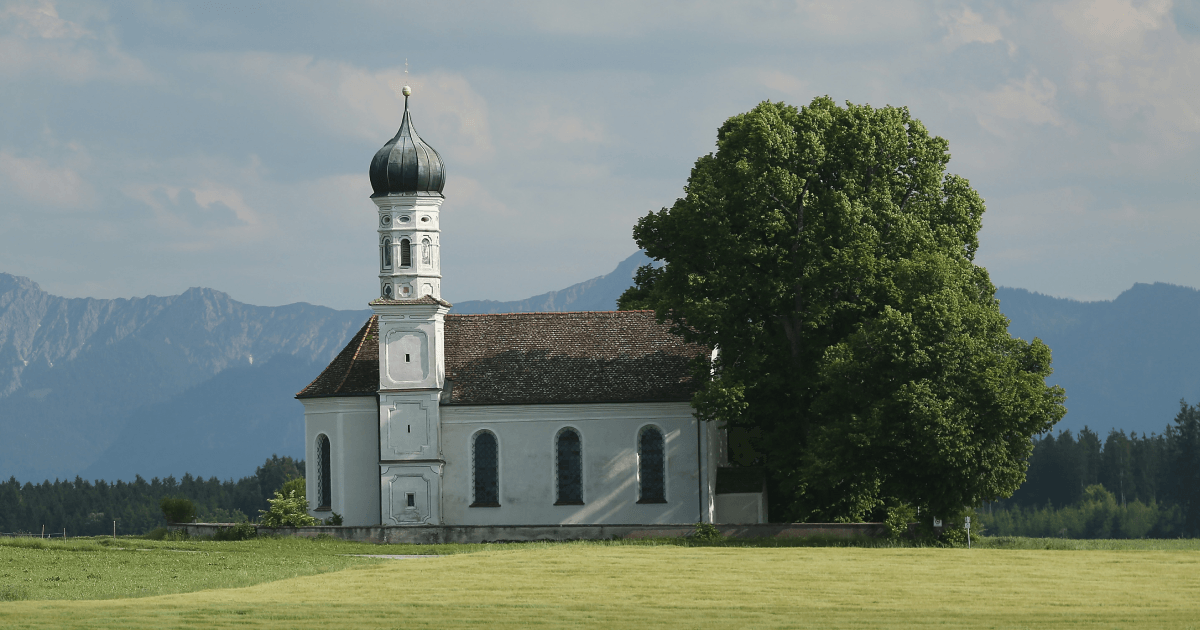
Bavaria is Germany’s most famous region. Its traditional dress of Lederhosen – literally “leather trousers” – and Oktoberfest beer festivities are known the world over, and taken by many foreigners as epitomising German-ness.

What many people do not realise, though, is just how Catholic the region is behind all the beer swilling and merriment. I encountered this when I hiked from Salzburg, just across the border in Austria, to the Bavarian capital of Munich, the route serving as a “decompression” mini-Camino following a much longer Camino.
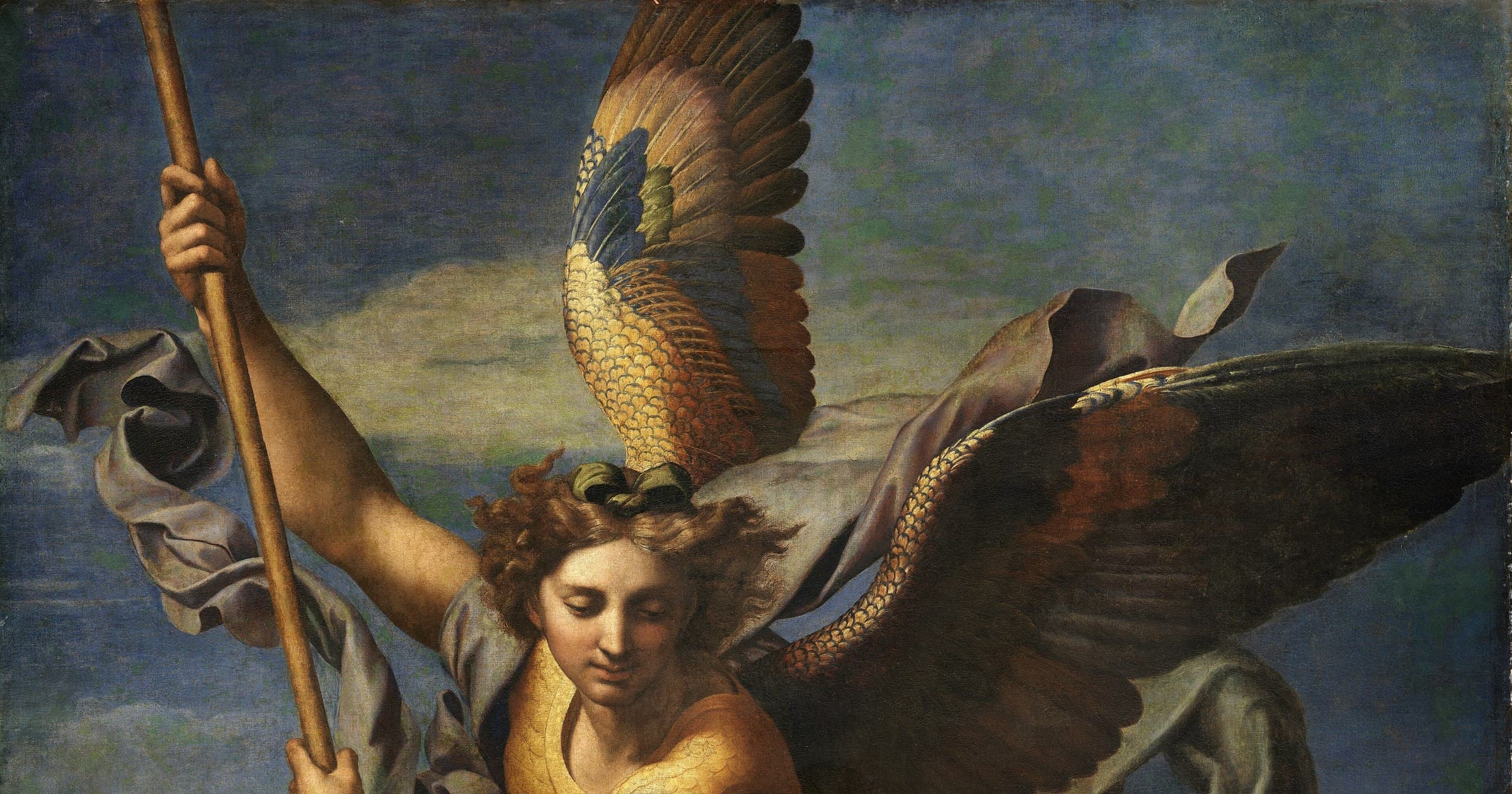
Each day I passed well-tended Catholic shrines, adorned with fresh flowers, dotted around the countryside beside the tracks I followed. Large crucifixes were conspicuous in restaurants and bars – not a small one above a doorway, but ones two feet tall in a prominent corner looking out over the surrounding dining area. Residential buildings often had murals painted on their exteriors depicting the Virgin Mary holding the Christ Child, or small alcoves set into the wall containing a statue of the Virgin or another saint.

Encountering all this, you get a distinct sense of the “chasm” that exists between living in this sort of Catholic-infused environment, replete with such images, and the secular landscape of today, full of images entirely at the other end of the spectrum – especially when it comes to the garish, brainwashing spectacle of modern advertising.

But because most people are subsumed in modern advertising day in and day out, they rapidly become assimilated and desensitised to it as a result of its repetitive – or attritional – effect, to the point where it all looks par for the course. On the Camino, however, you are removed from that barrage for significant periods as you pass through rural areas with conurbations no bigger than villages and small towns, where advertising is simpler, some of it even looking rather wholesome. Then, once you reach a big city and are suddenly bombarded with the full weight of modern advertising, the seismic shift makes you realise just how bonkers, daft, cynical and even disturbing much of it is. After a good break from television adverts, much of it on first encounter looks close to deranged, as does much of what passes for popular culture these days.

An encounter with a Welsh pilgrim during my longer Camino spoke to this depressing situation. We had both stopped for a break at a Spanish café where the speakers were playing some excellent hits from the 1980s. I spotted the Welsh pilgrim and her friend clearly enjoying the same song to which I was tapping my foot. I said something along the lines of, “They do not make them like that any more,” adding that so much of today’s pop music is asinine by comparison.

“It’s demonic, that’s what it is,” she said. “I won’t have anything to do with it, with the media or with any of that sort of stuff.”

It turned out that she was now an Orthodox Christian, having been raised Catholic. She explained that Orthodox priests urge their faithful to avoid popular culture and the media as much as possible; something akin to the “Benedict Option” of creating a Christianised space for yourself amid the cynical trappings of secular culture.

This idea of creating or finding a corresponding spiritual space – in my case, a Catholic one – was something I encountered elsewhere in Germany, primarily because I walked the Jakobsweg – Germany’s version of the Camino de Santiago – from Berlin to the French border. This meant I initially walked across former East Germany before crossing into former West Germany. While there is obviously no internal border running through Germany any more, I can tell you there certainly still is when it comes to the presence of Catholic churches.

Until I got within about 10 km of the former internal border between East and West Germany, almost all the churches I encountered after Berlin on the eastern side were Lutheran or Evangelical because of the history of the area, including the communist regime of the German Democratic Republic doing a thorough job of suppressing what Catholicism remained in the region after the Second World War. But as I closed in on the former internal border, the churches suddenly started to be – and to look – Catholic. It was noticeable, too, how a large wooden crucifix would typically stand at the edge of a village beside the road, accompanied by Marian shrines throughout the settlement.

Once I “crossed” the former border into former West Germany – where the present-day regional border runs between the states of Thüringen (formerly East) and Hesse (formerly West) – almost all the churches I came across afterwards were Catholic, while the large crucifixes and Marian statues started to multiply noticeably. It was such a stark volte-face, seemingly rooted in pure geography, and one that you could only notice through the act of long, steady walking across a landscape.

I am not disparaging former East Germany for its lack of Catholic churches – I thoroughly enjoyed my time crossing the region, which has much to commend it: a reassuringly slower pace of life, a greater sense of tradition, not to mention its lovely landscapes, such as the forest-strewn rolling hills of Thüringen. But I also cannot deny that once I entered “West Germany” and found myself among a land of Catholic churches, it was hard not to have a reassuring sense of being among “friendly forces”.

It is a sensation I have encountered when walking Caminos in other historically Catholic European countries, such as France and Spain. Despite what polls and statistics say about the rapid rate of secularisation in such places – and they certainly paint a bleak picture in terms of diminishing church attendance and the like – these countries still exude something intangible that “feels” Catholic. As the little Spanish phrasebook I used notes: “Spanish culture is imbued with Catholic traditions,” adding that the most common first names are still María and José (Mary and Joseph), and that the feast day of a person’s patron saint is celebrated as much as his or her birthday.

But I think it goes beyond the “culturally Catholic” terminology that you typically hear applied, to include a different moral and ethical persuasion – one which I fear the UK increasingly lacks. Just look at the legislation being pushed on abortion up to birth and assisted suicide, which I would describe as illustrating the absence of the “background Catholic effect”. At the risk of making a sweeping anthropological generalisation, this background influence often seems to result in people being friendlier and kinder, at least when dealing with a stranger passing through – which is the role I usually find myself occupying in these countries.

In the first half of the 20th century, this “background Catholic effect” in Germany was one of the few things that stood against Hitler’s rise to power. In The Shortest History of Germany, James Hawes notes that, when it comes to the deciding factor for voters in the 1932 German elections – in which the Nazis scored their highest vote in a genuinely free election, after which they became by far the largest single party in the Reichstag – “the only question really worth asking is whether they are Catholic or Protestant”.

Almost all the area that became East Germany voted more than 40 per cent for Hitler in July 1932, with many places giving him more than 50 per cent of the vote. “The comparison with the map of the Catholic population is stunning in its clarity, being almost exactly a reverse image,” Hawes writes, with Hitler in those areas consistently polling below 30 per cent. The pattern was repeated during the crucial election in 1933, which served as a referendum, Hawes explains, on whether Germans wanted Hitler to remain in power. Protestant Germany basically said yes; Catholic Germany basically said no.

“Even with the whole state apparatus behind him, even with [President] Hindenburg’s blessing and the great scare campaign after the Reichstag fire, even after a campaign tailored to make him seem as normal as possible, Hitler has failed to take the west and south of Germany,” Hawes writes.

A final coda to this theme concerns the Nazis’ initial efforts to kill disabled Germans, those judged lebensunwert (“life unworthy”), in the so-called T4 Aktion from late 1939 until August 1941, before the mass murder of European Jews began.

“This prequel to Auschwitz was stopped by the last vestige of western civilisation left in Nazi Germany,” Hawes writes. He cites comments from the head office of the SS on June 6, 1939, stating: “One can declare with certainty that the Lutheran part of the population has a better understanding of the struggle and mission of the SS than the Catholic part.”

This was followed on August 3, 1941, by Cardinal Clemens August von Galen of Münster speaking out “so openly and powerfully against the T4 Aktion that his sermon was later printed and dropped as propaganda on German cities by Britain’s RAF”.

“It was an act of extraordinary courage,” Hawes writes. “Galen’s bravery, and the Nazis’ awareness of popular feeling in Catholic areas, meant that the production-line mass killing of the handicapped was stopped in August 1941 [70,000 had been killed by then].”

Hawes concludes:

“T4 had shown the Nazis that, even in wartime, they couldn’t just start killing people wholesale within Germany. The SS needed somewhere no turbulent priests would interfere, where their work could be kept really secret, where European civilisation had already ceased to exist.
“By late 1941, with Poland and swathes of western Russia in their hands, they had just the place.”

Cue the Holocaust.

The above account from Hawes should be considered in relation to the role of the Church today and what it has said against secular efforts to introduce assisted suicide, abortion up to birth and a whole raft of eugenic practices into the UK – arguably the world’s most strikingly former Catholic land.

James Jeffrey is a former British Army officer. He is a writer, editor and Camino guide.

Continue reading with a free account

Create a free account to read up to five articles each month
Create free account

You have # free articles remaining this month.

Subscribe to get unlimited access.
Sign up

subscribe to the catholic herald today

Our best content is exclusively available to our subscribers. Subscribe today and gain instant access to expert analysis, in-depth articles, and thought-provoking insights—anytime, anywhere. Don’t miss out on the conversations that matter most.
Subscribe