

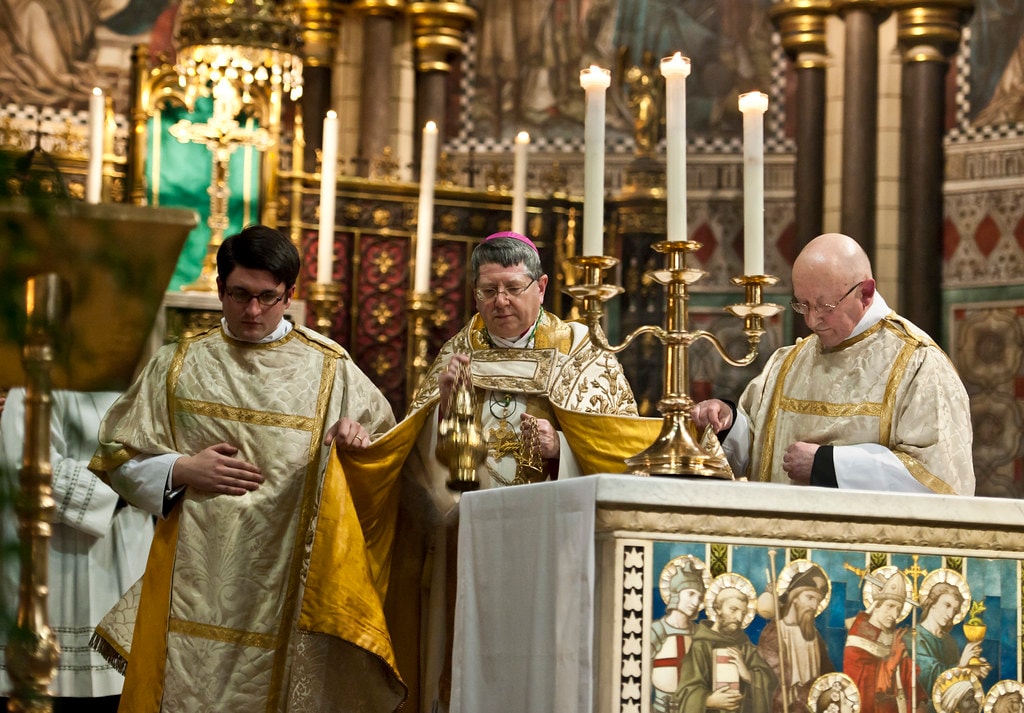
I am a priest of the Personal Ordinariate of Our Lady of Walsingham, having been part of the first group of former Anglican clergy to be ordained in 2012. Since then I have received great blessings through this wonderful journey into the full communion of the Catholic Church. I grew up and later ministered in parishes in the Church of England which adopted wholeheartedly the Novus Ordo of the Roman Rite and tried enthusiastically, in all things liturgical, to be as alike as possible to the parishes of modern Catholicism. This made it very easy to make the transition into the Catholic Church but resulted in me finding the distinctive liturgy of the ordinariate alien. However, this Lent, following several suggestions from parishioners, I began celebrating one Mass a week using Divine Worship, the ordinariate’s Missal. To my surprise, I have found that it has brought numerous benefits to myself and those who have attended, and has become something which we have continued to celebrate faithfully each week. There are several options to choose from when celebrating Mass according to Divine Worship. We have settled for a celebration which feels very much like the Extraordinary Form in English. Mass begins reverently with the Prayers at the Foot of the Altar (Psalm 42, also called the Judica me) and the Confiteor, said first by the priest and then the people. As the priest ascends to the altar, the Collect for Purity, found in the Sarum Missal, is said:
12:00 AM
What I learned from celebrating Mass in the Ordinariate Use
i am a priest of the personal ordinariate of our lady of walsingham, having been part of the first group of former anglican clergy to be ord...
Fr Matthew Pittam

3 min read



Already a subscriber? Sign in
5freearticles every month
Continue reading with a free account. No card needed.
- Five free articles every thirty days, on any device you sign in on
- The Catholic Herald newsletter, every morning
- Subscribe whenever you like for everything: every article and the magazine

subscribe to the catholic herald today
Our best content is exclusively available to our subscribers. Subscribe today and gain instant access to expert analysis, in-depth articles, and thought-provoking insights—anytime, anywhere. Don’t miss out on the conversations that matter most.
Subscribe



