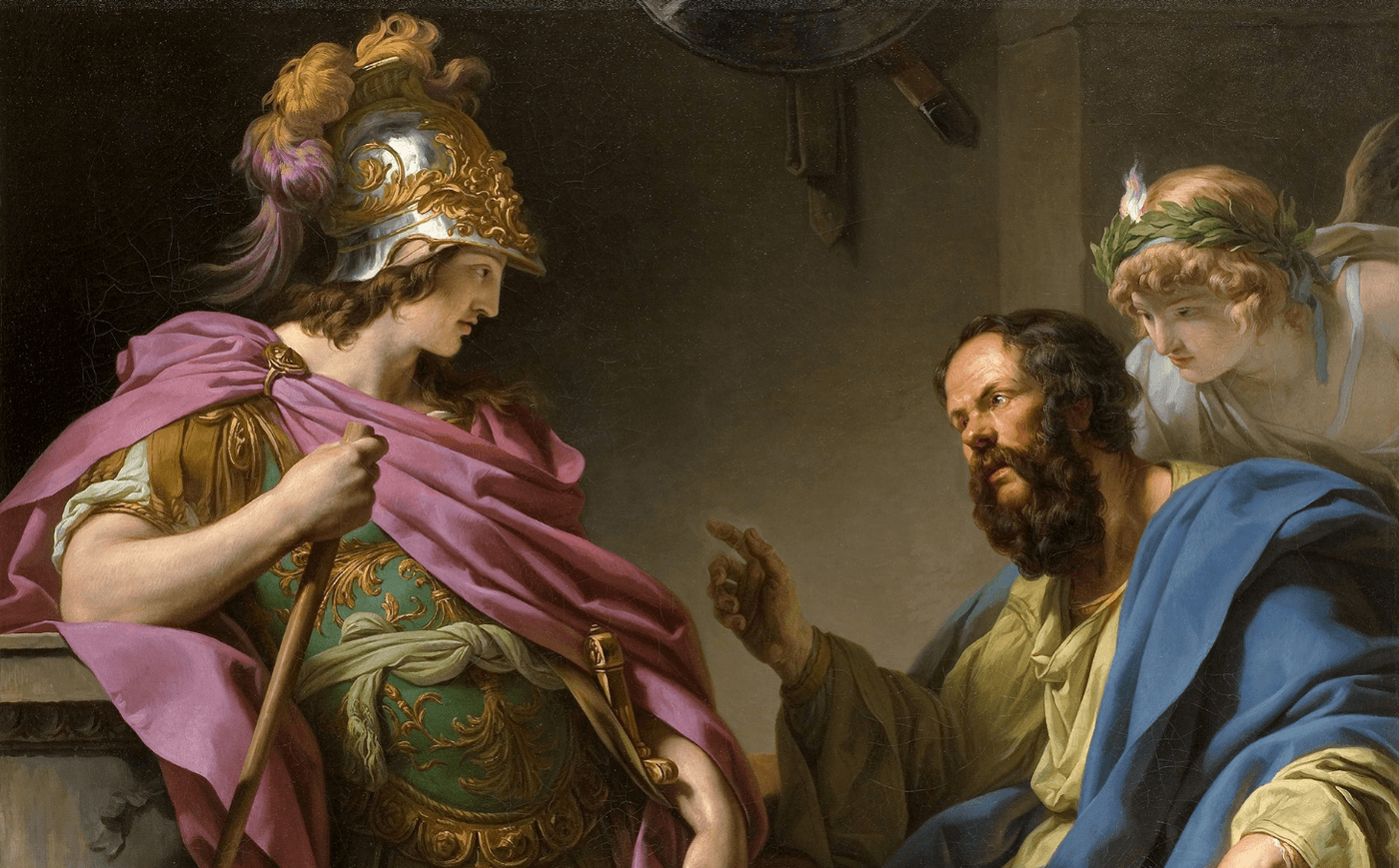




Before he was elected pope, Joseph Ratzinger spoke of Socrates as “in a certain respect the prophet of Jesus Christ”. He saw him as a philosopher who was concerned with the fundamental questions of whether man alone sets standards for himself or whether we can be confident of man’s capacity for objective truth. Socrates never wrote down his conclusions because he never arrived at one: he could only move towards truth through critically challenging his own ignorance.
Socrates tells the story of how the Oracle of Delphi said that there was no man wiser than him. This seemed so unlikely that he felt it necessary to test it by discussions with politicians, savants and craftsmen. He found that they knew many things which, on examination, turned out to be untrue. He concluded that his wisdom lay, by contrast, in not thinking that he knew things when he did not.