


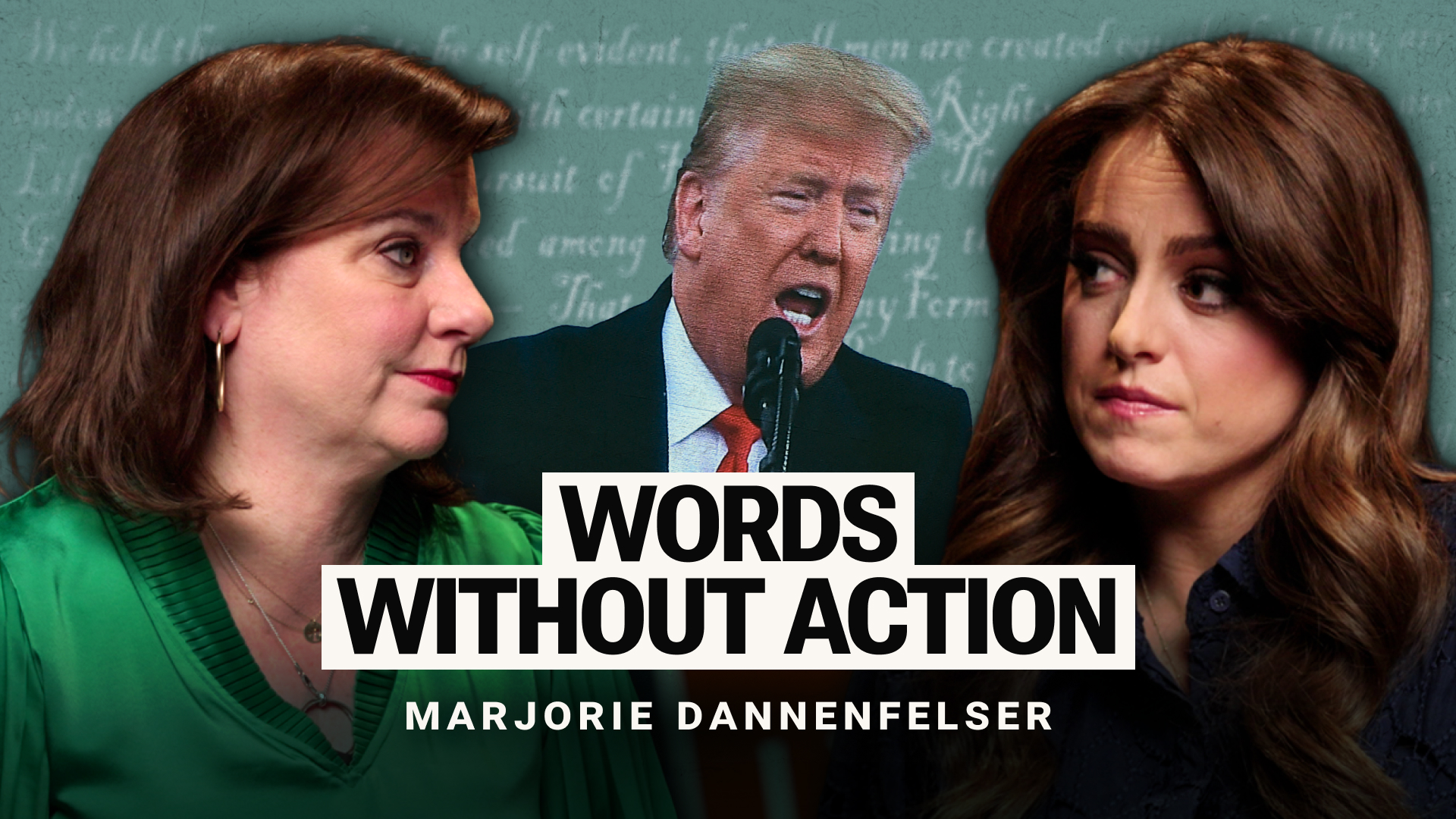


In this episode of In Conversation With, Mary Margaret Olohan sits down with Marjorie Dannenfelser, president of Susan B. Anthony Pro-Life America, to take stock of the pro-life movement at what Dannenfelser describes as a delicate and momentous place in history. She is not pessimistic, but she is unsparing. The movement fought for fifty years to overturn Roe v Wade, achieved it, and now watches as the party that made it possible goes quiet. Her argument, made consistently across the conversation, is that silence is not prudence. It is a political miscalculation that will cost the movement the very victories it has worked to consolidate.
The conversation's central exhibit is the abortion pill. Since Dobbs, abortion rates have not fallen; they have risen. Dannenfelser is direct about this, and she is equally direct about why. The drugs are flooding every state, including the twenty that passed strong pro-life protections immediately after the decision. They are unregulated, unmonitored and available to anyone online without a doctor's visit, without a sonogram, without any knowledge of gestational age or contraindications. The in-person doctor visit requirement was removed by the Biden administration during Covid as a temporary measure; it was never restored, and the Trump administration has declined to restore it, despite the fact that doing so requires no legislation and no political negotiation. The reason, Dannenfelser says, is midterms. The word abortion has been designated toxic, and so the administration that opened the door has, in her account, solidly closed it.
She does not spare the Justice Department. A group of pro-life attorneys general, including Louisiana's Liz Muriel, brought suits against the FDA over the pill's distribution. The DOJ dismissed them, siding with the FDA. This is not mere inaction; it is an act against the movement's own legal infrastructure. Gavin Newsom, she notes with some bitterness, has been more energetic in using executive power to shape abortion policy in Louisiana than the administration that ran on a pro-life platform.
On the political argument that abortion is a liability for Republicans, Dannenfelser's response is empirical and pointed. The base for any Republican candidate includes the pro-life movement. When that movement moves from high intensity to low intensity because it perceives no action from its allies, votes are lost. Not the whole bloc, but the margin: the 1 to 2 per cent of voters who, when they register that the abortion rate has spiked and their leaders have nothing to say, simply do not turn out. In close midterm races, that is the election. The rule, she says, is elementary: do not mess with your base.
The conversation turns to 2028, and here Dannenfelser is characteristically specific. She is already in Iowa and South Carolina, building the framework through which primary and caucus voters will extract commitments from candidates on abortion drugs and national standards. She has doubts that the current administration will move before midterms. After midterms, a presidential election follows immediately, and the calculus shifts again. Her hope is that the competition of a contested primary, iron sharpening iron, will produce candidates who find their voice on this issue in the way that only real consequence, not theoretical debate, tends to produce. She speaks warmly of Marco Rubio as someone who can hold the legal, moral and strategic dimensions of the argument together simultaneously; of JD Vance as one of the most articulate people she has encountered on life, constrained at present by loyalty and proximity to a president who has chosen not to act; of Josh Hawley as someone who carries himself like a candidate whether or not he is one.
Her sharpest observation concerns the drift in Republican talking points. Where abortion was once the cultural issue the party was prepared to defend, gender ideology has taken its place. This is, in her view, a purely political calculation, and a wrongheaded one. The pro-life movement is not going away; it is founded on something too essential to dissolve. But if national leaders continue to decline the argument, if when accused of misogyny and indifference to women's lives the response is simply to change the subject, the accusation sticks. The Handmaid's Tale imagery does not stop because Republicans stop talking. It fills the silence.
The episode ends on the question of what Catholics and Christians who care about this issue should actually do. Dannenfelser's answer is practical and unglamorous: pray, because the movement would not have arrived where it is without the prayers of generations; make elected officials uncomfortable, because it takes remarkably few constituent contacts to register as a concern; and demand audibility. Not perfection, not the exactly right position, but a willingness to have the conversation rather than avoid it. An elected official who refuses to engage, she argues, is not playing it safe. They are handing their opponents the field.


