

From the migrant influx in Ceuta to attacks on churches in France and developments in the US, here are the major Catholic stories from the week.
Migrants pour into Ceuta
This week, Europe reeled from the shock of Ceuta. Millions of people online watched footage of more than 60,000 migrants pouring into the Spanish exclave. The reaction was particularly pronounced in Ceuta, where the number of migrants who arrived was equivalent to around 70 per cent of the city’s population of 84,000.
Following Sunday’s Angelus, Pope Leo XIV said he was following the situation with concern and asked for the intercession of Our Lady of Africa that “solutions of peace, stability, and justice may be found”.
The Diocese of Ceuta responded by dedicating its Sunday collections to a migrant centre through its Diocesan Delegation for Migration.
Not everyone took the same view. Archbishop Luis Argüello of Valladolid, president of the Spanish Bishops’ Conference, said: “Biopolitics is key in the current world power structure. Life is played with, and people – their dreams, hunger, sexuality, and data – are used in favour of profit and power. Migrations are part of this strategy. The Ceuta invasion is a test. Demography is a weapon.”
Archbishop Carlo Maria Viganò went further, describing the incursion as part of what he called a deliberate plan of ethnic replacement. He also accused the Church – or what he described as the “synodal hierarchy” – of complicity.
Cardinal Sarah calls for return to traditional Mass
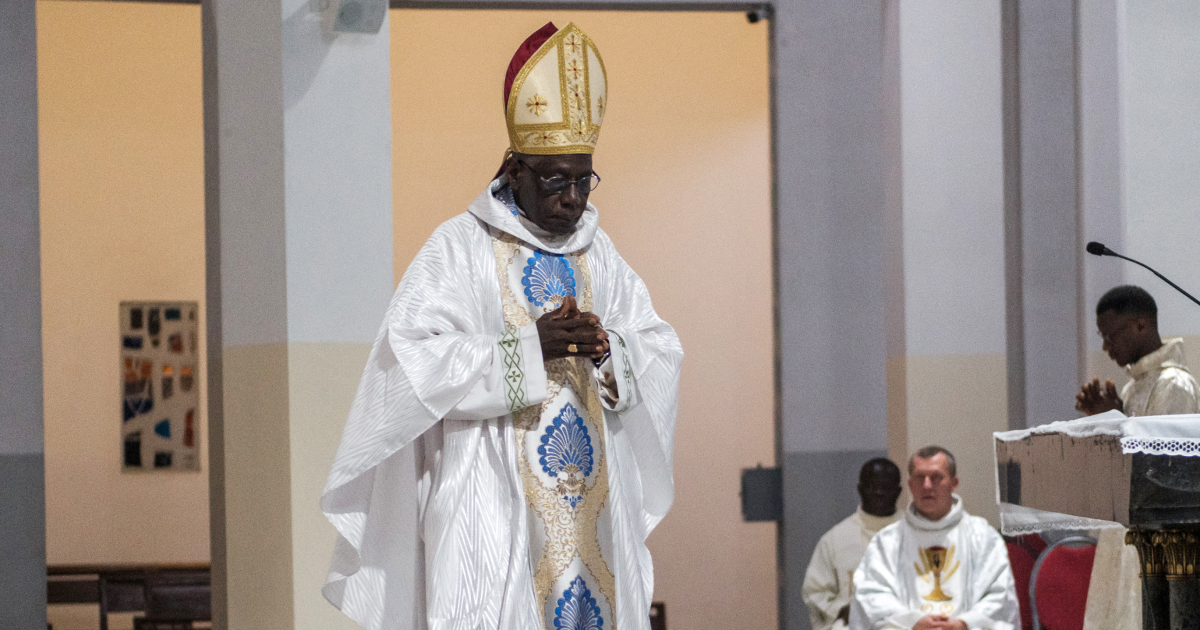
Cardinal Robert Sarah has made a fresh appeal for Pope Leo XIV to abandon restrictions on the traditional Mass and return to the approach of Pope Benedict XVI.
The Guinean cardinal is among a vocal group within the College of Cardinals who have consistently called, following Traditionis custodes, for the restrictions placed on the traditional Latin Mass to be lifted.
“It is a tragedy – indeed, a true sin – that on an essential issue such as the liturgy there is a sort of war,” Cardinal Sarah said.
The Catholic liturgy “is the source of the Church’s communion, and it is unthinkable that on liturgical matters – or rather, ritual matters – there should be such a clash and such fierce opposition”, he said.
Churches vandalised in France
Three churches within the Archdiocese of Tours in France were vandalised, with the Blessed Sacrament desecrated.
The churches were looted and sacred objects were defaced. Sacred vessels were damaged and tabernacles were forced open before the Blessed Sacrament was desecrated.
The attacks come as the Church in France continues to suffer arson and vandalism against its buildings. Four churches within the Archdiocese of Tours were previously targeted in November 2024.
In December 2025, the Church of St Marie-Madeleine in the Diocese of Marseille was attacked. The side of the church was vandalised with graffiti reading: “The only church that illuminates is the one that burns.”
A study published that month by the Observatory of Religious Heritage stated that France loses one religious building each week, with two-thirds of fires showing signs of deliberate arson.
A May 2026 report by the French Interior Ministry stated that anti-Christian acts have been increasing since 2010, with the majority targeting Catholicism.
Archbishop details humanitarian cost of war in Kyiv
Archbishop Visvaldas Kulbokas, Apostolic Nuncio to Ukraine, detailed the humanitarian cost of the war in Kyiv as he expressed gratitude to Pope Leo for his continued commitment to peace.
He spoke on August 5, the same day as another Russian missile strike on the city that killed 17 people and injured 44.
The archbishop noted that there were at least 10 ballistic missile attacks on Kyiv in July, an average of one every three days.
He said that between 45,000 and 50,000 people often spend the night in the city’s metro stations, which are used to protect civilians from attacks.
The bombings cause road and rail closures that disrupt daily life, he said, while areas must be regularly cleared of unexploded ordnance.
The missile fuel and burning buildings also leave a lingering smell that remains in the air “for days, sometimes weeks, and that affects everyone's life. Unfortunately, this reality has become, so to speak, normal”.
Florida Catholic schools warned over vaccine exemptions
Stateside, Florida’s attorney general, who is Catholic, warned the state’s Catholic schools that they could lose access to state funds and scholarships if they do not accept religious exemptions from vaccine requirements.
Florida, unlike most states, has a robust school-choice programme that enables parents to use state-funded programmes to pay tuition at private schools.
US courts hear religious freedom cases
There were several court developments in the United States this week.
In Michigan, therapists will no longer risk losing their licences or facing hefty fines for engaging in talk therapy with patients with gender dysphoria or who express discomfort with their biological sex.
Previously, under Michigan law, counselling a minor with gender dysphoria about being comfortable with their biological sex was deemed “conversion therapy” and banned.
Meanwhile, in Texas, a group of mothers sued the state over a law requiring the Ten Commandments to be displayed prominently in public school classrooms.
The three mothers, who have a variety of religious beliefs, challenged the law not on free speech grounds but under two Texas laws.
They argue that their rights as parents to raise their children according to the religion of their choice would be violated and that the government is infringing on their religious freedom.
Blanche pledges action on ‘mail-order’ abortion pills
Acting Attorney General Todd Blanche spoke to a group of faith leaders last week, and a recording of the conversation was subsequently shared by the organising group.
During the call, Blanche said he hoped to crack down on “mail-order” abortions, referring to people circumventing state abortion bans by ordering abortion medication online.
Blanche also pledged to make the Dobbs ruling “permanent”, although it is not entirely clear what he meant by the statement.
Catholic church vandalised in New York
And in New York City, a Catholic church was vandalised for the fourth time in just over two years.
This time, a man hopped a fence, pulled a hammer from his pocket and broke a statue of the Virgin Mary.
The NYPD’s Hate Crime Task Force is investigating the latest act of vandalism.