
February 12, 2026

Why we kneel during the Creed at Christmas

Fr John Zuhlsdorf
More
Related
Min read
share
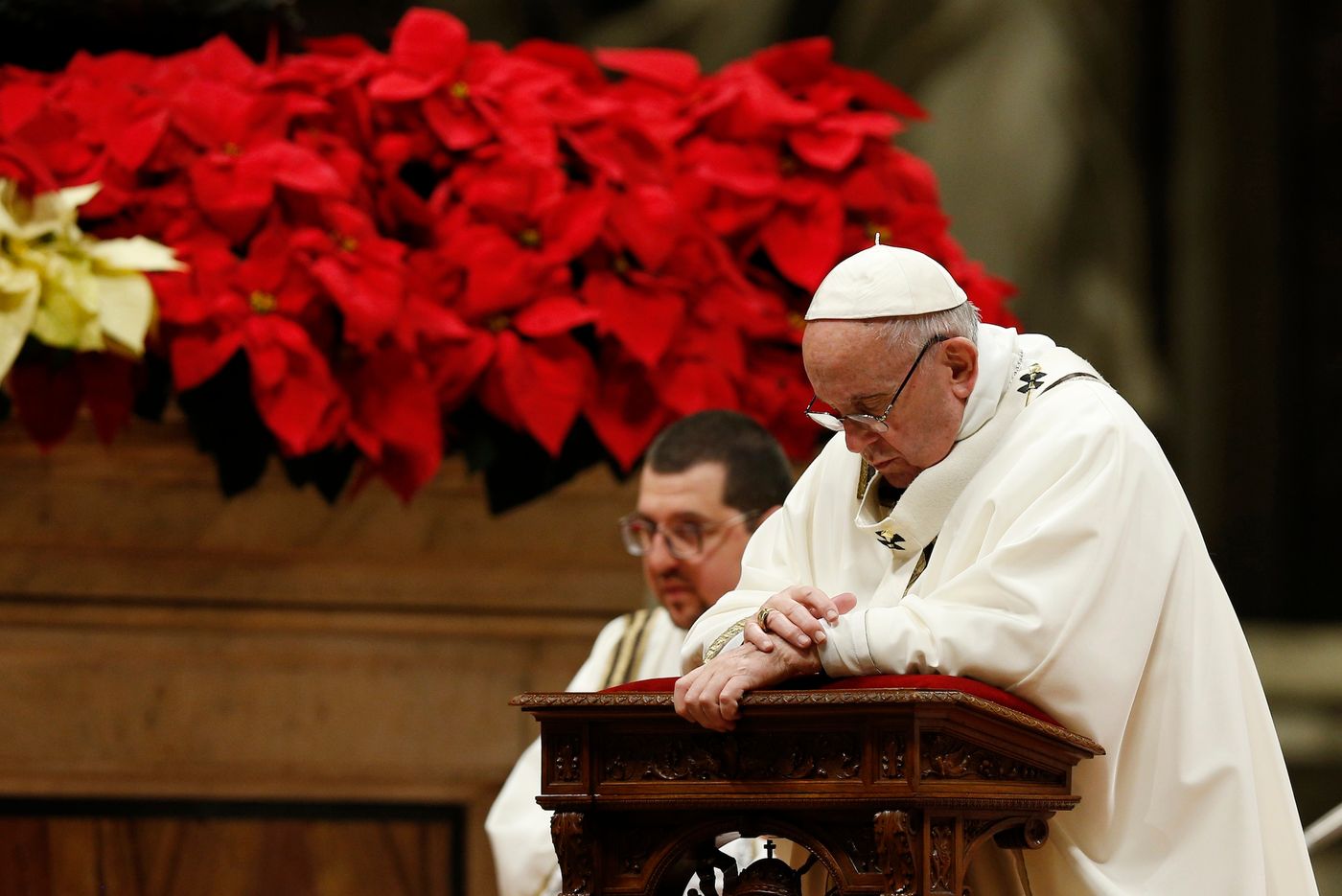
The Collect for the Fourth Sunday of Advent in the Novus Ordo is also the Postcommunion for the Feast of the Annunciation (March 25) in the Extraordinary Form of the Roman Rite. The Annunciation was the moment of the Incarnation of our Lord.  Therefore, during Mass in the Ordinary Form on both Annunciation and Christmas, during the Creed of Holy Mass we bend our knees instead of merely bowing at the words “Et incarnatus est…” Alas, only on those two days do we kneel during the Creed with the Ordinary Form. If you recite the Angelus (which has an indulgence), you know today’s Collect. It was in the 8th-century Gelasian Sacramentary.

Gratiam tuam, quaesumus Domine, mentibus nostris infunde, ut qui, Angelo nuntiante, Christi Filii tui incarnationem cognovimus, per passionem eius et crucem  ad resurrectionis gloriam perducamur. 

The last lines have wonderful alliteration and a snappy final cadence (glóriam perducámur). Collects are often little jewels. That “Angelo nuntiante” is an ablative absolute. By its “present” tense it is contemporary with the time of the past tense in cognovimus. Thus, in the very moment the Angel was heralding the good news, we (collectively in the shepherds) knew the truth of the message. They rushed to the Coming of the Lord to see the Word made flesh. The current ICEL translation: “Pour forth, we beseech you, O Lord, your grace into our hearts, that we, to whom the Incarnation of Christ your Son was made known by the message of an Angel, may by his Passion and Cross be brought to the glory of his Resurrection.” Speaking of seeing, “seeing is believing”, they say. But believing makes us want to see. “Crede ut intellegas! Believe that you may understand!” is a common theme for St Augustine of Hippo (d 430). Today many people pit reason again faith, intellect against authority as if they were mutually exclusive. In all the deeper questions of human existence both faith and authority are indispensable for a fuller rational, intellectual apprehension. Our Blessed Mother, so closely associated with today’s Collect, received the message of the Angel. She believed. She pondered it in her heart. She understood. She pro-claimed her Magnificat. She brought our Saviour into the world. The Angel heralded with authority and the shepherds believed. They pondered while rushing to Bethlehem. They saw the Infant and understood. They knelt. They worshipped. Believe, kneel, and worship anew. Merry Christmas! Visit fatherzonline.com 
The Collect for the Fourth Sunday of Advent in the Novus Ordo is also the Postcommunion for the Feast of the Annunciation (March 25) in the Extraordinary Form of the Roman Rite. The Annunciation was the moment of the Incarnation of our Lord.  Therefore, during Mass in the Ordinary Form on both Annunciation and Christmas, during the Creed of Holy Mass we bend our knees instead of merely bowing at the words “Et incarnatus est…” Alas, only on those two days do we kneel during the Creed with the Ordinary Form. If you recite the Angelus (which has an indulgence), you know today’s Collect. It was in the 8th-century Gelasian Sacramentary.

Gratiam tuam, quaesumus Domine, mentibus nostris infunde, ut qui, Angelo nuntiante, Christi Filii tui incarnationem cognovimus, per passionem eius et crucem  ad resurrectionis gloriam perducamur. 

The last lines have wonderful alliteration and a snappy final cadence (glóriam perducámur). Collects are often little jewels. That “Angelo nuntiante” is an ablative absolute. By its “present” tense it is contemporary with the time of the past tense in cognovimus. Thus, in the very moment the Angel was heralding the good news, we (collectively in the shepherds) knew the truth of the message. They rushed to the Coming of the Lord to see the Word made flesh. The current ICEL translation: “Pour forth, we beseech you, O Lord, your grace into our hearts, that we, to whom the Incarnation of Christ your Son was made known by the message of an Angel, may by his Passion and Cross be brought to the glory of his Resurrection.” Speaking of seeing, “seeing is believing”, they say. But believing makes us want to see. “Crede ut intellegas! Believe that you may understand!” is a common theme for St Augustine of Hippo (d 430). Today many people pit reason again faith, intellect against authority as if they were mutually exclusive. In all the deeper questions of human existence both faith and authority are indispensable for a fuller rational, intellectual apprehension. Our Blessed Mother, so closely associated with today’s Collect, received the message of the Angel. She believed. She pondered it in her heart. She understood. She pro-claimed her Magnificat. She brought our Saviour into the world. The Angel heralded with authority and the shepherds believed. They pondered while rushing to Bethlehem. They saw the Infant and understood. They knelt. They worshipped. Believe, kneel, and worship anew. Merry Christmas! Visit fatherzonline.com 

subscribe to
the catholic herald

Continue reading your article with a subscription.
Read 5 articles with our free plan.
Subscribe

subscribe to the catholic herald today

Our best content is exclusively available to our subscribers. Subscribe today and gain instant access to expert analysis, in-depth articles, and thought-provoking insights—anytime, anywhere. Don’t miss out on the conversations that matter most.
Subscribe