
February 12, 2026

Word This Week

Bishop David McGough
More
No items found.
Related
Min read
share

Fifth Sunday of Lent
Ez 37:12-14; Rom 8: 8-11; Jn 11:1-45 (year a)

‘I am going now to open your graves, my people, and lead you back to the soil of Israel. And I shall put my spirit in you, and you will live.” These words, spoken by the prophet Ezekiel, were addressed to Israel’s broken exiles. Their lives had ended with the destruction of their homeland. They had become as those living in the grave, whose bones had dried, whose hope was gone.

Lent summons us to the repentance that acknowledges that when we sin something dies within us. Love dies. We become strangers to God, to each other, and even to ourselves. Such is the death of sin. Sinful choices become the tomb that holds us captive.
Ezekiel’s vision of a valley of dry bones, called to life by the breath of God, was spoken to a people who felt themselves abandoned by God and beyond hope. They are spoken to every sinner who feels that the past has put him, or her, beyond the reach of God’s healing love.

St Paul spoke words of hope to the inner death that sin brings. “Though your body may be dead it is because of sin, but if Christ is in you, then your spirit is life itself.” This is the hope that leads us from sin and to the life of Easter.

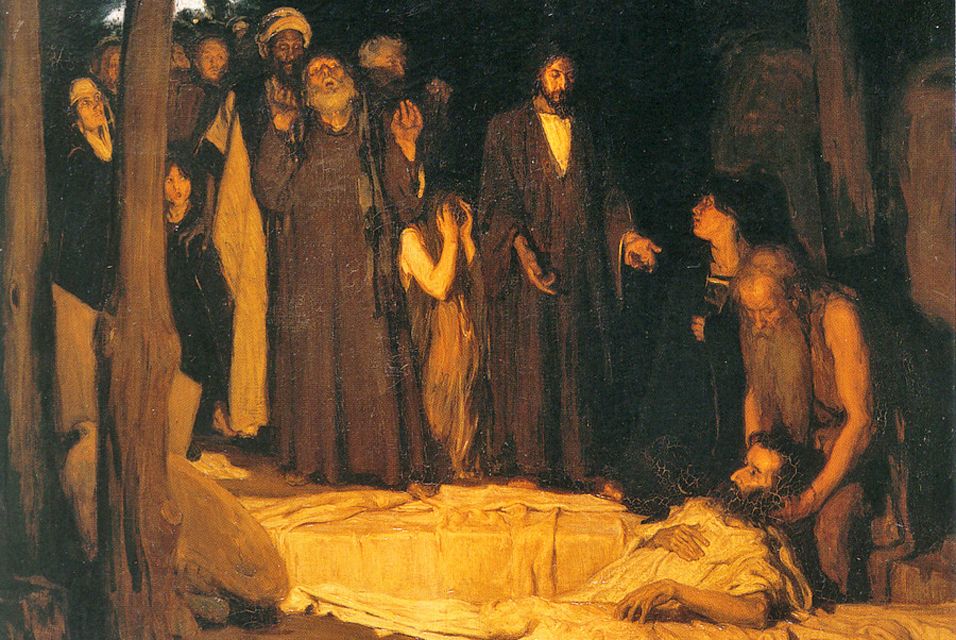
John’s account of the raising of Lazarus does indeed describe a close friend raised to life, but it is much more. It is the promise that we, who have died through sin, are called to new life in Christ. This promise is not simply for the end of time. It is for every present moment in which the sinner entrusts himself to Christ.

The sinner has only to respond to the question addressed to Mary, the sister of the dead Lazarus, and he shall live. “I am the resurrection and the life. If anyone believes in me, even though he dies he will live. Do you believe this?”

As Christ summoned Lazarus from the tomb, so he summons the sinner from the burden of past sin. As Jesus commanded that Lazarus be set free from death’s binding cloths, so he frees the sinner to live in the joy of his presence: “Unbind him, let him go free.”

The Lord does indeed heed the prayer of every sinner calling from the depths.

Fifth Sunday of Lent
Ez 37:12-14; Rom 8: 8-11; Jn 11:1-45 (year a)

‘I am going now to open your graves, my people, and lead you back to the soil of Israel. And I shall put my spirit in you, and you will live.” These words, spoken by the prophet Ezekiel, were addressed to Israel’s broken exiles. Their lives had ended with the destruction of their homeland. They had become as those living in the grave, whose bones had dried, whose hope was gone.

Lent summons us to the repentance that acknowledges that when we sin something dies within us. Love dies. We become strangers to God, to each other, and even to ourselves. Such is the death of sin. Sinful choices become the tomb that holds us captive.

Ezekiel’s vision of a valley of dry bones, called to life by the breath of God, was spoken to a people who felt themselves abandoned by God and beyond hope. They are spoken to every sinner who feels that the past has put him, or her, beyond the reach of God’s healing love.

St Paul spoke words of hope to the inner death that sin brings. “Though your body may be dead it is because of sin, but if Christ is in you, then your spirit is life itself.” This is the hope that leads us from sin and to the life of Easter.

John’s account of the raising of Lazarus does indeed describe a close friend raised to life, but it is much more. It is the promise that we, who have died through sin, are called to new life in Christ. This promise is not simply for the end of time. It is for every present moment in which the sinner entrusts himself to Christ.

The sinner has only to respond to the question addressed to Mary, the sister of the dead Lazarus, and he shall live. “I am the resurrection and the life. If anyone believes in me, even though he dies he will live. Do you believe this?”

As Christ summoned Lazarus from the tomb, so he summons the sinner from the burden of past sin. As Jesus commanded that Lazarus be set free from death’s binding cloths, so he frees the sinner to live in the joy of his presence: “Unbind him, let him go free.”

The Lord does indeed heed the prayer of every sinner calling from the depths.

subscribe to
the catholic herald

Continue reading your article with a subscription.
Read 5 articles with our free plan.
Subscribe

subscribe to the catholic herald today

Our best content is exclusively available to our subscribers. Subscribe today and gain instant access to expert analysis, in-depth articles, and thought-provoking insights—anytime, anywhere. Don’t miss out on the conversations that matter most.
Subscribe