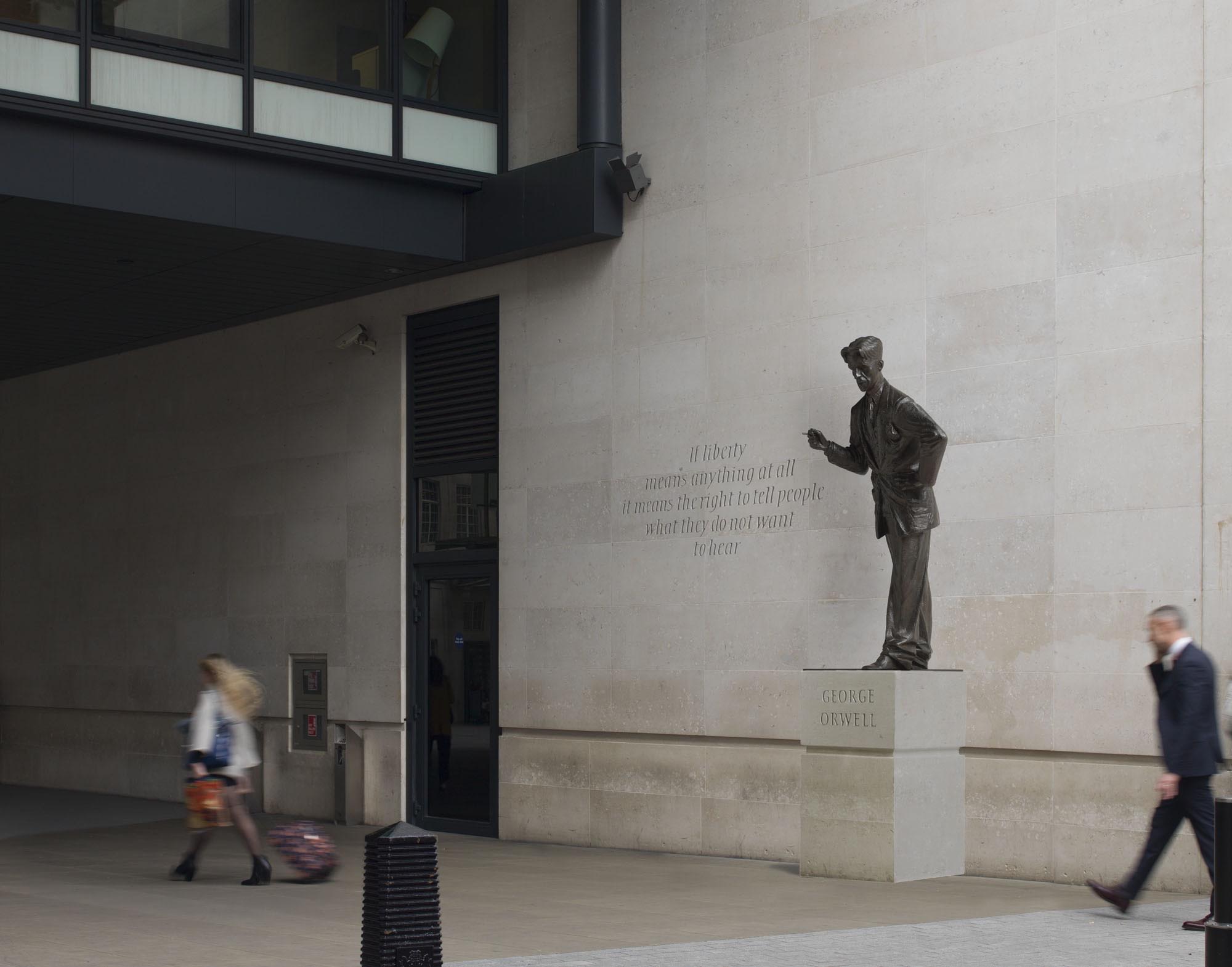


Later this year, a statue of George Orwell will stand outside BBC New Broadcasting House, cigarette in hand, looking quizzically at passersby. In the Oxfordshire studio of the sculptor Martin Jennings, the tall, thin figure of Orwell is gradually taking shape, his maquette instantly recognisable as the writer who did so much to shape our thinking on politics and political language. He is known as “the patron saint of political journalism”.
I wonder, as I peer down at Orwell’s lined, intelligent face, what he would make of us all in 2017. His struggles during the Spanish Civil War are well known, as are his writings on totalitarianism and the uses of populism and nationalism; his struggles with religion less so, though the last book that visitors to his hospital bed saw him reading before he died was Inferno, the first part of Dante’s Divine Comedy.