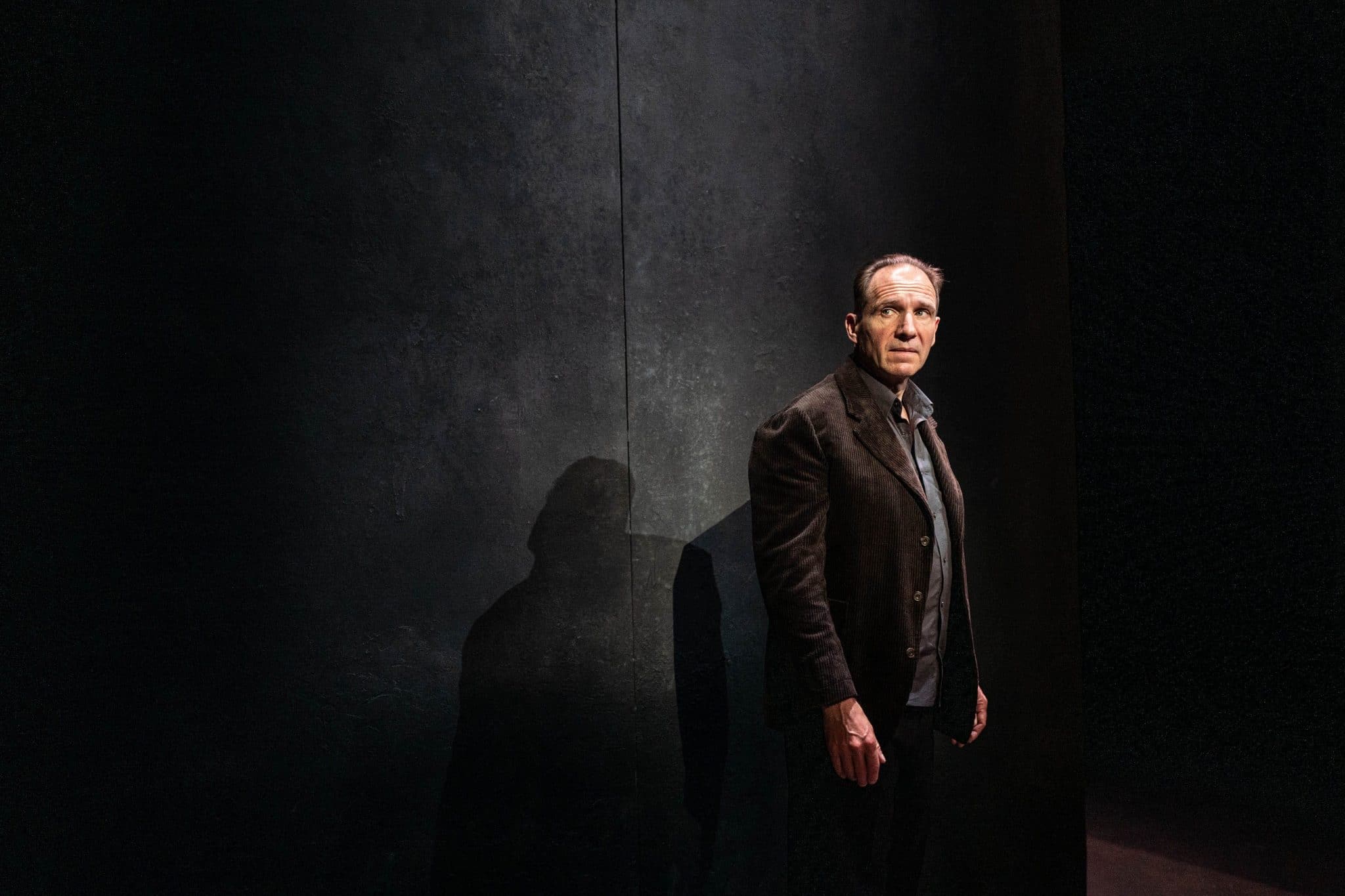



Ralph Fiennes’ staging of TS Eliot’s Four Quartets at the Harold Pinter Theatre in London – which ended its run just before Christmas – is a musing on infinite time and how time is redemptive. Eliot thought of it as one meditative poem, not four separate poems, so staging it without an interval (it lasts over an hour) works memorably. That many in the audience wore masks is a reminder of the ubiquity of illness – not just physical illness but the moral decay of the 20th century.
Fiennes had brought to us a gift. On a slimmed down stage containing two chairs, a desk, a lamp and two grey panels, Fiennes, in a brown corduroy jacket, dark trousers and a button-down chemise, dances the beat of the poetic abstractions of time, and explains “the eternal” has nothing to do with “us” or “our feelings”. “Attached to the soil”, “Earth-feet”, “loam feet” – all walk through the rose garden before the feet go “under” the earth. The higher meaning here not being a limited corporeal reality, but rather it has a transitory, elative and expansive discourse on the unknowable perpetual time, “a kind of valediction, faded on the blowing of the horn”.