

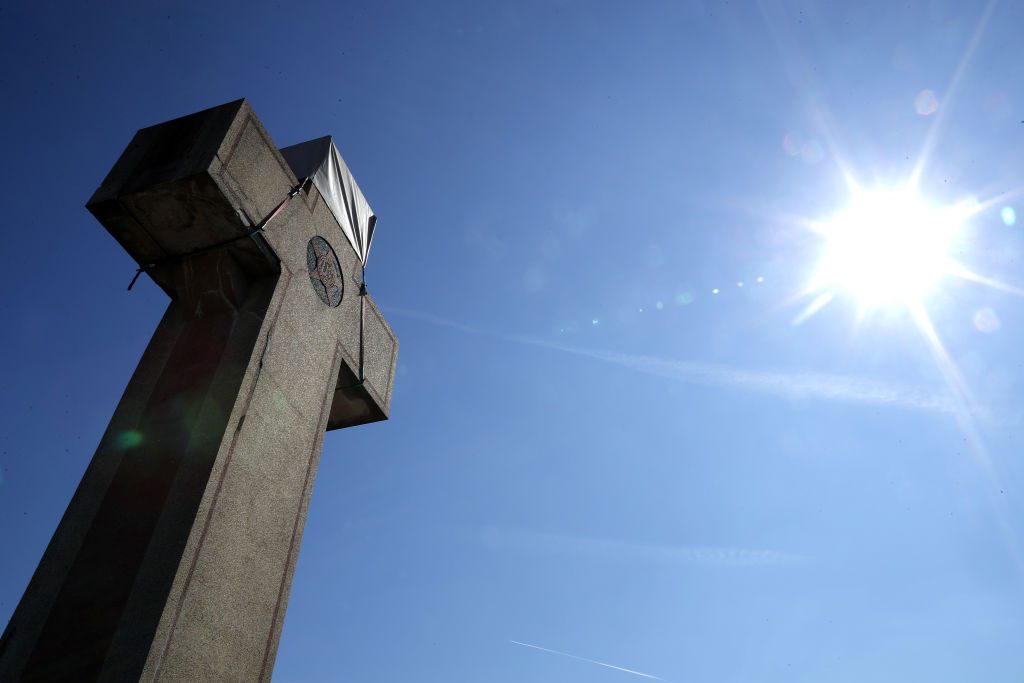
“The cross is undoubtedly a Christian symbol,” Justice Alito remarked in his lead opinion defending the 32-foot-tall Latin Cross, erected in 1925 in Bladensburg, Maryland in memory of 49 area soldiers. Just imagine their world, only a hundred years ago. Americans sacrificed their lives for the common good of their country, and so their friends and fellow citizens erected a Cross, the highest monument of sacrifice in history. They gave those 49 men, black and white, none of them segregated in sacrifice, service, or honor, the most elevated meaning they knew. The cross is at the very heart of Christianity. The cross is a monument to how Christians face suffering — we pray that in uniting our suffering to His, we too may join Him in glory. So it must have been one hundred years ago, “undoubtedly a Christian symbol.” Today it is a stumbling block, once again. But by a 7-2 vote, the Supreme Court of the United States has ruled that it is constitutional that it should stand. The question of why the Bladensburg Cross should stand is inseparable from the question of whether it violates the Establishment Clause which prohibits the Federal government from establishing an official religion, or from favoring one religion over others. So the Justices had to wrestle with the question of whether the Cross privileges Christianity — and they found a number of ways to do this without denying the very obvious fact that it does. Justice Alito remarked in the first section that a Christian symbol can accrue additional symbolic meanings which are not in themselves religious. Alito writes:
1:00 AM
After the Peace Cross ruling, is religious freedom more secure?
C C Pecknold

5 min read



Already a subscriber? Sign in
5freearticles every month
Continue reading with a free account. No card needed.
- Five free articles every thirty days, on any device you sign in on
- The Catholic Herald newsletter, every morning
- Subscribe whenever you like for everything: every article and the magazine


subscribe to the catholic herald today
Our best content is exclusively available to our subscribers. Subscribe today and gain instant access to expert analysis, in-depth articles, and thought-provoking insights—anytime, anywhere. Don’t miss out on the conversations that matter most.
Subscribe



