February 4, 2026
February 4, 2026

Against lazy Catholicism: Discerning truth from error

Min read
share

There’s a famous skit from the Irish sitcom Father Ted where, after hearing that his priest was caught making comedic caricatures of Asians, a parishioner greets him over a dry stone wall.

“I hear you’re a racist now, Father,” he yells. “Should we all be racists now? What’s the official line the Church’s taking on this?”

The clip ridicules something which, actually, today, ought to be taken seriously: a tendency among some Catholics to uncritically – and with a perhaps generous helping of intellectual laziness – accept as sacrosanct anything and everything handed down to them by a man in clerical garb.

The tragedy is, this attitude comes from a place of misplaced piety. Obedience certainly is a virtue, and honouring clerical authority, ordinarily, is honouring apostolic presence and, in a way, Christ Himself – for these are those He sends, albeit indirectly, to act in persona Christi. The excessive inclination is also, typically, better than the alternative. In periods of crisis, however, this can be dangerous. And we are in a period of crisis.

It is true that, typically, someone is more likely to grow in moral virtue and retain the Faith if they acknowledge they can benefit from the external wisdom and counsel of those ostensibly educated in the riches of 2,000 years of Catholic thinking and conferred with apostolic lineage, than someone who presumes with arrogance to be already self-sufficient.

Yet it remains true that not a few priests and clerics fall very short of Christ indeed. If not always in their moral conduct (for thankfully there are swathes of good priests), at least in their natural limits and fallen nature; in their lack of knowledge or wisdom. And so laypeople must bear in mind that two things can be simultaneously true. First, that there is indeed a supernatural charism protecting the Catholic Church from error in her fundamental doctrine and infallible teaching. Second, that priests and bishops, even popes, can behave wrongly, think wrongly, and even teach wrongly.

It doesn’t sound radical to say this – but for the genuinely pious it is a reality that can be hard to accept. And unfortunately these virtuous, mistakenly obedient Catholics are the most easily led astray when clerics do go wrong. Their instincts are correct. We do not leave all to private interpretation. We have a hierarchy and a magisterium for a reason. All the same, God gave us reason (the Logos within us) and critical abilities because He wants us to use them, and to avoid the false shepherds who may in fact be ravenous wolves (Mt 7:15).

All of this needs saying now, as the bishops’ conference in Spain and other prelates in the United States, such as Cardinal Joseph Tobin, have come out unequivocally against deportations or in favour of amnesties for illegal migrants en masse. This has caused scandal, given poor witness by the Catholic Church, and has misrepresented her true character in the eyes of many.

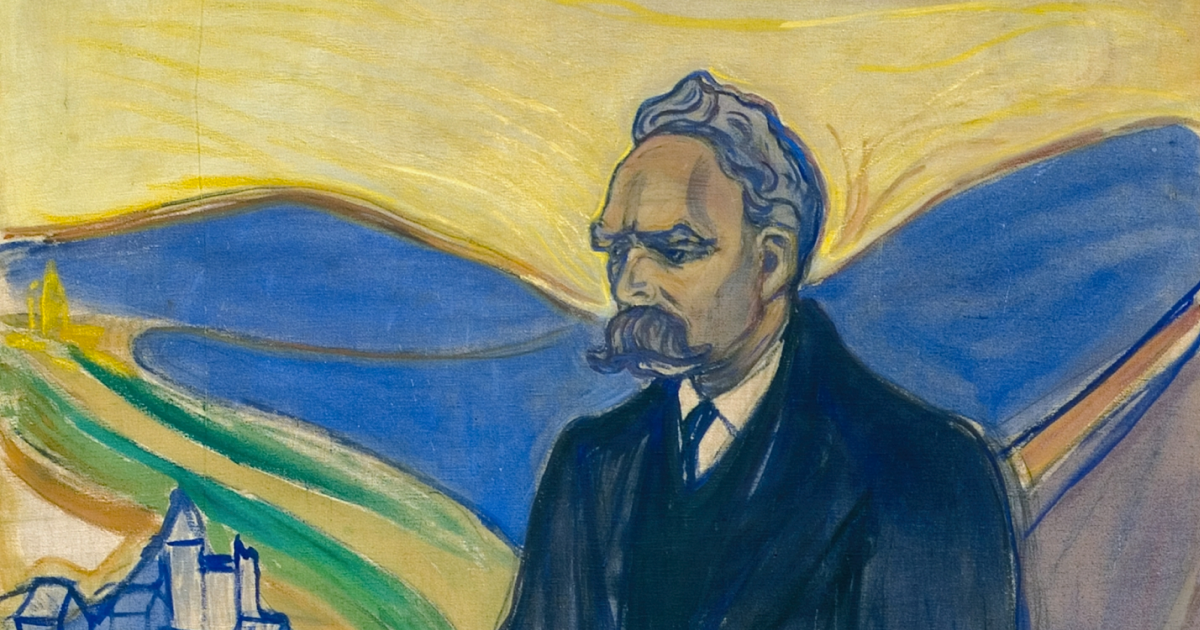
Commenting on Cardinal Tobin’s call to defund ICE, the United States’ deportations task force, journalist Harrison Pitt remarked: “Pampered idiot. If mass illegality and the systematic abuse of the American people are going to be sold to us as Christian virtues, then the Church risks making a better case for neo-paganism than Friedrich Nietzsche ever could.”

While, as a grateful son of the Church, it is hard to endorse the first two words of his remark in writing, it is much more difficult to conclude that the rest is entirely wrong. Europeans, seeing demographic trends and being able to perform mathematics, understanding that when people migrate they bring with them cultures, religions, behaviours, and prejudices which may be adverse to those of host peoples – see that mass migration, carried out on this scale, is an existential matter and resembles nothing less than civilisational suicide. I, though one who attempts to love my fellow man as Christ commands, am yet to hear a convincing argument that they are wrong.

And so, in this context, do the Spanish bishops or the likes of Cardinal Tobin realise they almost irreparably damage the Catholic Church’s image as a force for good in the eyes of many? Do they understand that what they are interpreted as advocating is this: that the Catholic Church believes your displacement in your own homelands is good, that it commands you not to defend yourselves as your nations welcome droves of people who hate you? Do they care?

They’re wrong too. And it’s unfortunate that some onlookers take them to authentically represent the Catholic Faith. Not every word which comes out of the mouth of a cleric, fortunately, resembles the true shape of that Faith.

It is, of course, doubly frustrating when one understands European and Catholic history. Not only did Christ never command civilisational or national suicide, but it is no exaggeration to say that the Church was for a long time, on the contrary, the source of Europe’s formidable vitality, of her unity and will to self-defence.

Everything collapsed before the furious Islamic advance in the 7th century. First the Arabian Peninsula, then Zoroastrian Persia, and most of the Christian East and North Africa; it soon charged into Spain and Greece. The lion’s share of the Eastern Orthodox world would soon eventually collapse before it, leaving only Russia outside its grasp. But at Tours in France, the Western Christians first stemmed this “unstoppable tide”. Historians tell us this is the first time Latin-rite Christians began to understand and define themselves as “Europeans”.

Then, rallied by Pope Urban II, came the Crusades, and European Catholics committed the ostensible mortal sin of fighting back. Majority-Christian lands were violently liberated from Islamic rule, under which non-Muslims were subject to excess tax, were treated as second-class citizens, and frequently harassed, stolen from, or murdered by Muslims while the ruling powers turned a blind eye.

And here again is another reason we may have to actually use our brains (painful, I know) when it comes to how we ought to react to and respectfully heed clerical authority. If we hear that Pope John Paul II “apologised” for the Crusades, we ought to ask ourselves how far papal statements should be heeded. Because Urban II, who was also a successor of St Peter, would never have made such a concession or repudiation. The two at least cancel each other out.

Why is one pope’s word better than another’s? Or is it that, perhaps, the infallible magisterium is a more solid and unmalleable thing, not defined by however a pope wakes up and feels one morning? We shouldn’t forget that St Peter, the first pope, was wrong about Gentile circumcision, and his rebuke and correction by St Paul is documented in the Letter to the Galatians.

Both in the East and the West, the Reconquista of Iberia and heroic resistance by the likes of Skanderbeg (a Catholic revert) in Albania, Vlad the Impaler (a crypto-Catholic) in Wallachia, or modern-day Romania, Hunyadi János (a loyal and decorated servant of the Pope) in Hungary, Jan Sobieski in Poland, and Prince Eugene of Savoy in Austria – the Church and Catholic Faith, far from asking for invertebrate surrender in the face of the invasion of a foreign, religious and cultural adversary, was the spiritual and psychological source and motivation for resistance.

Add to that Isabella of Castile (whose piety is undisputed and who is in the process of beatification), who unified Spain as a Catholic nation. I could be wrong, but I wouldn’t wager that Tobin will gain as popular a devotional cult for heroic piety as she enjoys after he passes.

Catholicism has always been a religion where a stand is made. Be it over marriage, contraception, Trinitarian orthodoxy, or when invasions threaten to crush a people and their nation under the cross. Whether it be after the Vikings conquered the capital of Wessex in Winchester, or when all bar two of the bishops professed fundamental heresy during the Arian crisis, or after the sexual revolution swept all before it – Catholicism is not and has never been what the Spanish bishops and Tobin make it out to be: a flaccid, timid thing which only counsels surrender to one’s enemies, intellectual, moral or civilisational. Saints Ambrose and Augustine argued fiercely against Roman critics centuries ago who contended that it was. We must do the same.

When all seems over, even when bishops themselves dissent, and things look dark inside and outside the Church, something peculiarly found in the Catholic world refuses to yield and, against all odds, fights back. The hour can be very dark indeed, but, as GK Chesterton says, the Catholic world has been defeated and recovered from the precipice almost miraculously many times throughout history in a manner no parallel religion or civilisation has. It “died many times and [rose] again; for it had a God who knew the way out of the grave”.

Arianism is almost entirely dead. King Alfred emerged from the marshes of Athelney after all was lost and reigned triumphant. We have good reason to think the scandals and crises before us will be the same.

The immigration and invasion question is, of course, anecdotal. It is just one among many issues which could be given as an example regarding which Catholics ought to be wary about priests or bishops making wild assertions which may not represent the faith well. It is not insignificant, though. Today, immigration ranks top among voter concerns in the United Kingdom, Ireland and Germany. It is important that Catholics are not so lazy as to allow mistaken actors to represent our religion on the foremost political issue of our century.

Still, it is not the only issue where, since Vatican II, clerical unity and orthodoxy, not long ago almost miraculously maintained, has been lost, and laymen and women have to do their homework to know what Sacred Tradition and the truth is. There are also problems with ecumenical excess, universalistic teachings surrounding salvation, and occasionally marital practices that have crept in and caused great problems too. Catholics should not be alarmed either, even if this tells us we have to be vigilant, and as innocent as doves and as shrewd as serpents (Mt 10:16), as this has happened before.

The Arian crisis almost spelled the end of the Catholic Faith. As stated, all bar two lone bishops professed heresy and contradicted the Council of Nicaea and the notion that Jesus Christ is God, two elements so foundational that today even most Protestants recognise them. A disastrous state of affairs. Importantly, it did not last forever, and it is helpfully informative for us about what to do during times of crisis.

St Ignatius is famously quoted stating, Ubi episcopus, ibi Ecclesia, “Where the bishop is, there is the Church”. Such was the emphasis and importance of the bishop from the earliest days of the Christian Faith. What were the faithful to do, then, if heeding this without qualification or caveat, when virtually all of them had gone astray, save two whom they may never have heard of, reigning in far distant lands?

The answer is helped when Ignatius is more helpfully and faithfully translated: “Wherever the bishop appears, there let the people be; as wherever Jesus Christ is, there is the Catholic Church”. Jesus Christ is the cornerstone and the head of the body. The bishops are merely his digits. Some, from time to time, may sever themselves from the body or fall off, but Christ is one who had something of a knack for regrowing body parts.

And the papacy? Is that not the foundation? It is, but even that, though it possesses a pre-eminent teaching role and the capacity to pronounce things infallibly, is not one and the same with the entirely indefectible Founder.

Today’s Catholics ought to be aware, as esteemed Thomistic theologian Ed Feser points out, of the story of Pope Honorius I. In case any were to lazily assume the Pope could never utter a word wrong, it may surprise them to learn that, although exceedingly rare in doctrinal matters, a statement from Honorius was condemned as heretical by an ecumenical council and a future pope. He was even anathematised in the grave.

I recently interviewed Cardinal Gerard Ludwig Müller, who warned against the ultramontane attitude towards the papal office, which entails an “exaggeration that says every private meaning of the Pope is a dogma or is an interpretation of the revealed truth”.

So what do we learn? The Catholic Faith is not one and the same as whatever a bishop or pope may say, especially regarding politics or things which are not explicit doctrines or dogmas. It is worth repeating that. Catholicism does not entail whatever a man with clerical dignity decides it does on any given day of the week.

But how then can we know anything, if even bishops and popes are sometimes wrong? How can anyone say they even are wrong?

Fortunately Catholics are “not left as orphans”. Officially, the infallible teaching and shape of the Catholic Faith are those things either magisterially pronounced or part of Sacred Tradition and universally taught in the Church for an extended period of time. There are so many materials, readily available, to remind us what this constitutes today that most Catholics are almost entirely without excuse. There are the Catechisms, of John Paul II, of Trent, of Baltimore. There is canon law. Ecumenical councils. Ex cathedra declarations. The writings of holy mystics, saints and Doctors. The Summa Theologiae of the Church’s Angelic Doctor, St Thomas Aquinas. All available at the click of a button.

On top of that, when we do not have these at hand, we possess a rational intellect to be able to recognise and discern coherence from incoherence, fidelity from infidelity, light from dark, and truth from falsehood. This should flare when, say, a bishops’ conference or individual cardinals seem to be asserting something which does not tally with what we know about Catholic history.

Even papal obedience has limits. Yes, he is the appointed stand-in monarch of the Church. But he is not incapable of misleading those beneath him, sometimes even gravely. Pope Sixtus IV was involved in a plot to kill members of the Medici banking family, a rival to the family he supported, during which Giuliano de Medici was murdered in cold blood during Mass. Does anyone believe this private will of the Pope was what obedient Catholics were asked to follow by Christ?

Clerics also are ultimately confined within the authority of Sacred Tradition and Revelation. They could never deny a doctrine or write a new Bible. In a word, they are, like all of us, underneath and beholden to the Truth. If we ever see that they clearly go beyond this and what is certainly known to be otherwise, they carry no authority at all.

The Church is a hierarchical system. An advantage of this is that it typically helps provide unity and order, a clarity and singleness of purpose and direction that keeps anarchy at bay. A disadvantage of hierarchical systems is that when, as happened with the Jesuits and quasi-Marxist liberation theology, a rot finds its way into the hierarchy, the poison spreads swiftly from the head downwards, threatening the whole body unless the faithful rise to excise it with charity, courage and clarity. Yet even then, the Church endures. Christ promised the gates of hell would not prevail, not that the barque would never list perilously or that every hand on deck would remain steady.

And unlike other spiritualities and “denominations”, Catholicism has a certain shape. It provides room for variety but is not malleable. Ours is not a religion like Mormonism, where what is held as truth can contradict what was or will be defined as truth before or after. Once true, always true. And despite a squiffy wording from Pope Francis regarding the death penalty, which is yet to be resolved, in 2,000 years it has managed never to self-contradict. So learn what was true yesterday, and you will not be led astray by false assertions of truth today.

Sound history and making the effort to understand what Catholicism actually is gives us a rudder and a compass with which we can traverse when the waters are muddy. Catholicism is true for other reasons than, and independent of, its utility in achieving health and survival in individual lives, society or a civilisation. Happily, though, worshipping a God it knows to be Reason, Logos itself, it does also provide the latter, with a little self-denying love and effort. We would all do well to remember this.

Do not be a lazy Catholic. The crisis will end. Christ’s Church has outlasted every storm before it. But until that dawn breaks, confusion swirls like mist across the deck and waves pound the barque relentlessly. And we may have to put up with the irritating virtue signals of either poorly catechised or bad-faith clerics in the meantime. To find your way through the fog of contradiction, hold fast to the compass of faith: know your religion, its doctrines, its history, its unchanging shape, and remain steadfast within the safety of the hull where the indefectible Truth abides, as the Lord Himself keeps the ship on course.

There’s a famous skit from the Irish sitcom Father Ted where, after hearing that his priest was caught making comedic caricatures of Asians, a parishioner greets him over a dry stone wall.

“I hear you’re a racist now, Father,” he yells. “Should we all be racists now? What’s the official line the Church’s taking on this?”

The clip ridicules something which, actually, today, ought to be taken seriously: a tendency among some Catholics to uncritically – and with a perhaps generous helping of intellectual laziness – accept as sacrosanct anything and everything handed down to them by a man in clerical garb.

The tragedy is, this attitude comes from a place of misplaced piety. Obedience certainly is a virtue, and honouring clerical authority, ordinarily, is honouring apostolic presence and, in a way, Christ Himself – for these are those He sends, albeit indirectly, to act in persona Christi. The excessive inclination is also, typically, better than the alternative. In periods of crisis, however, this can be dangerous. And we are in a period of crisis.

It is true that, typically, someone is more likely to grow in moral virtue and retain the Faith if they acknowledge they can benefit from the external wisdom and counsel of those ostensibly educated in the riches of 2,000 years of Catholic thinking and conferred with apostolic lineage, than someone who presumes with arrogance to be already self-sufficient.

Yet it remains true that not a few priests and clerics fall very short of Christ indeed. If not always in their moral conduct (for thankfully there are swathes of good priests), at least in their natural limits and fallen nature; in their lack of knowledge or wisdom. And so laypeople must bear in mind that two things can be simultaneously true. First, that there is indeed a supernatural charism protecting the Catholic Church from error in her fundamental doctrine and infallible teaching. Second, that priests and bishops, even popes, can behave wrongly, think wrongly, and even teach wrongly.

It doesn’t sound radical to say this – but for the genuinely pious it is a reality that can be hard to accept. And unfortunately these virtuous, mistakenly obedient Catholics are the most easily led astray when clerics do go wrong. Their instincts are correct. We do not leave all to private interpretation. We have a hierarchy and a magisterium for a reason. All the same, God gave us reason (the Logos within us) and critical abilities because He wants us to use them, and to avoid the false shepherds who may in fact be ravenous wolves (Mt 7:15).

All of this needs saying now, as the bishops’ conference in Spain and other prelates in the United States, such as Cardinal Joseph Tobin, have come out unequivocally against deportations or in favour of amnesties for illegal migrants en masse. This has caused scandal, given poor witness by the Catholic Church, and has misrepresented her true character in the eyes of many.

Commenting on Cardinal Tobin’s call to defund ICE, the United States’ deportations task force, journalist Harrison Pitt remarked: “Pampered idiot. If mass illegality and the systematic abuse of the American people are going to be sold to us as Christian virtues, then the Church risks making a better case for neo-paganism than Friedrich Nietzsche ever could.”

While, as a grateful son of the Church, it is hard to endorse the first two words of his remark in writing, it is much more difficult to conclude that the rest is entirely wrong. Europeans, seeing demographic trends and being able to perform mathematics, understanding that when people migrate they bring with them cultures, religions, behaviours, and prejudices which may be adverse to those of host peoples – see that mass migration, carried out on this scale, is an existential matter and resembles nothing less than civilisational suicide. I, though one who attempts to love my fellow man as Christ commands, am yet to hear a convincing argument that they are wrong.

And so, in this context, do the Spanish bishops or the likes of Cardinal Tobin realise they almost irreparably damage the Catholic Church’s image as a force for good in the eyes of many? Do they understand that what they are interpreted as advocating is this: that the Catholic Church believes your displacement in your own homelands is good, that it commands you not to defend yourselves as your nations welcome droves of people who hate you? Do they care?

They’re wrong too. And it’s unfortunate that some onlookers take them to authentically represent the Catholic Faith. Not every word which comes out of the mouth of a cleric, fortunately, resembles the true shape of that Faith.

It is, of course, doubly frustrating when one understands European and Catholic history. Not only did Christ never command civilisational or national suicide, but it is no exaggeration to say that the Church was for a long time, on the contrary, the source of Europe’s formidable vitality, of her unity and will to self-defence.

Everything collapsed before the furious Islamic advance in the 7th century. First the Arabian Peninsula, then Zoroastrian Persia, and most of the Christian East and North Africa; it soon charged into Spain and Greece. The lion’s share of the Eastern Orthodox world would soon eventually collapse before it, leaving only Russia outside its grasp. But at Tours in France, the Western Christians first stemmed this “unstoppable tide”. Historians tell us this is the first time Latin-rite Christians began to understand and define themselves as “Europeans”.

Then, rallied by Pope Urban II, came the Crusades, and European Catholics committed the ostensible mortal sin of fighting back. Majority-Christian lands were violently liberated from Islamic rule, under which non-Muslims were subject to excess tax, were treated as second-class citizens, and frequently harassed, stolen from, or murdered by Muslims while the ruling powers turned a blind eye.

And here again is another reason we may have to actually use our brains (painful, I know) when it comes to how we ought to react to and respectfully heed clerical authority. If we hear that Pope John Paul II “apologised” for the Crusades, we ought to ask ourselves how far papal statements should be heeded. Because Urban II, who was also a successor of St Peter, would never have made such a concession or repudiation. The two at least cancel each other out.

Why is one pope’s word better than another’s? Or is it that, perhaps, the infallible magisterium is a more solid and unmalleable thing, not defined by however a pope wakes up and feels one morning? We shouldn’t forget that St Peter, the first pope, was wrong about Gentile circumcision, and his rebuke and correction by St Paul is documented in the Letter to the Galatians.

Both in the East and the West, the Reconquista of Iberia and heroic resistance by the likes of Skanderbeg (a Catholic revert) in Albania, Vlad the Impaler (a crypto-Catholic) in Wallachia, or modern-day Romania, Hunyadi János (a loyal and decorated servant of the Pope) in Hungary, Jan Sobieski in Poland, and Prince Eugene of Savoy in Austria – the Church and Catholic Faith, far from asking for invertebrate surrender in the face of the invasion of a foreign, religious and cultural adversary, was the spiritual and psychological source and motivation for resistance.

Add to that Isabella of Castile (whose piety is undisputed and who is in the process of beatification), who unified Spain as a Catholic nation. I could be wrong, but I wouldn’t wager that Tobin will gain as popular a devotional cult for heroic piety as she enjoys after he passes.

Catholicism has always been a religion where a stand is made. Be it over marriage, contraception, Trinitarian orthodoxy, or when invasions threaten to crush a people and their nation under the cross. Whether it be after the Vikings conquered the capital of Wessex in Winchester, or when all bar two of the bishops professed fundamental heresy during the Arian crisis, or after the sexual revolution swept all before it – Catholicism is not and has never been what the Spanish bishops and Tobin make it out to be: a flaccid, timid thing which only counsels surrender to one’s enemies, intellectual, moral or civilisational. Saints Ambrose and Augustine argued fiercely against Roman critics centuries ago who contended that it was. We must do the same.

When all seems over, even when bishops themselves dissent, and things look dark inside and outside the Church, something peculiarly found in the Catholic world refuses to yield and, against all odds, fights back. The hour can be very dark indeed, but, as GK Chesterton says, the Catholic world has been defeated and recovered from the precipice almost miraculously many times throughout history in a manner no parallel religion or civilisation has. It “died many times and [rose] again; for it had a God who knew the way out of the grave”.

Arianism is almost entirely dead. King Alfred emerged from the marshes of Athelney after all was lost and reigned triumphant. We have good reason to think the scandals and crises before us will be the same.

The immigration and invasion question is, of course, anecdotal. It is just one among many issues which could be given as an example regarding which Catholics ought to be wary about priests or bishops making wild assertions which may not represent the faith well. It is not insignificant, though. Today, immigration ranks top among voter concerns in the United Kingdom, Ireland and Germany. It is important that Catholics are not so lazy as to allow mistaken actors to represent our religion on the foremost political issue of our century.

Still, it is not the only issue where, since Vatican II, clerical unity and orthodoxy, not long ago almost miraculously maintained, has been lost, and laymen and women have to do their homework to know what Sacred Tradition and the truth is. There are also problems with ecumenical excess, universalistic teachings surrounding salvation, and occasionally marital practices that have crept in and caused great problems too. Catholics should not be alarmed either, even if this tells us we have to be vigilant, and as innocent as doves and as shrewd as serpents (Mt 10:16), as this has happened before.

The Arian crisis almost spelled the end of the Catholic Faith. As stated, all bar two lone bishops professed heresy and contradicted the Council of Nicaea and the notion that Jesus Christ is God, two elements so foundational that today even most Protestants recognise them. A disastrous state of affairs. Importantly, it did not last forever, and it is helpfully informative for us about what to do during times of crisis.

St Ignatius is famously quoted stating, Ubi episcopus, ibi Ecclesia, “Where the bishop is, there is the Church”. Such was the emphasis and importance of the bishop from the earliest days of the Christian Faith. What were the faithful to do, then, if heeding this without qualification or caveat, when virtually all of them had gone astray, save two whom they may never have heard of, reigning in far distant lands?

The answer is helped when Ignatius is more helpfully and faithfully translated: “Wherever the bishop appears, there let the people be; as wherever Jesus Christ is, there is the Catholic Church”. Jesus Christ is the cornerstone and the head of the body. The bishops are merely his digits. Some, from time to time, may sever themselves from the body or fall off, but Christ is one who had something of a knack for regrowing body parts.

And the papacy? Is that not the foundation? It is, but even that, though it possesses a pre-eminent teaching role and the capacity to pronounce things infallibly, is not one and the same with the entirely indefectible Founder.

Today’s Catholics ought to be aware, as esteemed Thomistic theologian Ed Feser points out, of the story of Pope Honorius I. In case any were to lazily assume the Pope could never utter a word wrong, it may surprise them to learn that, although exceedingly rare in doctrinal matters, a statement from Honorius was condemned as heretical by an ecumenical council and a future pope. He was even anathematised in the grave.

I recently interviewed Cardinal Gerard Ludwig Müller, who warned against the ultramontane attitude towards the papal office, which entails an “exaggeration that says every private meaning of the Pope is a dogma or is an interpretation of the revealed truth”.

So what do we learn? The Catholic Faith is not one and the same as whatever a bishop or pope may say, especially regarding politics or things which are not explicit doctrines or dogmas. It is worth repeating that. Catholicism does not entail whatever a man with clerical dignity decides it does on any given day of the week.

But how then can we know anything, if even bishops and popes are sometimes wrong? How can anyone say they even are wrong?

Fortunately Catholics are “not left as orphans”. Officially, the infallible teaching and shape of the Catholic Faith are those things either magisterially pronounced or part of Sacred Tradition and universally taught in the Church for an extended period of time. There are so many materials, readily available, to remind us what this constitutes today that most Catholics are almost entirely without excuse. There are the Catechisms, of John Paul II, of Trent, of Baltimore. There is canon law. Ecumenical councils. Ex cathedra declarations. The writings of holy mystics, saints and Doctors. The Summa Theologiae of the Church’s Angelic Doctor, St Thomas Aquinas. All available at the click of a button.

On top of that, when we do not have these at hand, we possess a rational intellect to be able to recognise and discern coherence from incoherence, fidelity from infidelity, light from dark, and truth from falsehood. This should flare when, say, a bishops’ conference or individual cardinals seem to be asserting something which does not tally with what we know about Catholic history.

Even papal obedience has limits. Yes, he is the appointed stand-in monarch of the Church. But he is not incapable of misleading those beneath him, sometimes even gravely. Pope Sixtus IV was involved in a plot to kill members of the Medici banking family, a rival to the family he supported, during which Giuliano de Medici was murdered in cold blood during Mass. Does anyone believe this private will of the Pope was what obedient Catholics were asked to follow by Christ?

Clerics also are ultimately confined within the authority of Sacred Tradition and Revelation. They could never deny a doctrine or write a new Bible. In a word, they are, like all of us, underneath and beholden to the Truth. If we ever see that they clearly go beyond this and what is certainly known to be otherwise, they carry no authority at all.

The Church is a hierarchical system. An advantage of this is that it typically helps provide unity and order, a clarity and singleness of purpose and direction that keeps anarchy at bay. A disadvantage of hierarchical systems is that when, as happened with the Jesuits and quasi-Marxist liberation theology, a rot finds its way into the hierarchy, the poison spreads swiftly from the head downwards, threatening the whole body unless the faithful rise to excise it with charity, courage and clarity. Yet even then, the Church endures. Christ promised the gates of hell would not prevail, not that the barque would never list perilously or that every hand on deck would remain steady.

And unlike other spiritualities and “denominations”, Catholicism has a certain shape. It provides room for variety but is not malleable. Ours is not a religion like Mormonism, where what is held as truth can contradict what was or will be defined as truth before or after. Once true, always true. And despite a squiffy wording from Pope Francis regarding the death penalty, which is yet to be resolved, in 2,000 years it has managed never to self-contradict. So learn what was true yesterday, and you will not be led astray by false assertions of truth today.

Sound history and making the effort to understand what Catholicism actually is gives us a rudder and a compass with which we can traverse when the waters are muddy. Catholicism is true for other reasons than, and independent of, its utility in achieving health and survival in individual lives, society or a civilisation. Happily, though, worshipping a God it knows to be Reason, Logos itself, it does also provide the latter, with a little self-denying love and effort. We would all do well to remember this.

Do not be a lazy Catholic. The crisis will end. Christ’s Church has outlasted every storm before it. But until that dawn breaks, confusion swirls like mist across the deck and waves pound the barque relentlessly. And we may have to put up with the irritating virtue signals of either poorly catechised or bad-faith clerics in the meantime. To find your way through the fog of contradiction, hold fast to the compass of faith: know your religion, its doctrines, its history, its unchanging shape, and remain steadfast within the safety of the hull where the indefectible Truth abides, as the Lord Himself keeps the ship on course.
subscribe to
the catholic herald

Continue reading your article with a subscription.
Read 5 articles with our free plan.
Subscribe
share

subscribe to the catholic herald today

Our best content is exclusively available to our subscribers. Subscribe today and gain instant access to expert analysis, in-depth articles, and thought-provoking insights—anytime, anywhere. Don’t miss out on the conversations that matter most.
Subscribe