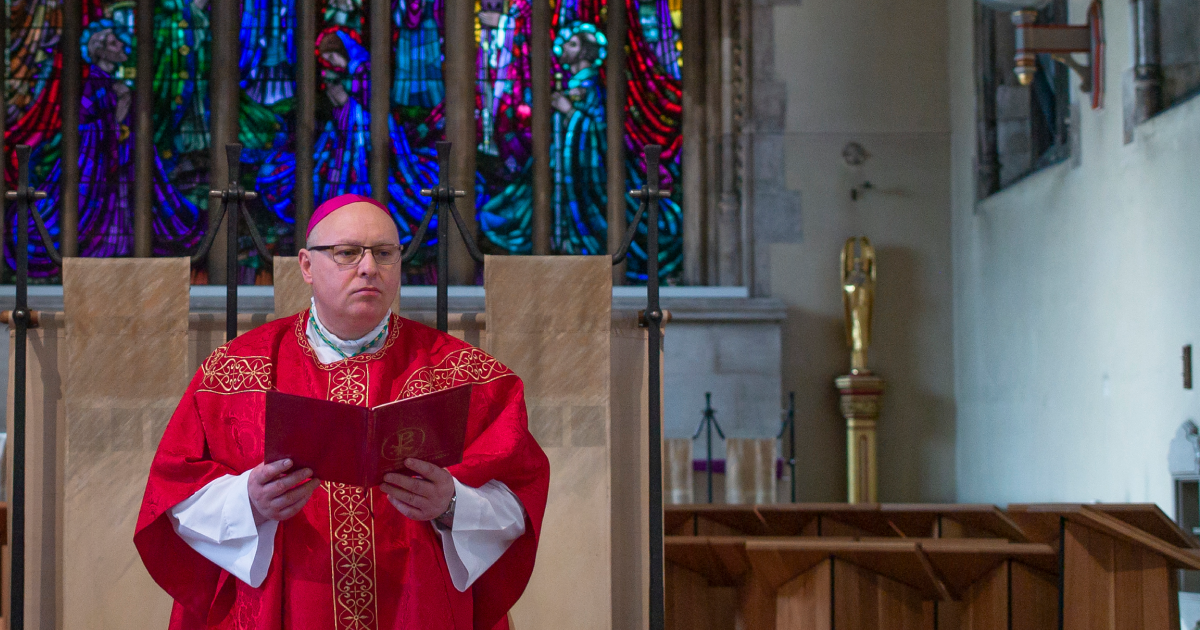


Archbishop John Wilson of Southwark has described the new Bill that seeks to legalise assisted suicide as a “law whose ultimate purpose is to end human life” as he called on Catholics to contact their local Member of Parliament to voice opposition.
The Terminally Ill Adults (End of Life) Bill has received continued condemnation by the Bishops Conference of England and Wales ahead of its Second Reading and vote on September 11, 2026.
“It is a question about the kind of society in which we wish to live. The choice is stark. Do we want to value each person’s life, especially when they become vulnerable through serious illness or disability? Or do we want to create a culture where killing is a better option than caring?” he said.
“There will never be any moral justification – irrespective of the desperately needed funding for palliative and social care – for introducing legislation which will intentionally and directly result in the deaths of so many people.
“Whatever language those campaigning for assisted suicide may use, the terrible truth remains unchanged: should this proposal become law, grandparents, mothers, fathers, daughters and sons will die believing there is no possible alternative, no chance of being cared for and loved until their natural death.”
On Wednesday, Prime Minister Andy Burnham voiced his reservations about the introduction of assisted suicide in the UK, stating that improved palliative care should instead be a priority. The remarks, which suggest Burnham will not back the Bill, were a blow to the campaign for the introduction of euthanasia.
Burnham said that it was “very challenging” to introduce the debate whilst people are “not receiving that care and having the peace of mind about that care”.
On July 30, Bishop John Keenan of Paisley, who is responsible for Marriage, Family and Life for the Bishops’ Conference of Scotland, called the Prime Minister’s intervention “timely and welcome”.
The bishop said: “We have a duty to ensure that every person approaching the end of life has access to the compassionate palliative and social care they deserve.
“No one should ever feel driven towards assisted suicide because they lack the care, support or dignity they need. We were grateful that the Scottish Parliament resolutely rejected assisted suicide only recently.
“We hope this latest intervention will encourage Members of the Westminster Parliament to reflect carefully before taking a step that would fundamentally change the way our society cares for the sick and vulnerable.”
An MRP poll published in June which surveyed more than 10,000 people found in each of Great Britain’s 632 constituencies, a majority would not want their MP to support a law pushed through Parliament without full scrutiny and approval by both the House of Lords and House of Commons.
The results also found that assisted suicide was not among the top five priorities for constituents, with voters favouring prioritising the NHS and palliative care. Furthermore, only eight per cent supported a non-manifesto commitment into law without approval and full scrutiny from both Houses.