

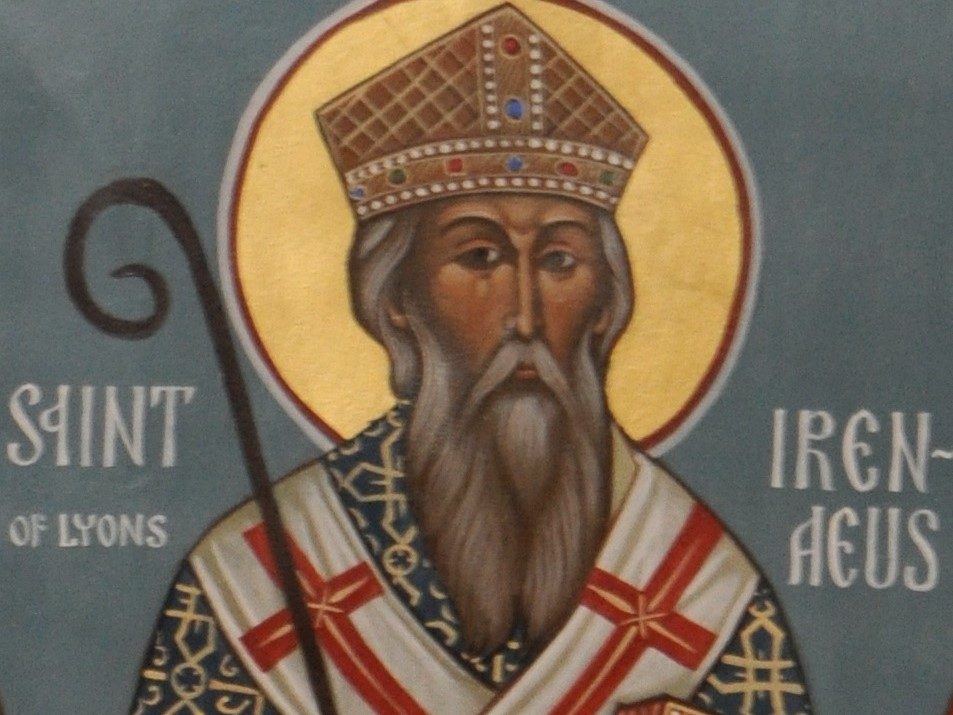
The church I grew up in was about as far from Catholicism as it is possible to get. From a very young age my parents took me to a local school hall every Sunday, where around 300 people would sit in a horseshoe-shaped arrangement, sing a spontaneously arranged medley of 1970s-style “praise choruses”, share testimonies and listen to a 45-minute sermon. As far as we were concerned, this is what it meant to be Christian in the purest sense. We were not part of a denomination and had cut ourselves free from the restraints of tradition and religion. We had, so we thought, returned to doing what the early Christians had done in the book of Acts. This church had grown from meetings in the pastor’s living room with just his wife and children, to the ones I attended that filled the school hall. There were legendary stories from the early days: spontaneous baptisms in bathtubs, miraculous healings and dramatic conversions of local hooligans. Ironically though, by the time I came along, these stories – along with the church’s idiosyncratic attempts to escape liturgical structures – had solidified into the very thing we thought we had escaped: a church tradition. Over time I realised that, for a Christian, there was no real choice between tradition or no tradition. The question was which tradition. Several unremarkable occasions exposed me to the Church of England: weddings, Midnight Mass services and a reluctant, hungover trip to a friend’s church on Easter Sunday. As an outsider looking in, I could see that the traditions I grew up with were flimsy in contrast with the beauty of the Book of Common Prayer, the robust theology of the 39 Articles and the comfort that comes from being part of something with ancient roots. This is where I found a home, and it would eventually lead to where I am today, a conservative evangelical Anglican, training to become a vicar. But it was impossible to feel this pull towards a richer tradition without sensing that the centre of gravity might sit somewhere deeper and more ancient, namely, in the Catholic Church. I was first properly exposed to the ancient claims of Catholicism when I had the privilege of studying theology at the University of Oxford. One of the first essays I wrote was for a paper on Patristics, addressing the question “In what sense was Rome the centre of doctrine in the first three centuries of the church?” Here I came across the 2nd-century apologists Tertullian and Irenaeus, pointing to the Catholic Church as the source of true doctrine, and I squirmed nervously in my seat when my tutor asked me what the latter meant by referring to Rome’s potentiorem principalitatem (“preeminent authority” or “superior foundation”). I also had the opportunity to study the theology of Thomas Aquinas at Blackfriars for one term. Here I would sit down with a Dominican friar and be guided into Catholic thought via the samurai-sword-sharp logic of the Angelic Doctor. What has rattled my Protestant convictions the hardest was an exchange I had with an Anglican bishop at a question-and-answer event. After hearing the bishop speak enthusiastically about the unity of the church, I asked him why he was happy being in a schismatic denomination. Disappointingly, he mumbled something about there being no major outstanding theological issues separating the Church of England from the Catholic Church. But his answer left me confused: if there were no theological issues left to resolve, surely I should become Catholic at the nearest opportunity? When explaining his conversion to Catholicism, RR Reno, the theologian and former Anglican editor of First Things, likes to quote John Henry Newman: “The Church of Rome preoccupies the ground.” I have thought about these words often over the last year, not least while serving a training placement at Oriel College, ground which Newman himself occupied as chaplain before his own conversion. The precedence of the Catholic Church, along with its ancient pre-eminence, surely places a claim upon the allegiance of all Christians, unless there are serious theological reasons to stay out. Despite my deep respect for the Catholic Church and its tradition, I continue to view the Reformation as a tragic necessity. My convictions on justification and the nature of saving faith, issues that sit at the heart of Christian proclamation, and my doubts about the exclusivity of the Catholic Church’s claims, are sufficient for me to remain Protestant. But my Catholic friends should take this as a compliment. Because given the Church’s long tradition of preserving orthodoxy, its eminent theologians, its strength of moral conviction, its contributions to art and culture, and its commitment to beauty and reverence in Christian worship, it takes issues of cosmic proportions to keep me – tragically yet necessarily – on the outside. Jack O’Grady is a Church of England ordinand at Wycliffe Hall, University of Oxford
4:03 PM
I’m a trainee Anglican vicar. But I can see there’s a strong case for Catholicism
Jack O'Grady

5 min read



Already a subscriber? Sign in
5freearticles every month
Continue reading with a free account. No card needed.
- Five free articles every thirty days, on any device you sign in on
- The Catholic Herald newsletter, every morning
- Subscribe whenever you like for everything: every article and the magazine


subscribe to the catholic herald today
Our best content is exclusively available to our subscribers. Subscribe today and gain instant access to expert analysis, in-depth articles, and thought-provoking insights—anytime, anywhere. Don’t miss out on the conversations that matter most.
Subscribe



