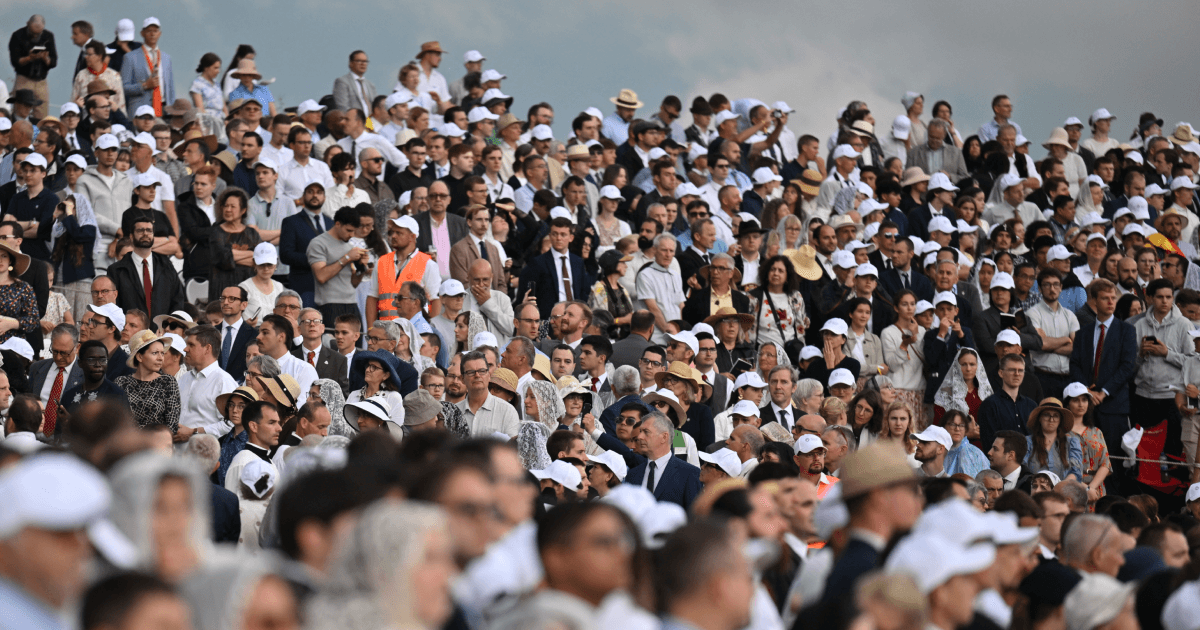
The valley of Écône in the Swiss canton of Valais provided a striking backdrop to the Society of St Pius X’s episcopal consecrations. The meadow where, just as in 1988, the liturgy took place sits right below the Society’s flagship seminary, with vineyards and rows of apricot trees flowing down to an electrical substation, with steep, snow-capped mountains rising on either side of the valley. For the episcopal consecrations, white baseball caps branded “Écône 2026” were handed out to the thousands of SSPX faithful who filled the meadow.
Within half an hour of the bishops being consecrated – just as the newly consecrated schismatic bishops of the Society of St Pius X prepared to receive Communion – divine displeasure poured down on Écône. The heavens opened and the faithful were pouring out of the meadow to escape a momentous thunderstorm; the kind that arrives all at once, soaks you in seconds and whose rain hurts when it hits the skin. Thunder pealed across the valley and the wires at the neighbouring electrical substation hissed and crackled. Along the sides of the meadow, paths turned into fast-running streams, against which stewards had to guard the surging crowd. Rods of lightning shot across the sky.
Behind the thunder and shouting, I could still make out a steady Latin chant. The Mass had been paused and the celebrants were singing the rosary. If you watch the livestream from about three hours and 45 minutes in, you have the somewhat gratifying sight of consecrating bishop Alfonso de Galarreta Genua scratching his head with a look of concern. Facing likely excommunication, was he entertaining doubts about his heavenly mandate? Or was he just unnerved by the potential PR damage? On the train in, a Latin American priest had told me that the consecrations would make “great propaganda”.
From the tone of SSPX Superior General Fr Pagliarani’s reply to a letter from Pope Leo, published the day before the consecrations went ahead, one has the impression that the Society approached schism with overwrought sadness, occasioning the usual flowery metaphors. Pagliarani wrote of the SSPX serving the Church as “mother in distress who requires particular help, even if such help is not understood by everyone”. After this sinister and confusing metaphor, he continued, “yet I am certain that the Holy Father could understand it”, reminding me of the saying that to overpraise someone is a form of disrespect.
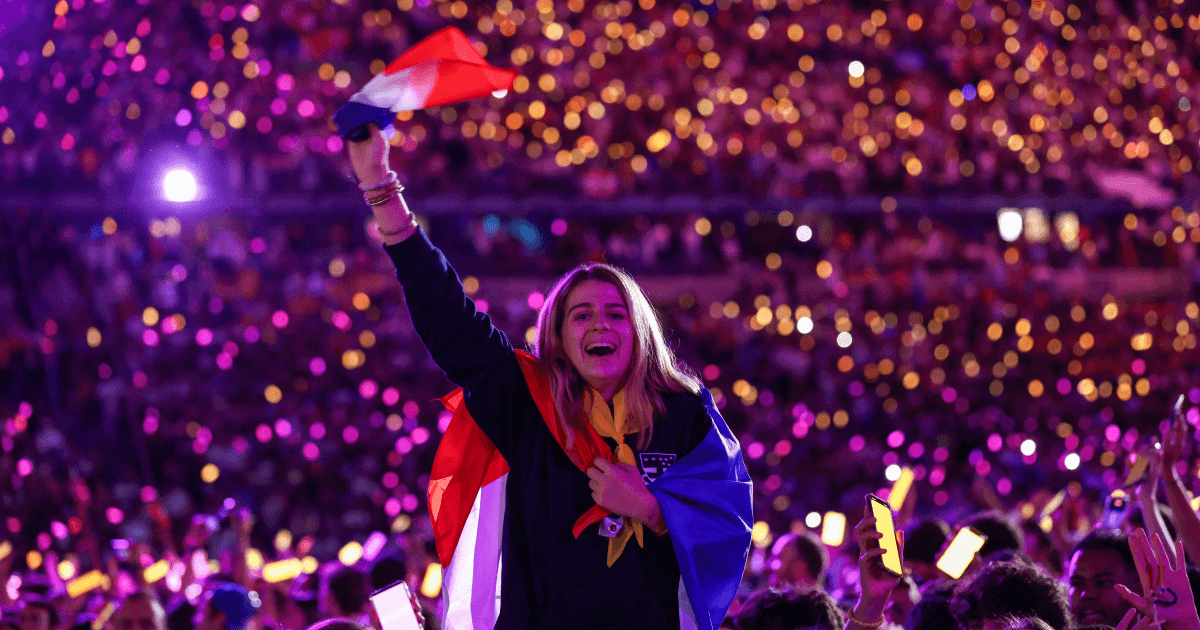
In my three days at Écône, I saw no expression of doubt, anxiety or sadness about the prospect of leading the Church further into schism. Not having much familiarity with the SSPX, I’d expected more hand-wringing or mixed feelings. On the meadow, though, the mood was jubilant. Without exception, every person I spoke to – mostly youngish, but representing a good swathe of the countries where the SSPX operates – expressed unreserved excitement. “Finally,” was the word on lots of lips, suggesting that they viewed it less as an immediate necessity and more as a long-awaited next step in the life of the Society.
Naturally, those willing to travel far would be more likely to hold a positive opinion, but I was surprised by how sure they were and how little theological weight they seemed to give to ecclesial communion. They tended to frame communion with an imperfect Church and with Catholics who differed on matters of doctrine as negative in and of itself, leading to confusion and threatening their own moral hygiene.
A young man in a kilt who told me he hailed from one of the three founding families of the SSPX in Scotland expressed that he had absolutely no doubt – he repeated this twice for emphasis – that the SSPX was in the right, and that falling further away from the Holy See might be positive in that it kept them further away from the contaminations of modernity. “We’re known for being cold and distant to outsiders because we want to protect ourselves.” I asked him how that could fit with our being commissioned by Christ to carry His Gospel to those who don’t know it. “Evangelism doesn’t matter,” he replied.
Again and again, people told me of the crisis in the Church. They talked about their opposition to religious liberty, ecumenism, interfaith dialogue and collegiality: all SSPX talking points which you can find neatly delineated on their website. Almost all talked about “modernists” and enemies of the Church. Nobody spoke about Jesus or God. Despite being willing to break from Rome to defend the reverence of the traditional liturgy, people walked around and chatted through the consecration rite and throughout Mass.
In Écône, I understood for the first time how tight-knit the Society is. I felt conspicuous and suspect, not least because I turned up on the first day wearing what I thought was a modest calf-length dress and found myself the only woman without fully covered shoulders. Everyone seemed to know everyone. In many cases, they had been born into SSPX families. But in all cases there was a sense of belonging to a family, an in-group of vetted people, identifiable by their particular modes of dress, set apart from the rest of the world. It reminded me of Anabaptists or Puritans who went to the New World to create communities of the elect far away from the reprobate and their influences.
Such an ecclesiology cannot reasonably be called Catholic. Catholicity means always aiming towards what is universal and whole. It draws us into communion with people very different from ourselves and asks that we remain open to encountering something of Christ in them. It means reaching into every corner of human life, pulling out some mangled thing, offering a salvation that works for those whose hearts have been twisted beyond recognition as well as those raised well. A Catholic sensibility can approach the most sublime things and the most degraded.
The happiness and excitement which I heard expressed again and again, by priests as well as laity, could not exist if there was a true appreciation of the ecclesial dimension of communion. I went for a walk during the Mass, not wanting to see the Body of Christ held up by bishops who had just wounded His Mystical Body with schism. Despite the public letters of their Superior General, it seemed apparent to me that many in the SSPX have no desire to remain in the Church. This is a significant difference between today’s consecrations and those performed by Archbishop Lefebvre in 1988. Now, children attend SSPX chapels from birth and grow up in the Society’s own schools, creating what is almost a parallel society. Habits of dress and behaviour have developed into a distinct culture, granting identity to adherents and differentiating them from those outside.
The people I spoke to at Écône seemed happy with this situation. Their willingness to embrace schism follows from this: they already think of themselves as a people set apart and have no desire to give up what makes them distinctive. They claim that the illicit consecration of four new bishops was necessary to their survival as a Society, which is an arguable point, but nobody came to Écône dragging their feet, sombre and reluctant. Impaired communion, sustained by what is now a tradition of illicit episcopal consecrations, has become an aspect of the Society’s identity. It proves their distinctiveness and holiness, their willingness to go where ordinary Catholics will not. The identity they have constructed on this basis is strong and certainly grants a powerful sense of belonging – and, no doubt, fulfilment – but it has firmly departed from the life of communion, obedience and openness which “Catholic” indicates. Given this development, a return to full communion with the Catholic Church seems both unlikely and undesirable.