
March 23, 2026

“Ballet can elevate body and soul together”

Jan C. Bentz
More
Related
Min read
share

Claire Kretzschmar is the artistic director of Ballet Hartford and a former soloist with New York City Ballet. Openly Catholic in her artistic vision, she is leading a significant renewal of sacred imagination in the arts, seeking to recover the unity of beauty, discipline, embodiment and transcendence through classical ballet.

Her recent work, Ode for St Cecilia, reflects this ambition particularly clearly: a choreography animated by artistic and theological conviction, dedicated to beauty.

Jan C Bentz: Claire, it is a real pleasure to speak with you about your work, about dancing and about faith. Let me begin very simply: when did it all come together for you? When did you begin to realise that art, beauty, faith and God belong together?
Claire Kretzschmar: It is not something I have really analysed in a formal way, but I think I began to realise it more clearly after I stopped dancing professionally. When I moved more to the other side of things – as a teacher, choreographer and director – I became less focused on all the technical details I had to work on as a dancer, and I started to develop my own perspective on the relationship between ballet, specifically, and faith.

What seems very natural to ballet and to good movement is that body and soul are instinctively united in the music and in the movement, if they go together well. Your whole person becomes one. That is something I did not fully realise while I was dancing professionally, but later, as I began to read more, study more and especially as I was trying to hand on what I knew to younger dancers, I really saw that the two naturally belong together.

That said, it also takes real effort on the part of the choreographer and the teacher to make sure that music, movement and the intention of a step or of a story are full of integrity – that they make sense, and that they elevate the human spirit. I think that is very important, and again, something quite natural to ballet when it is done well.

JCB: Do you find that modern life – perhaps based on decisive developments in modern philosophy and theology – often introduces a kind of fracture between body and soul? And if so, do you think dance naturally lends itself to rediscovering the unity of the two?

CK: Yes, completely. I feel very strongly about that. As a dancer, I found that, on a good day – and of course not every day was a good day – but for the most part, if I had good steps and good music, I felt whole, and I felt joy.

I think there is a great deal of fear around the body today. On the one hand, there are those who want to deny the body, as though it were bad in itself. On the other hand, there is an indulgence in the pleasures of the senses and the flesh, and that too is disordered. Somewhere in the middle there is this beauty of being a physical being, of having flesh and using it for good – for elevating both body and soul together.

My hope is that ballet can make that seen and felt, whether one is an audience member or a dancer. There is also, of course, so much gender confusion today, and that enters into dance as well. That is perhaps another subject, but it is related. Questions of gender roles, their importance and the confusion surrounding them are certainly present in the dance world too.

JCB: That connects very strongly with something I once heard from a Hungarian dancer in Budapest. He was not, as far as I know, a Christian, but he came to a very similar conclusion. He said that dance had almost a healing function: it helped people come properly into their bodies, arrive in them, and use them well. He even worked with patients suffering from forms of bodily or neurological dysfunction and saw dance as helping to restore a kind of unity.

That brings me to a question. From the outside, the dance world seems highly competitive, even ruthless at times. Was this sense of unity between body and soul something you found others also came to recognise, or was it more of a personal discovery that left you feeling rather alone?

CK: There is a great deal of brokenness in the dance world. Perhaps it is a kind of microcosm of the wider world, where there is already so much hardship surrounding the body. In dance specifically, the pursuit of perfection can really wreak havoc on both soul and body. At its worst, it can be crushing. It can keep you from even wanting to try to become a good dancer.

The competition, the pursuit of perfection, and the sheer toll it takes on the body can really wound the heart. What I have experienced in dance is a deep brokenness among many dancers. They feel less than they are. They struggle to find peace while trying to pursue excellence without being perfect.

Personally, I experienced this struggle very strongly. The pursuit of perfection made me fearful of failure, especially on stage. I often did not really know where to turn for help. Over time I began praying more, attending daily Mass, and those became the means by which I found some stability and healing. That may not be what the average dancer turns to, but it helped me immensely. And because of that experience, I now feel a great deal of empathy for dancers who carry that same brokenness.

Now, as a director, I hope to bring some healing into that. I want to say that one can pursue excellence, one can pursue beauty and integrity in body and soul, without being destroyed by the impossibility of perfection. Perfection may never be attained, but greatness can be. And that greatness, the beauty of movement and music, can become a balm to others just as much as it can to the dancers themselves, if we can build that together in the studio.

JCB: That brings us very naturally to your beautiful ballet Ode for St Cecilia. First of all, why St Cecilia? And then: when you began choreographing this work, how did you think about grace, harmony, transcendence and faith through the language of dance? How did that come about?

CK: With Ode for St Cecilia, I first found the music. I was listening, as I often do, on Spotify, and I think I heard one track and immediately thought: what is this? It is amazing. So I found the rest of the piece and fell in love with it – its uniqueness, its sense of transcendence. I especially love choral music. The first ballet I ever choreographed and had performed on stage was Benjamin Britten’s A Ceremony of Carols, and I think I am simply drawn to the human voice and to the way voices can carry the soul in music. I do not think that is always done today, especially in ballet, but I love it.

As director and choreographer of Ballet Hartford, I am always looking for new music and new ideas. What usually happens is that I listen to the music over and over again. If it really stays with me and I keep wanting to return to it, that is a good sign that choreography may come from it. I also often shape the music a little for practical reasons – I do not always use every section of a larger work, because I need to think about the arc of the ballet, the length and the size of the company.

But with this piece, what moved me most was the fact that music, through its harmony, balance, beauty and power, can elevate the human spirit in a way that other art forms perhaps cannot. I have recently been reading the composer Michael Kurek, who writes that music speaks directly to the heart and the emotions, and I think that is true.

Handel’s piece was composed for the Feast of St Cecilia. She is the patron saint of music, and the music itself honours the beauty and power music can have in human life. So I simply retained Handel’s title for the ballet and followed the spirit of the piece very closely.

JCB: And what is the narrative or inner structure of the ballet? Does it retell the story of St Cecilia herself, or is it more a meditation on her significance?

CK: I am still developing the piece – I still have three sections left to choreograph – but I am envisioning it less as a literal retelling of her life and more as an expression of her as patron saint of music and of the gift that music is to the world. In a sense, I am imagining the ballet almost like an icon of St Cecilia – but translated into dance and brought to life through movement.

I picture her at the organ, with a harp in the background, gold everywhere, and an angel speaking to her. In her story, the angel comes with the golden crowns and affirms her purity. Her husband understands and honours her virginity. So the ballet is, in a way, a radiant and glorious representation of St Cecilia as she might appear in an icon – but given movement, costume and eventually lighting.

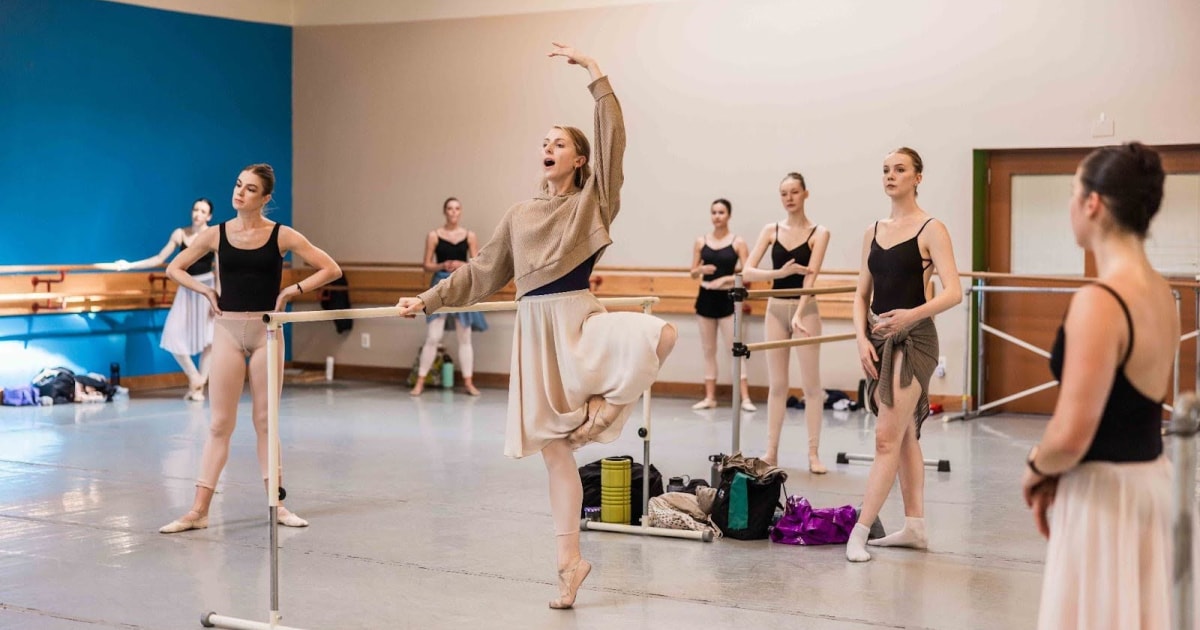
The studio performance you saw is only a studio showing, and those costumes are provisional. I am now working with a costume designer who is developing fuller versions, including subtle musical motifs in the designs – small references to musical notation or a clef on the bodice. The men will wear something like a bronze colour, suggestive of a trumpet, because one of the sections is built around a kind of trumpet dance.

So all of these things – movement, costume, music, and one day, I hope, live performance – are meant to capture the radiance of St Cecilia as she appears in traditional iconography.

JCB: You have spoken a great deal about beauty, and about ballet as a privileged art form for expressing it. Ballet, after all, still remains relatively traditional. It has a strong sense of form, discipline and inherited vocabulary. Do you think dance is particularly well suited to making transcendent beauty visible? And if so, why? Is it because of ballet, or because of the human body itself?

CK: I am not sure I could say with certainty which art form does this best, but I do think that because dance involves the whole person being seen – and the whole person being elevated through music and movement – it has a special power to convey transcendence.

When people watch dance, they often feel, almost vicariously, the elevation of spirit that the dancer experiences in movement. Even while simply sitting in their seats, they somehow participate in what we are feeling. That says something about the unique power of seeing the human body move beautifully. There is something there that is difficult to define, but very real.

JCB: That is a point I find especially striking. In philosophy of art, one notices that the most enduring achievements in painting, sculpture and even architecture are so often those grounded in the human form. It seems that creation as a whole is good, but the human form remains, in a special way, ‘very good’.

CK: Yes, exactly. And that immediately brings to mind the fact that we are made in the image and likeness of God. That is why the human form carries such dignity. Perhaps that is also why dance has this unique power: through the body it reveals something of the soul, and therefore something of God.

JCB: As a dancer, you are especially sensitive to good movement, gesture and musical form. Does that affect the way you experience the liturgy? Would you say that beautiful music and reverent gesture make a real difference at Mass?

CK: Yes, absolutely. In fact, I changed where I go to Sunday Mass because I wanted to be in a place with beautiful music and a beautiful liturgy. I even joined the choir there because I loved it so much.

Beautiful music in the liturgy is immensely elevating. It inspires prayer in a way that lesser music simply does not. The richness and layering of voices in a choir seem to speak both to the multitude of persons on earth and to the Kingdom of Heaven. There is something about beautiful sacred music that does wonders for the human person.

JCB: What would be your dream stage for this work?

CK: I already have one. It would be Woolsey Hall in New Haven. There is an organ there that literally forms the backdrop to the stage. The stage itself is somewhat smaller than what one usually wants for dance, and it is slightly raked, which would make things more challenging for the dancers. That is not especially common in the United States. But still, it is my dream space because it is nearby, in Connecticut, and that organ would form such a magnificent backdrop. The hall itself has beautiful architecture and excellent acoustics. I imagine a small choir in the balconies on either side, a small orchestra below, the organist facing the stage, and our 13 dancers on stage. That is the dream.

And I am actually hoping to make it happen – not too far in the future, but perhaps in 2027.

JCB: Before we finish, is there anything further you would want to say about Ode for St Cecilia?

CK: Only that it has been a joy to choreograph. There is something both playful and elevating in the music, and working with it has been a real pleasure. Even where the work becomes demanding, there has been a great deal of joy in the uniqueness of the piece.

Claire Kretzschmar is the artistic director of Ballet Hartford and a former soloist with New York City Ballet. Openly Catholic in her artistic vision, she is leading a significant renewal of sacred imagination in the arts, seeking to recover the unity of beauty, discipline, embodiment and transcendence through classical ballet.

Her recent work, Ode for St Cecilia, reflects this ambition particularly clearly: a choreography animated by artistic and theological conviction, dedicated to beauty.

Jan C Bentz: Claire, it is a real pleasure to speak with you about your work, about dancing and about faith. Let me begin very simply: when did it all come together for you? When did you begin to realise that art, beauty, faith and God belong together?
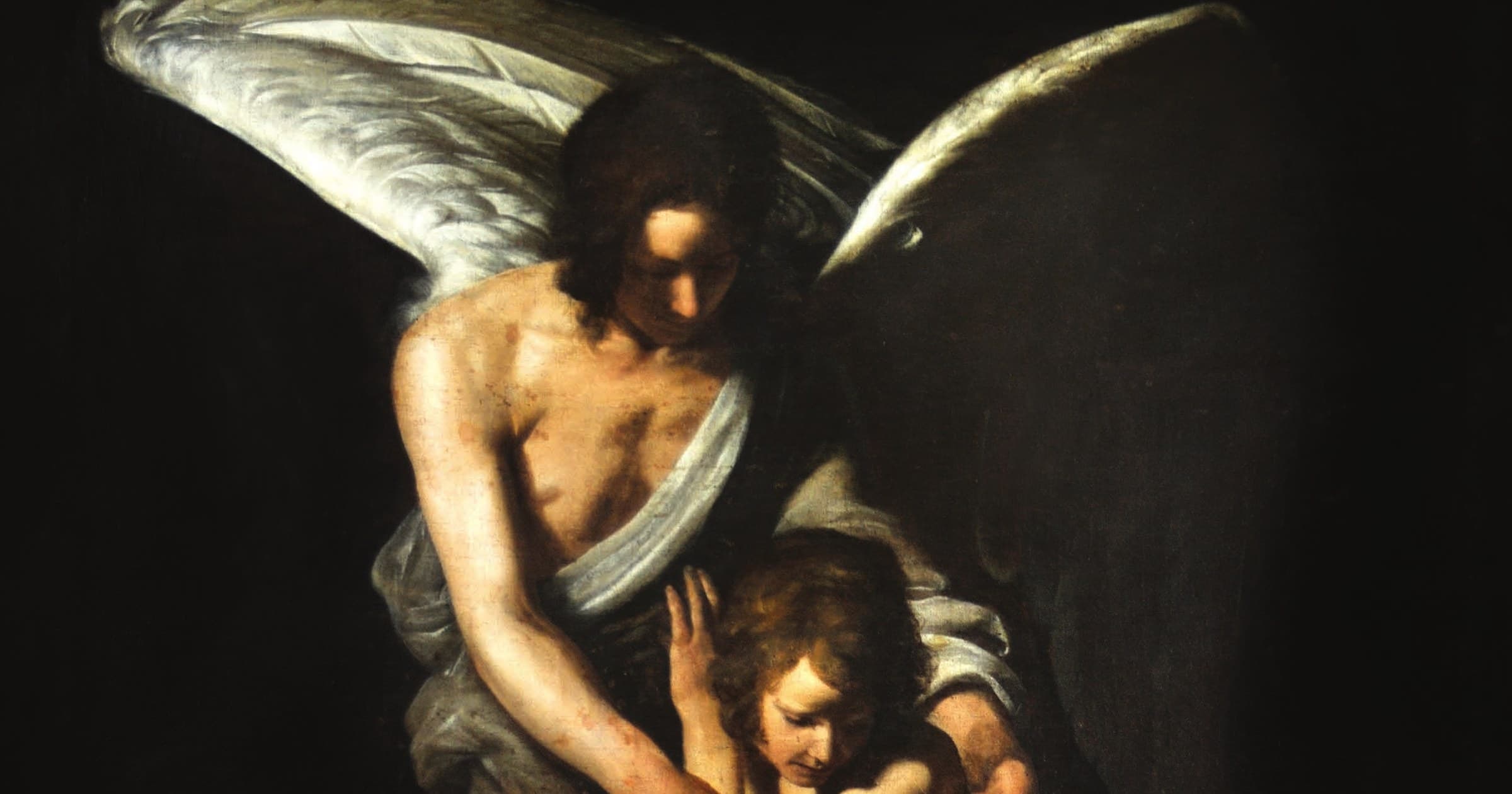
Claire Kretzschmar: It is not something I have really analysed in a formal way, but I think I began to realise it more clearly after I stopped dancing professionally. When I moved more to the other side of things – as a teacher, choreographer and director – I became less focused on all the technical details I had to work on as a dancer, and I started to develop my own perspective on the relationship between ballet, specifically, and faith.

What seems very natural to ballet and to good movement is that body and soul are instinctively united in the music and in the movement, if they go together well. Your whole person becomes one. That is something I did not fully realise while I was dancing professionally, but later, as I began to read more, study more and especially as I was trying to hand on what I knew to younger dancers, I really saw that the two naturally belong together.

That said, it also takes real effort on the part of the choreographer and the teacher to make sure that music, movement and the intention of a step or of a story are full of integrity – that they make sense, and that they elevate the human spirit. I think that is very important, and again, something quite natural to ballet when it is done well.

JCB: Do you find that modern life – perhaps based on decisive developments in modern philosophy and theology – often introduces a kind of fracture between body and soul? And if so, do you think dance naturally lends itself to rediscovering the unity of the two?

CK: Yes, completely. I feel very strongly about that. As a dancer, I found that, on a good day – and of course not every day was a good day – but for the most part, if I had good steps and good music, I felt whole, and I felt joy.

I think there is a great deal of fear around the body today. On the one hand, there are those who want to deny the body, as though it were bad in itself. On the other hand, there is an indulgence in the pleasures of the senses and the flesh, and that too is disordered. Somewhere in the middle there is this beauty of being a physical being, of having flesh and using it for good – for elevating both body and soul together.

My hope is that ballet can make that seen and felt, whether one is an audience member or a dancer. There is also, of course, so much gender confusion today, and that enters into dance as well. That is perhaps another subject, but it is related. Questions of gender roles, their importance and the confusion surrounding them are certainly present in the dance world too.

JCB: That connects very strongly with something I once heard from a Hungarian dancer in Budapest. He was not, as far as I know, a Christian, but he came to a very similar conclusion. He said that dance had almost a healing function: it helped people come properly into their bodies, arrive in them, and use them well. He even worked with patients suffering from forms of bodily or neurological dysfunction and saw dance as helping to restore a kind of unity.

That brings me to a question. From the outside, the dance world seems highly competitive, even ruthless at times. Was this sense of unity between body and soul something you found others also came to recognise, or was it more of a personal discovery that left you feeling rather alone?

CK: There is a great deal of brokenness in the dance world. Perhaps it is a kind of microcosm of the wider world, where there is already so much hardship surrounding the body. In dance specifically, the pursuit of perfection can really wreak havoc on both soul and body. At its worst, it can be crushing. It can keep you from even wanting to try to become a good dancer.

The competition, the pursuit of perfection, and the sheer toll it takes on the body can really wound the heart. What I have experienced in dance is a deep brokenness among many dancers. They feel less than they are. They struggle to find peace while trying to pursue excellence without being perfect.

Personally, I experienced this struggle very strongly. The pursuit of perfection made me fearful of failure, especially on stage. I often did not really know where to turn for help. Over time I began praying more, attending daily Mass, and those became the means by which I found some stability and healing. That may not be what the average dancer turns to, but it helped me immensely. And because of that experience, I now feel a great deal of empathy for dancers who carry that same brokenness.

Now, as a director, I hope to bring some healing into that. I want to say that one can pursue excellence, one can pursue beauty and integrity in body and soul, without being destroyed by the impossibility of perfection. Perfection may never be attained, but greatness can be. And that greatness, the beauty of movement and music, can become a balm to others just as much as it can to the dancers themselves, if we can build that together in the studio.

JCB: That brings us very naturally to your beautiful ballet Ode for St Cecilia. First of all, why St Cecilia? And then: when you began choreographing this work, how did you think about grace, harmony, transcendence and faith through the language of dance? How did that come about?

CK: With Ode for St Cecilia, I first found the music. I was listening, as I often do, on Spotify, and I think I heard one track and immediately thought: what is this? It is amazing. So I found the rest of the piece and fell in love with it – its uniqueness, its sense of transcendence. I especially love choral music. The first ballet I ever choreographed and had performed on stage was Benjamin Britten’s A Ceremony of Carols, and I think I am simply drawn to the human voice and to the way voices can carry the soul in music. I do not think that is always done today, especially in ballet, but I love it.

As director and choreographer of Ballet Hartford, I am always looking for new music and new ideas. What usually happens is that I listen to the music over and over again. If it really stays with me and I keep wanting to return to it, that is a good sign that choreography may come from it. I also often shape the music a little for practical reasons – I do not always use every section of a larger work, because I need to think about the arc of the ballet, the length and the size of the company.

But with this piece, what moved me most was the fact that music, through its harmony, balance, beauty and power, can elevate the human spirit in a way that other art forms perhaps cannot. I have recently been reading the composer Michael Kurek, who writes that music speaks directly to the heart and the emotions, and I think that is true.

Handel’s piece was composed for the Feast of St Cecilia. She is the patron saint of music, and the music itself honours the beauty and power music can have in human life. So I simply retained Handel’s title for the ballet and followed the spirit of the piece very closely.

JCB: And what is the narrative or inner structure of the ballet? Does it retell the story of St Cecilia herself, or is it more a meditation on her significance?

CK: I am still developing the piece – I still have three sections left to choreograph – but I am envisioning it less as a literal retelling of her life and more as an expression of her as patron saint of music and of the gift that music is to the world. In a sense, I am imagining the ballet almost like an icon of St Cecilia – but translated into dance and brought to life through movement.

I picture her at the organ, with a harp in the background, gold everywhere, and an angel speaking to her. In her story, the angel comes with the golden crowns and affirms her purity. Her husband understands and honours her virginity. So the ballet is, in a way, a radiant and glorious representation of St Cecilia as she might appear in an icon – but given movement, costume and eventually lighting.

The studio performance you saw is only a studio showing, and those costumes are provisional. I am now working with a costume designer who is developing fuller versions, including subtle musical motifs in the designs – small references to musical notation or a clef on the bodice. The men will wear something like a bronze colour, suggestive of a trumpet, because one of the sections is built around a kind of trumpet dance.

So all of these things – movement, costume, music, and one day, I hope, live performance – are meant to capture the radiance of St Cecilia as she appears in traditional iconography.

JCB: You have spoken a great deal about beauty, and about ballet as a privileged art form for expressing it. Ballet, after all, still remains relatively traditional. It has a strong sense of form, discipline and inherited vocabulary. Do you think dance is particularly well suited to making transcendent beauty visible? And if so, why? Is it because of ballet, or because of the human body itself?

CK: I am not sure I could say with certainty which art form does this best, but I do think that because dance involves the whole person being seen – and the whole person being elevated through music and movement – it has a special power to convey transcendence.

When people watch dance, they often feel, almost vicariously, the elevation of spirit that the dancer experiences in movement. Even while simply sitting in their seats, they somehow participate in what we are feeling. That says something about the unique power of seeing the human body move beautifully. There is something there that is difficult to define, but very real.

JCB: That is a point I find especially striking. In philosophy of art, one notices that the most enduring achievements in painting, sculpture and even architecture are so often those grounded in the human form. It seems that creation as a whole is good, but the human form remains, in a special way, ‘very good’.

CK: Yes, exactly. And that immediately brings to mind the fact that we are made in the image and likeness of God. That is why the human form carries such dignity. Perhaps that is also why dance has this unique power: through the body it reveals something of the soul, and therefore something of God.

JCB: As a dancer, you are especially sensitive to good movement, gesture and musical form. Does that affect the way you experience the liturgy? Would you say that beautiful music and reverent gesture make a real difference at Mass?

CK: Yes, absolutely. In fact, I changed where I go to Sunday Mass because I wanted to be in a place with beautiful music and a beautiful liturgy. I even joined the choir there because I loved it so much.

Beautiful music in the liturgy is immensely elevating. It inspires prayer in a way that lesser music simply does not. The richness and layering of voices in a choir seem to speak both to the multitude of persons on earth and to the Kingdom of Heaven. There is something about beautiful sacred music that does wonders for the human person.

JCB: What would be your dream stage for this work?

CK: I already have one. It would be Woolsey Hall in New Haven. There is an organ there that literally forms the backdrop to the stage. The stage itself is somewhat smaller than what one usually wants for dance, and it is slightly raked, which would make things more challenging for the dancers. That is not especially common in the United States. But still, it is my dream space because it is nearby, in Connecticut, and that organ would form such a magnificent backdrop. The hall itself has beautiful architecture and excellent acoustics. I imagine a small choir in the balconies on either side, a small orchestra below, the organist facing the stage, and our 13 dancers on stage. That is the dream.

And I am actually hoping to make it happen – not too far in the future, but perhaps in 2027.

JCB: Before we finish, is there anything further you would want to say about Ode for St Cecilia?

CK: Only that it has been a joy to choreograph. There is something both playful and elevating in the music, and working with it has been a real pleasure. Even where the work becomes demanding, there has been a great deal of joy in the uniqueness of the piece.

subscribe to
the catholic herald

Continue reading your article with a subscription.
Read 5 articles with our free plan.
Subscribe

subscribe to the catholic herald today

Our best content is exclusively available to our subscribers. Subscribe today and gain instant access to expert analysis, in-depth articles, and thought-provoking insights—anytime, anywhere. Don’t miss out on the conversations that matter most.
Subscribe