

Imagine finding yourself in a Roman tavern in the year AD 100. You are locked in conversation with a friend who, like you, speaks in hushed tones. Although your companion is not a Christian yet, neither of you has a desire to be overheard. The topic of conversation is the reasonableness of the Gospel, but it will be another 200 years before it is safe to discuss such things openly.
When your friend asks you why he should consider converting, you run through the usual arguments. The Christian conception of God is more philosophically coherent than the gods of his ancestors. Plus there is the eyewitness testimony surrounding the Resurrection of Christ, not to mention the fact that Saul of Tarsus came to believe in this central miracle despite having every reason not to.
Finally, you run through the remarkable growth of the Christian faith over the past 70 years. Could a man-made religion really have flourished under so much persecution? Surely the supernatural courage and charity displayed by the martyrs is evidence that they have discovered something true.
You pause for a sip of ale – and to observe how your companion is taking all this in. You see that he is sympathetic but still not entirely convinced. Thankfully, you saved one of your best arguments until last. ‘There is one more thing to think about,’ you add quietly. ‘Jesus of Nazareth was prophesied in the Jewish scriptures, written hundreds of years before his life. And he fulfilled those prophecies.’ Your friend’s eyes grow wide as you begin unpacking the Old Testament texts one by one. It is the early hours of the morning before you finally pick up the tab and hurry home for the night.
Although the argument from prophecy is not a popular one in modern Christian apologetics, it has not always been that way. In the New Testament itself, fulfilment of prophecy is seen as a crucial element in verifying who Jesus is. As Philip explains to Nathanael: ‘We have found him of whom Moses in the law and also the prophets wrote, Jesus of Nazareth, the son of Joseph’ (John 1:45).
Following the Resurrection, Jesus appears to two disciples on the road to Emmaus and proceeds to offer them the greatest Bible study in history: ‘beginning with Moses and all the prophets, he interpreted to them in all the scriptures the things concerning himself’ (Luke 24:27).
Jesus does the same thing in the following scene, when the disciples are gathered together in Jerusalem. After suddenly appearing before them, he explains that ‘everything written about me in the law of Moses and the prophets and the psalms must be fulfilled … [and] he opened their minds to understand the scriptures’ (Luke 24:44–45).
The elusive thing about these texts from Luke’s Gospel is that we are not told exactly what Old Testament passages Jesus drew on. But the fact that he references not only the prophets but also the law of Moses and the psalms suggests that he was drawing not on a handful of isolated texts, but rather on a whole panoply of prophetic material.
Much of that material has recently been compiled in Gary Michuta’s excellent new book, Messiah: Old Testament Prophecies Fulfilled in Christ. Published by Emmaus Road, this practical resource gathers together no fewer than 63 Old Testament Messianic prophecies, providing careful commentary on each.
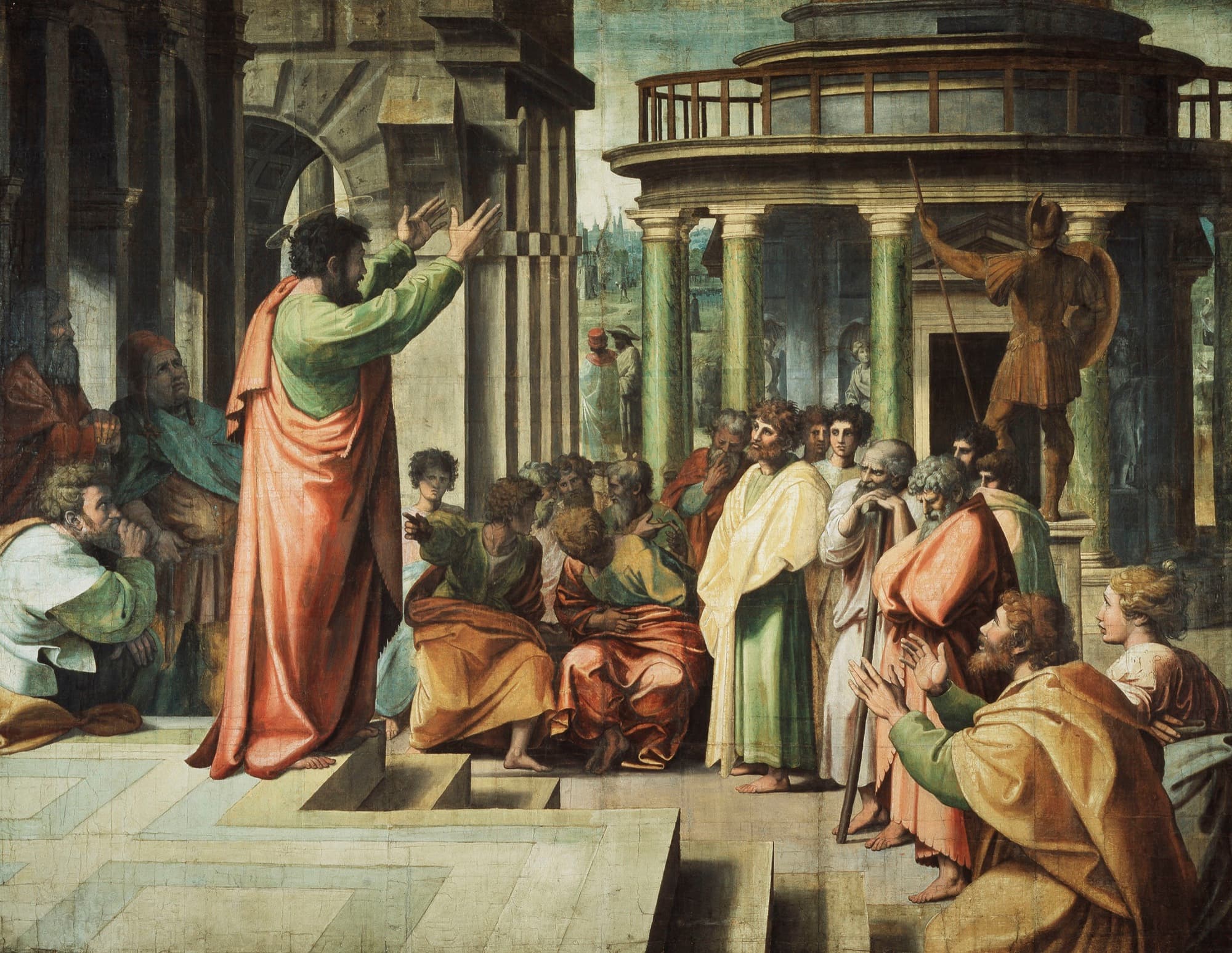
In undertaking this task, Michuta finds himself in good company. St Paul himself, in his trial before King Agrippa in Acts 26, points to the fulfilment of prophecy as powerful evidence for the truth of the Christian religion. This line of argument was expanded upon by St Justin Martyr – known as the first apologist – in the 2nd century.
Justin explains in his First Apology: ‘For with what reason should we believe of a crucified man that he is the first-born of the unbegotten God… unless we had found testimonies concerning him published before he came and was born as man, and unless we saw that things had happened accordingly’. This apologetic approach would later be adopted by thinkers like Irenaeus, Lactantius, Origen and Augustine.
Michuta is well aware of the sceptical response to arguments from prophecy. Could not Jesus or the evangelists simply have arranged things retroactively to make it appear as if certain things were being fulfilled? But as Michuta points out, the sheer quantity and diversity of prophecies makes this objection difficult to sustain.
Just consider some of the details the Old Testament offers us about the coming Messiah: he will be a descendant of King David (2 Sam 7:13–14), he will arise in the 1st century (Dan 9), he will be born in Bethlehem (Mic 5:2), he will die by being pierced in his hands and feet (Ps 22:16), he will rise on the third day (Hos 6:2), and his kingdom will be universal and will outlast all other earthly kingdoms (Dan 7:14). How plausible is it that Jesus could have ensured his life fulfilled all these different oracles?
Two prophecies I particularly appreciated in Michuta’s treatment were those found in Job 19 and Psalm 16. I find it tremendously moving to know that, even in the midst of his great suffering, Job lived in the hope that his Redeemer would one day stand upon the earth.
As for Psalm 16, we hear it every Thursday during Compline, but I had never stopped to consider before the way that it points forward to Christ’s Resurrection: ‘For you will not leave my soul among the dead, nor let your beloved know decay.’
Michuta’s book is both an impressive apologetic achievement and a useful devotional resource. He has done a great service to the Church by producing this work, and Messiah will remain on my shelf for many years to come.
.jpg)