May 2, 2026

Lola Salem on… the boycott crisis in the arts

Lola Salem
More
Related
Min read
share

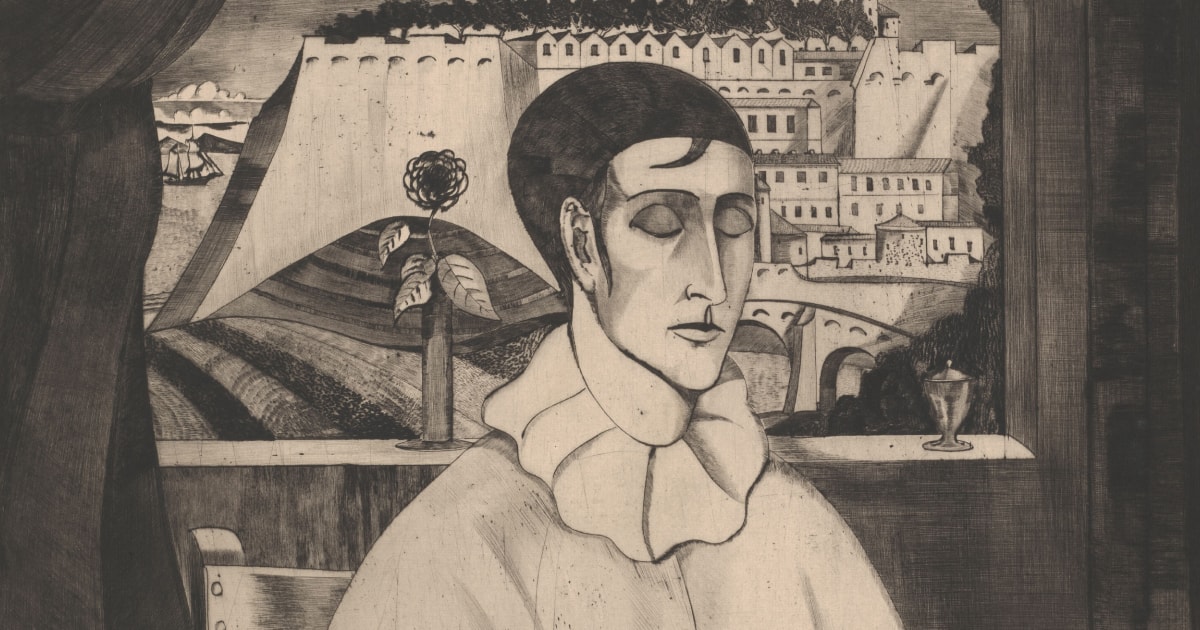
At the dawn of the new millennium, a gifted young composer could arrive in a great cosmopolitan capital, convinced he stood at the threshold of a flourishing career. Conservatories still taught rigorous craft, and the art institutions were not yet spooked by the language of excellence. Boulez, Ligeti and Stockhausen were alive, still active. At first glance, the infrastructure of serious music would appear intact to our young musician. Yet within a few short years he would watch the entire ecology dissolve. His own expectations, his sense of beginning – becoming something in this vast world – would turn out to be the tail end of the system he had been promised.

As the art institutions slowly, and then rapidly, reoriented themselves away from greatness towards something further and further away from art, but closer and closer to bureaucratic and ideological criteria – a farandole of checkboxes for identities and reputational safety – the generative chain eventually broke. Young artists would no longer be incentivised, if trained at all, to obtain traditional knowledge, and as time passed, a growing number of teachers would no longer even know how to transmit it. The knowledge transfer that sustained Western art for centuries would simply dry out. But if anyone were to wonder what the magnitude of the loss would be, like our young musician, where would that person begin?

I so wish that it were science fiction, but, first, history tells us that declines and falls exist, sometimes plunging societies into darkness for centuries, as Ancient Greece recalls. But it is also something that is very much on the menu, if one pays attention to the output of the poetically baptised ‘creative industries’. Freedom in the Arts’ latest report, The New Boycott Crisis, documents with clinical clarity what many in the sector have long sensed without daring to name – until now. ‘An ecology once shaped by artistic judgement and creative risk,’ the report states, ‘is increasingly influenced by fear, informal sanction and reputational anxiety. The determining question is no longer simply “is this good work?” but “what will happen if we programme this?”’

Adding to their previous report, Afraid to Speak Freely, which gathered data from almost 500 people in the sector, a total of 158 artists spoke to the authors, Jo Phoenix and the co-founders of the campaign, Denise Fahmy and Rosie Kay, of humiliating professional exclusion, self-censorship and a cascade of anticipatory compliance that now ripples through venues, galleries, funders and festivals alike. The sector ‘risks defending diversity of identity while losing diversity of thought’.

The Romantic myth dies hard: many still think of the artist as visionary, necessarily unfettered, answerable only to the daemon within. Yet this mythology conceals a grimmer reality. Behind the rhetoric of liberation, today’s creators find themselves bound by constraints far more insidious than any patron’s brief or guild master’s rule. The invisible masters are not patrons but peer networks, funding criteria, algorithmic reputation systems, and the quiet but utterly destructive machinery of cancellation. One need only read The New Boycott Crisis’s case studies to see the pattern. People in the arts are faced with a deluge of passive-aggressive behaviours. In many cases, the resounding silence of peers – who refuse to speak to the cancelled individual, do not reply to emails, and whisper in the corridors of artistic power – is absolutely chilling. Operating through silence and quiet withdrawal, the infrastructure of control in the art world is rarely proclaimed from on high. 

Josh Breslaw, co-founded and drummer of the klezmer dance band Oi Va Voi, described during the report’s launch in the House of Commons, how the band was deplatformed in Brighton and in Bristol as a result of pressure from pro-Palestine activists because their guest singer, Zohara, was Israeli. And although one of the venues, Strange Brew, accepted that its decision to cancel the band, had been shaped by heightened sensitivity around Jewish identity, the path to recovery for artists plunged in these situations is difficult, often even impossible.

Although the timeline that would explain the reasons for this freedom of speech crisis is rather tortuous and complex, and few signposts stand out. It is particularly interesting to consider that, in the early 2000s, serious conversations about what art was and what it was for still occurred in modest project spaces and front rooms; however, they started migrating to public venues underwritten by public money. In the auditorium of the Tate Modern, among other postmodern temples, discussions would then be moderated by officials in lanyards performing the role of ‘vibes checkers’, and the ‘culture wars’ would become the culture itself.

What has taken over is a strange modern combination that G K Chesterton diagnosed a century ago: theoretical libertinism paired with practical tyranny. Artists and art critics may express anything, so long as it passes through an invisible filter of acceptable opinion. The very systems once designed as patronage for non-commercial artists – allowing them to pursue beauty rather than marketability – have been repurposed as instruments of ideological conformity. The incentives now reward gaming the system and punish honesty.

Freedom in the Arts has performed a genuine and much-needed public service by bringing these patterns into the open. Its careful diagnosis presents a map of the new boycott crisis that spares neither left nor right, neither secular nor religious. Going further, we need to document the quiet erosion of artistic judgement and the substitution of reputational risk management for aesthetic discernment. In doing so, we’d perform the classic function of Catholic intellectual witness: to name reality truthfully so that it might be redeemed.

The Church Fathers would not have been surprised. Augustine, for example, understood that freedom untethered from truth becomes its own prison: ‘Thus, a good man, though a slave, is free; but a wicked man, though a king, is a slave. For he serves, not one man alone, but what is worse, as many masters as he has vices’ (De Civitate Dei, Book IV, Chapter 3). The contemporary art world, having cast off the discipline of techne, has not achieved liberation; it has merely exchanged visible masters for hidden ones. Where once the artist submitted to the exacting tutelage of form, material and tradition, he now submits to the vagaries of ideological fashion, which are enforced not by edict but by the soft power of funding streams and peer pressure.

Yet the Catholic intellectual tradition offers a corrective our libertine age cannot supply. Aquinas taught that true freedom is not the absence of constraint but the capacity to act in accordance with one’s nature towards its proper end. The sculptor who has mastered his chisel is freer than the dilettante who has not. The poet who has internalised metre and form is freer than one who mistakes formlessness for liberation. Jacques Maritain, in his reflections on art and scholasticism, located the virtue of art in the habitus – the stable disposition acquired through long practice that enables the craftsman to make well. From constraint emerges capacity. The great works of Christendom, from Michelangelo’s Sistine ceiling and Dante’s Commedia to Palestrina’s Masses, emerged not despite the Church’s patronage and doctrinal framework but within and through them. They were shaped by commission, tradition, and theological truth, and in that shaping they achieved a freedom deeper than anything produced by our supposedly emancipated age.

In the secular sphere, some courageous souls perfectly understand this. Freedom in the Arts does not pursue any nostalgia for a lost golden age, but sends a call to recovery, starting with that of the courage and freedom to say what one believes, and to respect the artists’ craft regardless of their personal views. The campaign group’s work reminds us that material reality always wins as, indeed,the ideological bubbles currently suffocating the arts cannot sustain themselves indefinitely. Beauty, as Dostoevsky insisted, will save the world; but only if we permit it to exist.

Continue reading with a free account

Create a free account to read up to five articles each month
Create free account

You have # free articles remaining this month.

Subscribe to get unlimited access.
Sign up

subscribe to the catholic herald today

Our best content is exclusively available to our subscribers. Subscribe today and gain instant access to expert analysis, in-depth articles, and thought-provoking insights—anytime, anywhere. Don’t miss out on the conversations that matter most.
Subscribe