May 1, 2026

Faith, politics and the rise of MAGA Catholics

Fr Dwight Longenecker
More
Related
Min read
share

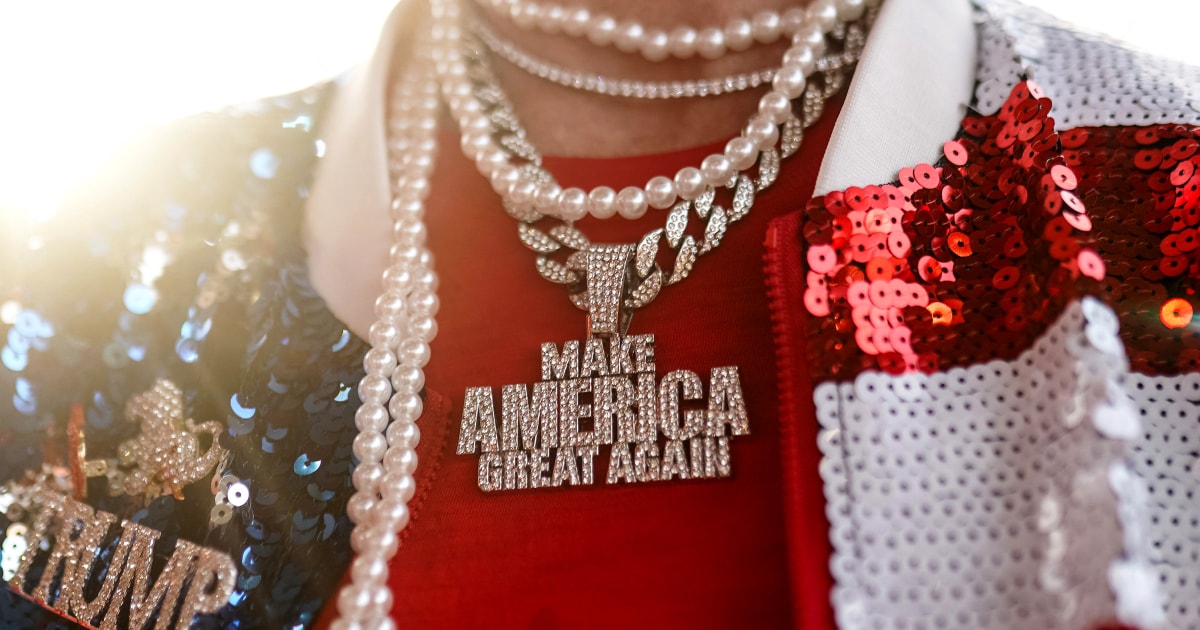
Scrolling through social media this morning, I was struck by a double image: a jet fighter with a large icon of the Blessed Virgin Mary blazoned across it, next to an AI-generated image of Donald Trump radiating a kind of messianic glory in front of a flowing American flag and the motto ‘Thank God for Trump’. The person posting bore the profile name ‘Our Lady of Guadalupe’. Above the double image that ‘Our Lady of Guadalupe’ posted was the text: ‘God bless America and Trump. Thank you Jesus for sending Trump to stand up to an apostate pope in error with church doctrine.’

The bitter vituperation against Pope Leo by right-wing American Catholics is astonishing. After the Pope’s clash with Trump over the war in Iran and his support for the poor and immigrants, social media posts from Trump supporters have called Pope Leo a homosexual, a lackey of the Lavender Mafia, a puppet of the left-wing Obama/Axelrod political machine, a socialist, a communist and a hand-picked successor to the Marxist shielder of sex offenders, Pope Francis. The frightening fanaticism of die-hard Catholic Trump supporters is bewildering, but when one looks at the history and wider context, it is not surprising.

For wider context, one needs to understand American politics from the post-war period onwards. Of the two political parties – Republican and Democrat – the Democrats presented themselves as the party of the poor, the dispossessed, the immigrants and the working class. They were for the little man: the trade unions, equal rights, welfare and standing up against the wealthy East Coast establishment. As such, the Democrats also had the Catholic vote. The Republicans stood for the wealthy, the property owners, the white Protestant middle class, much of the university-educated and the establishment elite.

But from the 1960s onwards there was an about-turn. It became fashionable to defend the poor and fight for equal rights, and those equal rights were not only for black Americans. Feminists and homosexuals were also demanding equal rights. As intellectuals, the entertainment industry and media figures joined in, the Democratic Party became the party of a new kind of elite – the politically correct elite. What had been support for the poor, ethnic minorities, the working class and immigrants evolved into support for a wide spectrum of aggrieved identities.

As the Democratic Party shifted from the working class to this new elite, its traditional base began to move. Ordinary working-class Democrats (and Catholics) realised that their common-sense values – both economic and moral – were more aligned with the Republican Party. This shift was driven in part by the ‘Moral Majority’ in the 1970s, which entered the culture wars over sexual morality and abortion, and through which Protestants and Catholics began to see themselves as allies rather than enemies.

In a television interview with Donald Trump decades before he pursued political ambitions, the interviewer was walking down a street in New York City and asked Trump if he had ever considered politics. Trump replied, prophetically: ‘Sure, and if I did, I’d win.’

‘Who would vote for you?’ the interviewer asked.

Pointing to the construction workers on one of his building projects, Trump said: ‘Those guys up there’.

They were all waving to him and calling his name.

After the blue-blood East Coast establishment reign of the Bush family over the Republican Party, billionaire Donald Trump came to prominence. Formerly a registered Democrat, he understood the cultural shift that had taken place. The workers, the ‘little guys’, the silent majority were now Republicans, not Democrats. He portrayed himself as an ordinary man who had made good. He was shrewd and spoke – and acted – not like the Bush family, but like the construction workers.

Was he coarse and foul-mouthed? They were too. Did he have an eye for a beautiful woman? He was like them. Did he cut deals and make money? They wished they could. Did he avoid taxes, distrust big government and suspect the establishment of being corrupt? That was their view too. When he ended up being persecuted by that crooked and corrupt establishment, he became their martyr. When he survived an assassination attempt, that sealed the deal.

Now let us weave in religion. Many of these same working-class and middle-class Americans were Christians – both Catholic and Protestant. They did not like Trump’s language or morals, but they preferred him to the alternative, for by now the Democrats were firmly aligned with abortion rights, feminism, LGBTQ+ activism, transgender ideology and open borders.

Catholics who once voted Democrat because it was ‘the party of the poor’ hesitated when ‘the poor’ appeared to include a wide range of social outliers. In their attempt to be tolerant, the Democrats seemed, to these voters, to indulge the worst elements of the underclass – the indigent, addicts and the homeless. Catholics may have wanted to help the poor, but for many this was a bridge too far.

Donald Trump came with a promise to clean up cities, deport criminal immigrants, support the family, ‘drain the swamp’ in Washington and ‘Make America Great Again’.

When he took action alongside Israel regarding Iran, these supporters cheered – Catholics included. Many viewed Muslims as a threat and saw Iran’s actions, both internationally and domestically, as justification for American force.

For right-wing American Catholics there was an additional factor: Pope Francis. Many conservative Catholics believed that Francis disliked America, did not understand traditional Catholics and did not wish to. They viewed him as aligned with liberation theology and hostile to their concerns. If Francis did not like them, they returned the sentiment.

Now Pope Leo has assumed the throne of Peter, these same Catholics have convinced themselves that he is the result of a conclave shaped by Francis and his allies – Cardinals Cupich, Tobin and McElroy.

Too many are declaring that they are Catholic, but ‘this Pope is not my Pope’.

Mr Trump is their hero instead, and their battle cry is: ‘Thank you Jesus for sending Trump to stand up to an apostate pope.’

I realise there is little I can do to address this situation.

However, there are five steps I think ordinary American Catholics should take. First, we should heed the words of St Paul: ‘I urge that petitions, prayers, intercessions and thanksgiving be made for kings and all those in authority, that we may live peaceful and quiet lives in all godliness and holiness’ (I Timothy 2:1–2). Considering these words were written during the reign of Nero, it should not be too much to ask.

Second, we should admit that it is the Pope’s role to speak out on moral as well as doctrinal issues and that it is acceptable for him to challenge the White House. Third, we should do the Holy Father the courtesy of discovering what he really said, rather than relying on scare headlines from bias-affirming news sources and social media. Fourth, we should be better informed about Catholic social teaching, realising that it offers a more expansive approach to world affairs that is balanced and fully Catholic.

Finally, we should all try harder to see the issues from the other side. We may disagree with our fellow Catholics on political questions, but if we grant that they hold their positions in sincere good faith, they might return the courtesy and grant that we also hope, pray and work for the best. In this mutual respect, the unity at the heart of the Catholic faith will be nurtured and prosper.

Continue reading with a free account

Create a free account to read up to five articles each month
Create free account

You have # free articles remaining this month.

Subscribe to get unlimited access.
Sign up

subscribe to the catholic herald today

Our best content is exclusively available to our subscribers. Subscribe today and gain instant access to expert analysis, in-depth articles, and thought-provoking insights—anytime, anywhere. Don’t miss out on the conversations that matter most.
Subscribe