
May 1, 2026

Growing up ‘trad’

Josephine Fütterer
More
Related
Min read
share

Over 60 years after the close of the Second Vatican Council, debates remain ongoing within the Catholic Church about whether changes to the liturgy after 1965 have had a net positive or net negative effect on people’s faith.

A faction of Catholics set themselves against these changes: the translation of the liturgy from Latin into the vernacular and the omission or alteration of certain prayers in the Mass. This faction felt that the new liturgy had diluted or even removed meaning from the Mass. Believing that liturgy had a catechetical function, they felt that changes – especially at such scale – could not but obscure the primary, sacrificial nature of the Mass.
Perhaps the traditionalists had a point: the years following the Second Vatican Council witnessed a significant, universal decline in practice of the Catholic faith. This included decreased Mass attendance, the near-extinction of Confession and a corresponding uptick in practices against Catholic morality such as the use of artificial contraception.

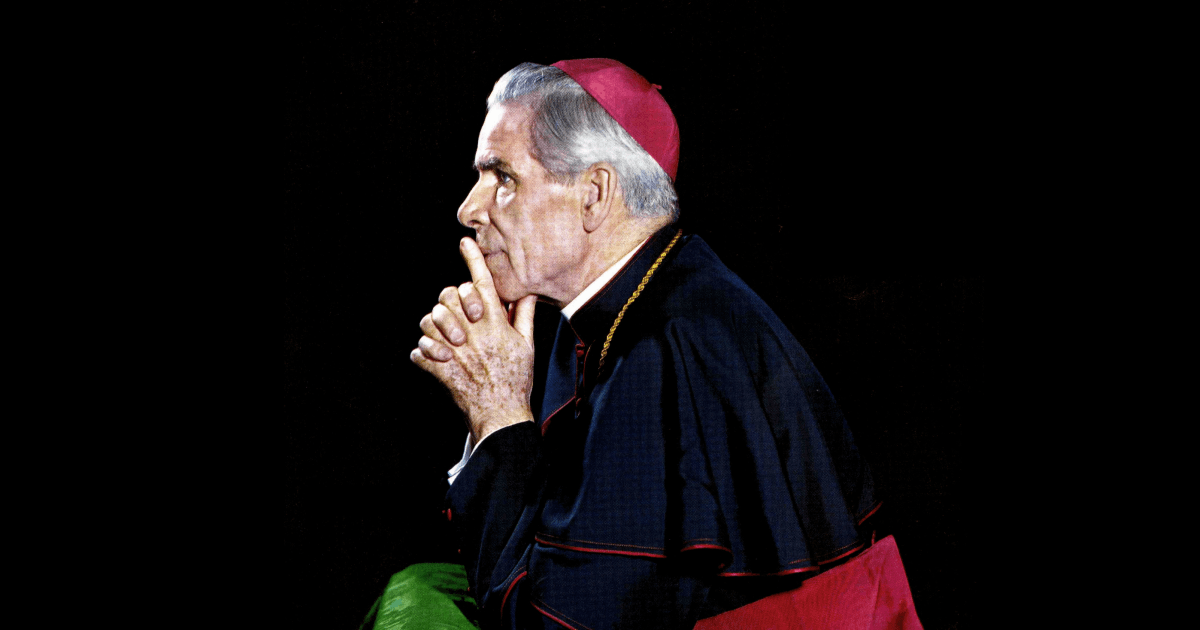
In the second half of the 20th century, the Church did not generally give much thought to the traditionalists. Some would have been aware of high-profile groups such as the Society of St Pius X (SSPX), led by the late Archbishop Marcel Lefebvre, who was present during the Council and was arguably a pioneer of Catholic traditionalism. However, the SSPX was also associated with significant controversy due to conflicts with the mainstream Church hierarchy.

The Church began to pay traditionalists more mind with the publication of Pope Benedict XVI’s apostolic letter Summorum Pontificum in 2007. The document increased awareness of and access to traditional forms of the liturgy in the mainstream Church, a move which attracted Catholic youth in search of meaning and structure in their faith. While this made many traditionalists optimistic that the Church would continue to embrace this heritage, controversies resurfaced when Pope Francis’s apostolic letter Traditionis Custodes (2021) sought to increase restrictions on the traditional Mass. This caused outcry among Old Rite communities and their supporters. There is a clear draw to the pre-1965 liturgies that defies even official restriction.

But what is the draw? The results of a 2020 survey published by the Priestly Fraternity of St Peter (FSSP), another traditionalist group, found – perhaps surprisingly – that pre-1962 rites were particularly popular among the 18–39 age group. Reverence, connection to Church history and a greater willingness to preach on difficult aspects of morality are reasons cited for young people’s choice to attend Mass at a traditional parish.

Many of these young people, however, discover the Old Rite later in life. It is quite plausible that, in a world full of turmoil and despair, they might turn to ‘beauty ever ancient and ever new’. But will this youthful enthusiasm last, spread and stem the tide of apostasy from the Catholic Church?

The natural answer to this question would be a longitudinal survey of Old Rite-attending families across generations. While such data would doubtless be useful, the scale of a survey often requires a degree of standardisation that can obscure the complexity of individual journeys and viewpoints.

These were the journeys and viewpoints I sought when I interviewed a handful of ‘second-generation traditionalists’ aged between 18 and 39, who had grown up predominantly attending a pre-1969 rite of the Mass. Most remain Catholic, though some left the Church as adults. The traditional rite of the Mass had left an impact on all of them. These are their stories.

• • •

“Andrew”, 18

Andrew arrives at our interview on a moped. The second oldest of 10 children, he is currently pursuing an apprenticeship in aerospace engineering. Andrew’s parents met through a traditionalist congregation when Andrew’s mother came to England from America as an au pair. Both parents played a significant role in the institution of the traditional Mass at their parish in London and currently run the church choir.

Life at home was steeped in faith: Andrew noted that the home altar was the ‘centre of the family’. He and his siblings grew up going to Mass at every opportunity, and evening prayers – Compline and five decades of the rosary – are non-negotiable.’“It is the most unpractical thing we do all day,’ observes Andrew. ‘My parents are bringing us up in a culture where no matter how the day has been, there is nothing in the evening that stops us from our prayers.’

Home schooling was another means of solidifying Andrew’s convictions. He observes that a home education can be centred around the Catholic faith in a way that is difficult in most school settings. He describes his experience as ‘normal studies done with a more liturgical or Catholic perspective’, such as using the Catechism of the Catholic Church as exemplars for handwriting practice. Andrew does acknowledge the possible downsides of home education. ‘Home schooling, depending on how it’s done, can be quite an enclosed thing,’ he admits. ‘But home schooling [is good] if you have a community.’

Nowadays, Andrew considers himself a traditional Catholic. ‘I believe that what we’ve seen [in the Catholic Church] since the 1960s and 70s, while not always negative, has not been a positive thing,’ he declares. He still lives in his childhood home, though 12-hour shifts at his apprenticeship mean reduced participation in family life. In addition to continued presence at family prayers, Andrew is a regular altar server alongside his brother in various central London churches. Altar serving is a large part of Andrew’s faith: ‘Being the eldest son,’ he comments, ‘one of the things that cemented me in the faith was the responsibility of serving Mass.’ Andrew is also fond of the Divine Office, a proclivity he can trace back to his family’s tradition of saying Compline daily.

I ask Andrew if there is one aspect of his faith he would pass on to the next generation. ‘That same sense of routine, even if you’re not able to pray reverently due to distraction,’ he confirms. It was this dogged devotion to evening prayers that impressed on a growing Andrew the importance of habit in a healthy spiritual life, a value which he hopes will carry him through life.

• • •

Anna, 30

Anna, currently a full-time religious education teacher, grew up breathing thoroughly Catholic air in the mountains of western Austria. The oldest of 10, she describes her upbringing as ‘a mix of very strict and very free’. Her tight-knit family attended Mass regularly at a chapel belonging to a prominent traditionalist group, and she attended schools run by this group until the age of 17.

Anna’s experience of boarding school was mixed. She treasures the deep, long-lasting friendships that she developed there, and recognises that it ‘tried to provide an excellent education for women who wouldn’t have otherwise had the opportunity’. However, Anna also mourns the ‘great wound’ that always seemed present in her community. Throughout her education, she felt that when she questioned what she was taught, her questions were sometimes brushed aside or not answered in a satisfactory manner. Anna fears that conflicts between her community and the mainstream Church have led to a closed, inflexible environment. ‘Everything is always about their cause,’ she explains, ‘which has often led people to a rigorous mindset with little compassion and mercy.’ However, Anna is keen to stress that she also received a solid religious education there that she might not have received elsewhere.

As Anna’s most formative years were spent at boarding school, the school’s prayer life had more of an impact on her than at home. Mass attendance was mandatory three times a week (including Sundays), and a daily rosary was also compulsory. A naturally lively child, Anna did not enjoy contemplative prayer, and the regimented routine felt ‘as though you have to pray a certain amount that is countable [to find favour with God]’.

Anna’s expulsion from school at age 17 triggered a crisis in faith. Chafing against a catechesis she describes as ‘narrow’, Anna later enrolled in a philosophy course at university with the goal of ‘seek[ing] the truth… without presuppositions’. During her course, she studied writers such as Kant, Wittgenstein and Edith Stein, and in doing so learned that she could not do without faith. ‘After six years, I received the grace to be reconciled with God,’ she says, ‘and healed my relationship with the Church. I could experience the beauty of the universal Church again.’

Anna considers herself Catholic today and is in the process of discerning a religious vocation. While considering herself a ‘defender of the Latin Mass’, she also appreciates the new rite. Attending the new rite with a chapter of the Scouts d’Europe challenged the pessimistic view of the mainstream Church that Anna grew up with: she had found a ‘beautiful community [whose] faith felt more real’. Anna believes that the new rite has enriched her spiritual life in a different way. The inclusion of more readings in the vernacular has enabled Anna to live closer to the Word of God on a daily basis.

For Anna, the most important aspects of her faith are reverence and beauty. Daily Mass is the ‘cornerstone’ of her prayer routine, which she attends ‘even if everything else fails’. Anna has learned to love the Mass as something more than the emotions beauty triggers in her. ‘Sometimes we have to carry this cross that things are not to your aesthetic standards… the Lord’s love is bigger than human psychological states, and the Mass is the Mass.’ When asked whether she prefers the traditional rite over the new rite, she says: ‘We [the Church] must breathe with the lungs we have.’

• • •

“Father John”, 33

Father John, from Germany, belongs to a priestly congregation that celebrates the old rite exclusively. In addition to his usual duties, he often leads retreats and youth formation programmes for young people.

Father John describes his upbringing as ‘sheltered’, with a ‘strong emphasis on both sports and music’. Unlike a few of the others interviewed for this article, it was his father who exercised the most influence over the family’s religious practice. ‘He was the one who constantly showed us by his example that faith isn’t just something for Sundays – it shapes your whole life,’ explains Father John. ‘[E]ven our family holidays were planned so that we could always attend Mass on Sundays.’

John’s family tried to integrate their faith in their daily lives. Father John would pray a few decades of the rosary with his family before school, ‘because in the evenings it was rare that everyone was home at the same time’. They would not only attend Mass together, but go on pilgrimage to places like Chartres as a family. John and his brothers became altar servers at a young age, which he avows is ‘something we [he and his brothers] were very proud of’.

Though Fr John lived a devout childhood, he underwent a period of rebellion during his final years at high school. ‘The lifestyle and influence of my classmates had a strong effect on me,’ he admits. ‘It might have been better if my father had pushed harder for me to finish my education at our school in America.’¹ This did not last long, however. He soon found his way back to the faith during a mission trip to India, where he and his sister took up teaching positions at an orphanage. Initially taking the trip as an opportunity to leave the country and see something different, John realises in retrospect that the move had also ‘ripped [him] out of all those bad influences’.

Fr John was moved by the contentment of children who had less than what those in the West were used to. Sitting with them in the evenings, his mindset turned on its head. ‘I realised that God is real,’ he recounts. ‘[That w]e human beings are in need of redemption. God became man, died on the Cross, and reconciled us with the heavenly Father. He founded the Church as a visible community and gave us the sacraments as means for the healing of our souls.’ Armed with his rediscovered faith, Fr John began going to daily Mass and exploring his faith in a deeper fashion. This resulted in the discernment of a priestly vocation.

‘I now live solely for the faith and for God,’ says Fr John. ‘That, to me, is the essence of the priesthood: a life of total dedication to God, a self-giving love offered for Him and for the salvation of souls.’ In addition to his youth work, Fr John keeps up a robust prayer life that includes daily celebration of Mass, the Divine Office, meditation and regular spiritual reading. He is ‘firmly convinced’ that the old rite helped him keep the faith. ‘The traditional liturgy, with its gestures, the posture of the priest and the faithful, the genuflections, the chants… expresses the majesty of God and the truths of the faith in the most profound way,’ he explains.

Looking back, Fr John is deeply grateful for the way his father guided the family in their faith. ‘A two-hour round trip in the car every Sunday to get to Mass was not something to be taken for granted,’ he acknowledges. Fr John also credits family prayers for ‘deeply rooting the faith within [him]’. However, he is keen to emphasise that he chose to become a priest and remain devout of his own free will. When he entered seminary, John recounts that ‘[t]here were even some harsh accusations that my parents had forced me or ‘brainwashed’ me in my childhood.’ But this is untrue, he says: ‘I had already shown at 18 that I don’t just do what my parents tell me.’

• • •

“Theo”, 27

Theo is a slim, dark-haired postdoc from the south of France. The youngest of eight, he is now pursuing research in physics at a top university in the United Kingdom.

Though he grew up predominantly attending the traditional Mass, Theo notes that his parents were relatively moderate on the Latin versus vernacular debate. The family would still occasionally go to a French Mass. ‘In England,’ he explains, ‘you can go to Latin Mass and people who go to English Mass won’t judge you. But in France there used to be a strong rift between tradition and Vatican II until Benedict XVI.’ Theo observes that such polarisation, though it increased again under Pope Francis, is likely decreasing again. Theo’s parents chose the old rite because they considered it ‘safer’, lest their children lose their faith – one of Theo’s brothers had allegedly attended a French Mass where the priest denied the divinity of Christ in his homily. ‘They didn’t want to fight against that so soon,’ explains Theo.

Theo remembers a family faith life centred around dinner-table discussions. Critical thinking was encouraged: his parents wanted to give their older children room to doubt. Theo notes that all of his siblings returned to the Church even after a phase of uncertainty. The family would discuss Sunday Mass, theology and morality, and Theo notes that ‘if we had questions, we could always go to our parents and ask’. Reading was also encouraged: Theo’s parents would recommend books and check to make sure they were morally sound, though if they were not, the books remained up for discussion. Theo categorises his religious education as ‘more self-reflection than external education’.

Nowadays, Theo still identifies as Catholic. For him, the most important aspect of his faith is self-discipline. ‘You need to make rules for yourself and choose to follow them,’ he insists. ‘If you won’t be able to hold yourself [to] small things, you won’t be able to hold yourself [to] big things.’ He has found this especially important having moved to the United Kingdom, where he feels he encounters more temptations than at home.

So how does Theo live out his faith? ‘I would say I try to live my faith by prayer, I am in constant internal fighting, and I count and hope for God’s help and mercy,’ he replies. The thought of constant internal fighting may seem somewhat distressing, but Theo has already given me my answer. ‘I always need to reevaluate my faith,’ he says. ‘Faith is an entire system. The temptation is to lie to yourself until you don’t believe a particular aspect of the faith because it’s “too hard”. But there is a difference between not believing something and not wanting it to be true.’

These are Theo’s interactions with a whole system of belief, but I am also interested in the spiritual dimension. I ask Theo how he sees God, and he says he has no answer. When I ask him why, he says that he does not like the question. ‘I don’t think of what God is “to me”,’ he explains, ‘because I consider this should not enter into my way of thinking. I think that way it may become easy to reduce God to an emotional dimension.’ I wonder if Theo’s ways of believing are influenced by the reason- and discussion-based catechesis he received growing up, but he is quick to correct me: there may be an internal logic to the beliefs of the Catholic Church, but first there must be a ‘spark of faith’, which only God Himself can provide.

Finally, I ask how the traditional Mass has influenced how Theo practises his faith. Attending makes believing easier, he says. ‘Times at which I go there regularly, I also pray more regularly, and hold closer to my belief,’ he continues. ‘I would say it [probably] makes it clearer, mainly because the traditional Mass leaves more space for silence… which allows me to think more clearly about my belief.’

• • •

“Adele”, 39

Adele, a social worker, is the mother of three children and lives in Austria. Her family joined a traditionalist group when she was about five years old after Adele’s mother met a passionate, charismatic priest who convinced them to begin attending his church.

Growing up, Adele’s mother continued to be the primary religious influence in the home. She remembers her mother’s frequent absence from the breakfast table, as that was when she would attend daily Mass. Similarly to other subjects, Adele grew up with a daily rosary in the evenings and frequent midweek Mass attendance in addition to the Sunday obligation.

For Adele, being a traditional Catholic meant plenty of rules imparted by her mother and during religion classes: dressing modestly, going to church and praying at home. Transferring from a traditionalist Catholic school to a state school at the age of 11 made things worse. ‘That was where I suffered most from all these close rules,’ remarks Adele. Peer pressure and a desire to fit in with her more secular peers also played into Adele’s disillusionment in her childhood faith: ‘I always wanted to be normal like the others were.’

Issues with peer pressure led Adele to rebel from her strict upbringing. As an older teenager, she began to lead a double life, taking drugs and playing truant from school. Nonetheless, Adele experienced periods where she would try to be more religious. ‘It gave my life a direction for many years,’ she explains. ‘My religion gave me support and structure.’ At 16 she became an au pair to another family in their church circles, working from 7am to 7pm. ‘I slept in the cellar, prayed a lot and read a lot of Hermann Hesse.’ But her life continued to spiral and she fell pregnant with her oldest child at 21. Adele made a final attempt at Catholicism after giving birth, taking her daughter’s father to catechism classes and bouncing between her parents’ home and the apartment they shared due to prohibitions on premarital cohabitation. But it all proved too much and she later separated from her then-partner.

When asked if she still considers herself religious, Adele answers: ‘Maybe yes, but it depends on the definition.’ I ask her to elaborate, and she replies: ‘My religion is just to be a good human being, to be respectful to people, respectful of nature… and maybe have a positive impact.’ Adele believes that her childhood faith was so focused on external manifestations – dressing a certain way, praying the right prayers – that all humanity was lost. ‘We were never taught how to love others,’ she says.

Fear-based morality is one aspect of her upbringing she does not want to pass down to her three children. Adele remembers the impact of an image she was shown in class as a teenager, of the wide road to hell and the narrow road to heaven. It seemed to sum up what Catholicism had become for her: a constant effort to avoid going to hell or, more immediately, displeasing her authorities. ‘Growing up, it was like “[you] do what I want because you’re afraid of me”,’ remembers Adele. ‘But I want my children to cooperate [with me] because we have a strong relationship.’ One can imagine that for Adele, this applies not only to parents, but to God.

• • •

In collecting these interviews, I was keen to obtain a variety of experiences around the traditional Mass. I was curious to see whether the Mass itself, and the spiritual culture around it, would leave an impression even on people who had eventually left the Church of their childhood. For some, it was the Mass itself: Anna’s sense of beauty, for example, was strongly informed by the aesthetics of the Mass. Father John also sees the traditional Mass as the fullest expression of the truths of the Catholic faith. However, it seems that for all of my interviewees, it is the practices of the Faith associated with traditional Mass attendees, and the culture surrounding these practices, that had the greatest impact.

For all, attending the traditional Mass came with strict prayer routines and a lifestyle that put the Catholic faith front and centre. For some, this upbringing came to mean legalism, fear and authority, with little opportunity to question why certain practices were upheld. Others found it provided a strong foundation for a solid, confident faith later in life.

Divergent conclusions, but two sides of the same coin. The former seek freedom to do and think things from which strict routines, dress codes and catechisms debar them; the latter believe that the same (or similar) restrictions give them freedom from an undesirable fate, whether that is hell, meaninglessness or uncertainty. It is not difficult to deduce that the aim of daily rosaries and heavily faith-centred schooling is to retain religious belief among the next generation – a notoriously difficult task. Traditionalists often blame the new order of Mass and its associated practices for the precipitous loss in Church membership from the 1960s onwards.

The statistics certainly support such a correspondence. Any sheltering or authoritarian behaviours mentioned in these interviews can only be a reflection of these anxieties. Typically, the interviewees who were more sympathetic to them were raised with a lighter touch, or came to agree with them independently. Theo’s story is an example of how open and intelligent discussion with authority figures led to retention of childhood faith as an adult – not just in himself, but in his seven siblings.

Does the old rite strengthen the faith of those who attend it? The data in the interviews above can of course be no more than anecdotal; however, even these five stories show that faith can be neither forced nor merely absorbed by observing the liturgy. The Mass and the liturgy cannot replace catechesis; they are better understood as the culmination of its principles. Whether or not the old or the new rite is the better summary is not a debate for this article. But this does not obscure the fact that these principles of faith must be well taught and wisely transmitted in order to remain with the next generation.

Continue reading with a free account

Create a free account to read up to five articles each month
Create free account

You have # free articles remaining this month.

Subscribe to get unlimited access.
Sign up

subscribe to the catholic herald today

Our best content is exclusively available to our subscribers. Subscribe today and gain instant access to expert analysis, in-depth articles, and thought-provoking insights—anytime, anywhere. Don’t miss out on the conversations that matter most.
Subscribe