
Dame Sarah Mullally’s visit to Rome was always going to be a bit awkward. There is no way around it. The first woman to hold herself out as Archbishop of Canterbury was received by a Pope whose Church teaches, definitively, that she cannot be ordained at all.
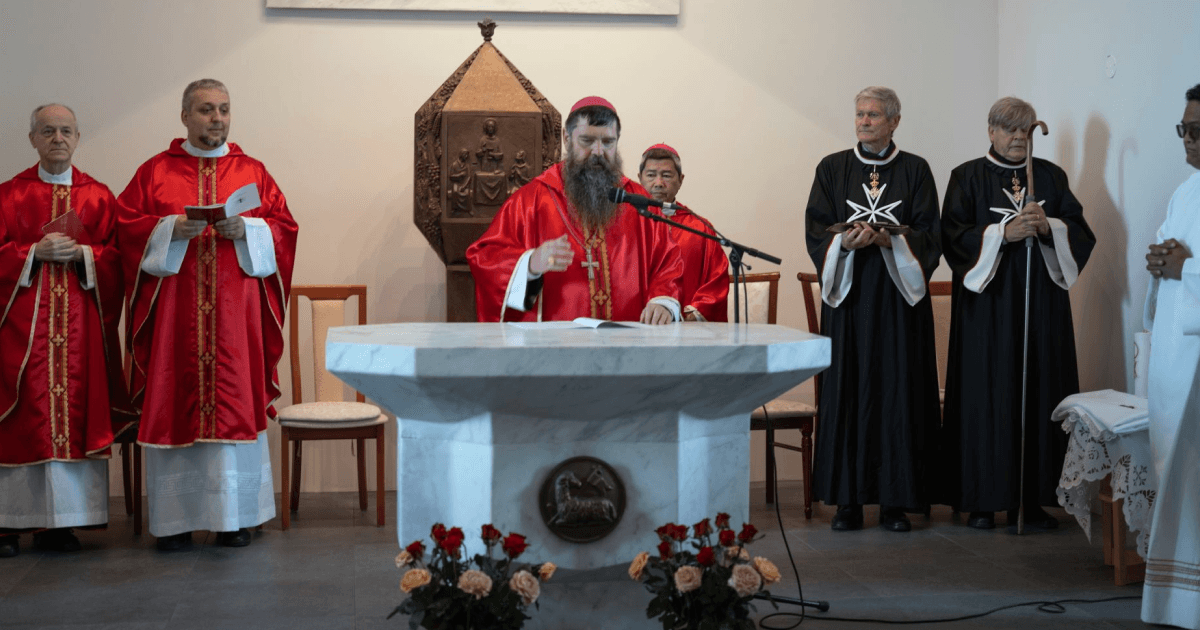
The meeting took place on April 27, during Mullally’s pilgrimage to Rome, and included a private audience with Pope Leo XIV and joint prayer in the Chapel of Urban VIII. The Vatican presented it, quite naturally, as another moment in Anglican-Catholic dialogue. Asked afterwards whether the question of ‘women’s ministry’ had been raised in private, Mullally replied that she had ‘spoken up where there is injustice’. The remark was diplomatically phrased, but the implication was plain enough. For many people, the exclusion of women from Holy Orders is not a theological matter: it is an injustice, and therefore something to be corrected.
This is where the argument usually goes wrong. It assumes that Holy Mother Church is withholding something she has the power to give. She is not. Saint John Paul II’s formulation in Ordinatio Sacerdotalis remains the essential starting point: ‘the Church has no authority whatsoever to confer priestly ordination on women’. That is a remarkable sentence, because it is not framed as a refusal, it is framed as a limit. The Church is saying: this is not ours to change.
That distinction is often missed. The sacraments are not bits of ecclesiastical machinery, to be improved when the age demands it. They are received. The Church may regulate disciplines. She may alter customs. She may develop her understanding. But she may not take what Christ has given and remake it into something else while pretending continuity has been preserved.
The usual reply is that Our Lord chose men as apostles because he lived in a patriarchal society. This sounds plausible until one actually reads the Gospels: Christ was not timid in the face of convention; He spoke publicly with women, He allowed himself to be followed and supported by women, He received sinners, touched lepers, challenged religious authorities, and scandalised respectable opinion with some regularity. At the Resurrection, he entrusted the first proclamation of the risen Lord to Mary Magdalene. If he had wished to establish a mixed priesthood, one struggles to see why he would have lacked either courage or imagination.
Instead, he chose the Twelve. The Church has never treated that choice as an accident.
This does not mean women are less holy, less intelligent, or less capable. It would be absurd for Catholics to say so. The greatest creature in the Catholic imagination is not Peter, or Paul, or Augustine, but Our Lady. The point is not ability: it is sign.
The priest acts in persona Christi. He is not merely a delegate of the community, or a religious functionary hired to perform ecclesiastical tasks. In the sacraments, he stands as a sign of Christ the bridegroom giving himself to his bride, the Church. That nuptial language is not a decorative metaphor. It runs through Scripture and tradition because it says something real about Christ’s relationship to the Church.
This is why treating the priesthood as a job leads the discussion badly astray. If the priesthood were merely a profession, the exclusion of women would indeed seem arbitrary. Nowadays, women can be doctors, scholars, judges, soldiers, even prime ministers, and almost anything else one can name. But fatherhood is not a profession. Nor is motherhood. The priesthood belongs closer to that order of reality: vocational, relational, personal. A priest is called ‘Father’ for a reason, and not because Catholics are short of quaint titles.
C S Lewis saw the danger rather clearly, even as an Anglican. Once priestly representation becomes interchangeable, he argued, the consequences do not stop at ordination. They begin to touch how we speak about God. Why Father, and not Mother? Why Son, and not Daughter? Why Bridegroom and bride? One can of course dismiss all this as old poetry, but Christianity is made of such things. Remove enough of them and one has not modernised the faith, one has changed its grammar.
God is not male in the biological sense – the Catechism is perfectly clear on that. But God has revealed Himself as Father, and the Word became flesh as the Son. The Church does not think herself authorised to improve on this revelation because a committee somewhere has discovered more inclusive language.
The same problem arises with the proposed female diaconate. It is sometimes presented as a moderate step, a tidy compromise for those not yet ready to demand women priests. But the diaconate is not a free-floating ministry, it is one of the three degrees of Holy Orders. If the Church cannot ordain women to the priesthood, it is hard to see how she could ordain them to the diaconate without first pretending that the diaconate is something other than Holy Orders. That way lies confusion, which is usually where bad theology goes to retire.
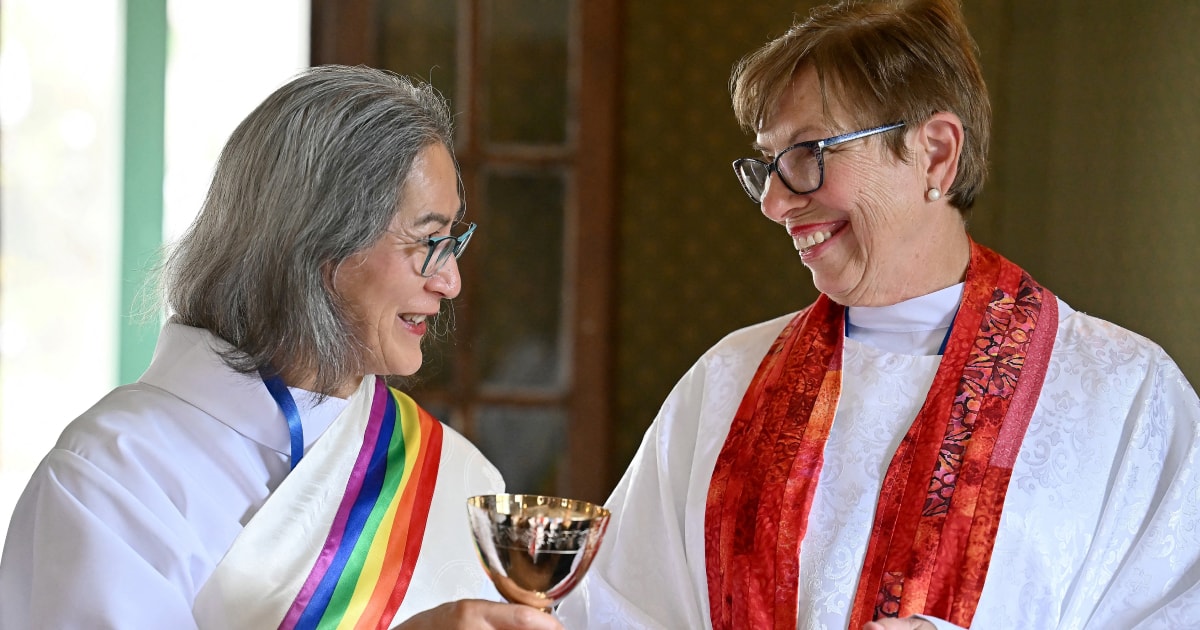
There is also the practical argument, which is made with great confidence and very little evidence: ordain women, and the Church will be renewed; the pews will fill, vocations will revive, and young people will return, grateful at last that the Church has become sufficiently like everything else. The Anglican experiment has not been encouraging. The Church of England has ordained women as priests for decades and consecrated women as bishops since 2014. It now has a female Archbishop of Canterbury. Yet none of this has reversed its decline. Attendance has fallen, the institution is increasingly unsure of itself, and its internal divisions are not exactly a secret. Reuters and AP both noted the obvious theological divide over women’s ordination in their reports on Mullally’s meeting with Pope Leo.
This matters because Catholics are constantly told that female ordination is the sensible, modern, pastoral answer. But the communities which have tried it have not discovered the promised springtime. More often, they have found that once the sacramental order is made negotiable, every other question becomes negotiable too. Even smaller changes in Catholic practice have not been without cost. Female altar servers are permitted, and my point is not that every girl who serves at Mass is doing something wicked. But it is strange to pretend the change has had no effect on the Catholic imagination. The sanctuary was once one of the ordinary places where boys first saw the priesthood from the inside. It trained the eye. It suggested a possibility. It made the altar feel close. Where that link is weakened, vocations are unlikely to be strengthened.
Again, this is not about dignity. It is about symbolism. Modern people are very quick to understand symbolism when they care about it, and very slow when the symbol is Catholic.
The recent Vatican optics around Mullally only sharpen the problem. When a woman whom Rome does not recognise as ordained is treated, even ceremonially, as though the difference was somehow secondary, ordinary Catholics are entitled to be confused. Ecumenism cannot mean behaving as though disputed questions have been settled by stage management. Real unity will not come from blurring sacramental truth.
Female ordination therefore fails on two fronts. In principle, the Church has no authority to do it; in practice, it has not saved the communities that have tried it: this ought to make Catholics a little less embarrassed by their own position. The Church will not be renewed by becoming a religious mirror of liberal society. People do not give their lives to an institution because it has learned to echo the assumptions of the age; they give their lives to something demanding, perennial, beautiful, and true.
I am struck by this every year when I attend the Chartres pilgrimage. Without turning this into an argument about liturgical preferences, the number of young priests one sees there is remarkable. The sight of them processing out of the cathedral is genuinely encouraging. Every vocation is, of course, unique, and God calls men through all sorts of paths. But my own impression is that those willing to give their whole lives to the priesthood are rarely attracted by a thin, managerial, modernised account of it. They are drawn to something older, more demanding, and more obviously sacred.
That ought to tell us something. The future of the priesthood is unlikely to be secured by making it look more like the modern world. It will be secured by recovering confidence in what the priesthood actually is.
So the answer to the question is simple: the Catholic Church cannot ordain women because she did not invent the priesthood. She received it. And what she has received, she is not free to destroy.


.jpg)