March 23, 2026

Benedictine abbot proposes solution to liturgy wars

The Catholic Herald
More
Related
Min read
share

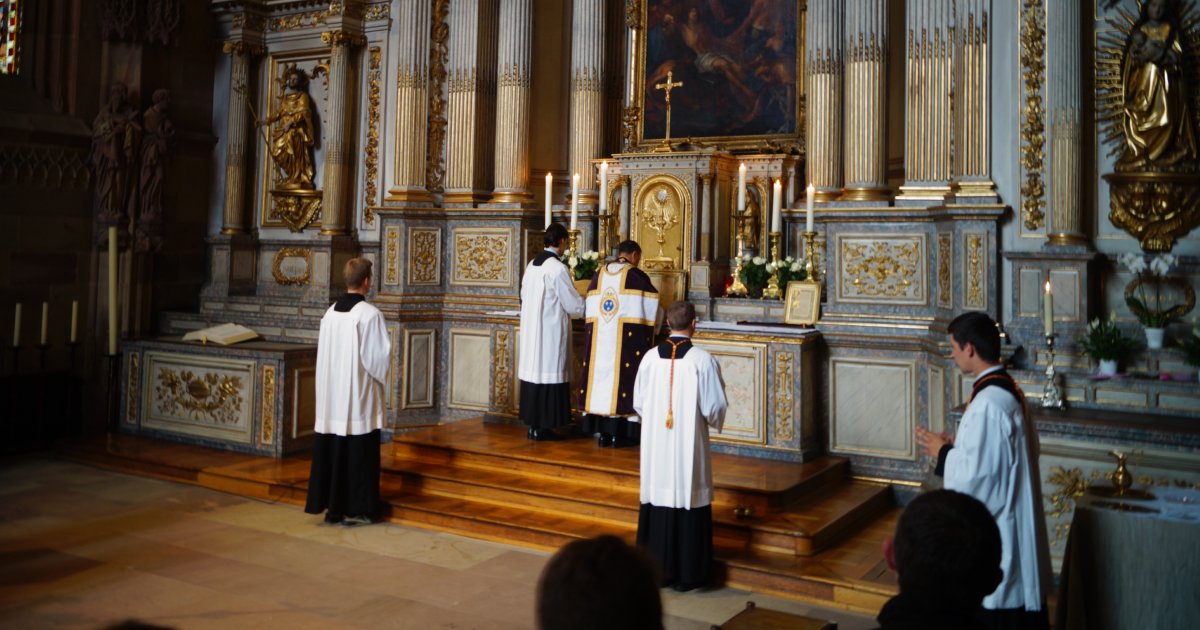
A French Benedictine abbot has proposed a reconfiguration of the Roman liturgy in an effort to resolve divisions within the Church, suggesting that the pre-conciliar Latin Mass be incorporated into the current Roman Missal so that both forms exist within a single authorised framework.

Dom Geoffroy Kemlin is the Abbot of the Abbey of Saint-Pierre, Solesmes, a community of about 50 monks known for its reverent worship, use of Latin and the singing of Gregorian chant. He set out his proposal in a letter dated November 12, 2025, addressed to Pope Leo XIV. The initiative, which he later discussed in a March 16 interview, is presented as a response to tensions over the liturgy that have continued since the reforms following the Second Vatican Council.

In his letter, Dom Kemlin cautioned against attempts to revise the modern rite itself, arguing that such an approach would risk deepening division rather than healing it. “I do not think this would be a good solution. It would, in fact, displease everyone and would only create new divisions, with the risk of ending up with not two but three missals,” he wrote.

Instead, he proposed what he described as a more inclusive solution: “It would simply consist of inserting into the Missale Romanum the ancient Ordo Missae, revised a minima to bring it into conformity with Vatican II, particularly by opening it up, for those who wish, to the use of the vernacular, concelebration, and the four Eucharistic prayers, while leaving the new Ordo Missae unchanged.” He added: “Both Ordos Missae would thus form part of the single Roman Missal.”

The abbot argued that such an arrangement would restore a visible unity of worship across the Latin Church. “This would restore liturgical unity, since the entire Latin Church would use the single Missale Romanum, with a single calendar,” he wrote, suggesting that the faithful attached to the older form would gain access to elements introduced after the Council, including “new prefaces and Eucharistic prayers, revised orations, the sanctoral calendar, the cycle of readings”.

In his letter, the abbot adopted a deferential tone, acknowledging that any decision rests with the Holy See. “Please forgive the boldness of writing to you in this way to offer suggestions,” he wrote. “The Abbey of Solesmes has always been at the service of the Holy See and of the Pope.”

He concluded by reaffirming his loyalty and that of his community: “Placing this suggestion in your hands, I assure you, Most Holy Father, of my complete devotion and of my daily prayer, as well as that of the entire Congregation of Solesmes, for your ministry in the service of the universal Church.”

In his interview with RCF, Dom Kemlin explained his motivation for writing to the Pope: “The liturgy is meant to foster unity in the Church, not to divide us.” He also spoke of the “liturgical quarrel” that has persisted for decades and admitted that Catholics attached to the older rite were unlikely simply to adopt the newer one. 

His proposal would involve more than a simple juxtaposition of rites. While he described the revisions to the older liturgy as “minimal”, the changes he outlined are substantial. He envisaged the possibility of celebrating the traditional Mass in the vernacular, incorporating the expanded lectionary introduced after the Council, and allowing the use of additional Eucharistic prayers. He also raised the prospect of concelebration and the integration of both forms into a unified liturgical calendar.

At the same time, he stressed that the post-conciliar rite would remain unchanged, with priests free to celebrate according to it as they do at present. “This solution would make it possible to include and welcome the faithful attached to the ancient Missal, without in any way offending or alienating those attached to the new Ordo,” he wrote.

The proposal emerges from the experience of the Solesmes Congregation, which includes monasteries that celebrate according to both the older and newer forms of the Roman Rite. Dom Kemlin himself entered the Abbey of Fontgombault, where the older liturgy is maintained, before moving to Solesmes, where the reformed liturgy is used, typically in Latin and with Gregorian chant.

This coexistence has informed his conviction that unity need not imply uniformity. In his interview, he said that younger Catholics in particular appear less marked by the divisions of previous decades and are often comfortable participating in different forms of the liturgy. He pointed to examples such as pilgrimages and prayer communities where diverse liturgical expressions are encountered without difficulty.

The question of liturgical unity has been a recurring concern since the introduction of the Missal of Pope Paul VI in 1969, which followed the directives of the Second Vatican Council. The reform replaced the Missal codified after the Council of Trent under Saint Pope Pius V, though elements of the earlier tradition were retained.

In 2007, Pope Benedict XVI sought to ease tensions by issuing Summorum Pontificum, which allowed broader use of the older liturgy alongside the newer one. The document described the two forms as “ordinary” and “extraordinary” expressions of the same Roman Rite. However, this arrangement did not resolve underlying disagreements.

Pope Francis imposed new restrictions through the 2021 motu proprio Traditionis Custodes, emphasising the unity of the Church around the reformed liturgy and placing tighter controls on the celebration of the older form.

Dom Kemlin argued that his proposal would not contradict that objective. “The goal of Pope Francis, through that document, was precisely to put an end to the divisions,” he said, adding that his own suggestion could “allow us to achieve the unity that everyone desires, while at the same time embracing the diversity of the Church”.

The proposal seeks to go beyond the coexistence of two forms and restore a visible unity of worship across the Church. However, the difficulty lies in what the proposal assumes can be reconciled. Since the reforms following the Second Vatican Council, the divergence between the older and newer forms of the Roman Rite has not been merely ceremonial or aesthetic. It reflects, as Dom Kemlin himself concedes, differing “anthropologies” and approaches to prayer. That admission is more significant than the proposal that follows from it. If the divergence is real at that level, a juridical solution placing two orders of Mass within a single book cannot by itself resolve the underlying tension.

This is why similar efforts have struggled in the past. The Missal promulgated under Pope Paul VI after the Council did not emerge as one option among many, but as a comprehensive reform intended to shape the liturgical life of the Church. When Pope Benedict XVI issued Summorum Pontificum in 2007, he sought to ease tensions by recognising the older Missal as an “extraordinary form” of the same Roman Rite. That settlement, however, institutionalised a duality without resolving it.

Dom Kemlin’s proposal attempts to go further by collapsing that duality into a single framework. However, by allowing vernacular usage, new Eucharistic prayers and an expanded lectionary in the older rite, it would cease to function as a stable and received form and instead become subject to the same internal variability seen in the newer rite. The unity proposed risks becoming a widening field of choice.

In the past, medieval Western usages such as the Dominican or Carthusian rites were local developments rooted in the Roman tradition, often described as the Roman Rite with additions. When Pope St Pius V promulgated the Missal of 1570 after the Council of Trent, he standardised the Roman usage while permitting rites of proven antiquity to continue. The principle was one of consolidation.

No exact precedent exists for what is now being proposed. The closest modern parallel, Summorum Pontificum, kept the two forms distinct, even while describing them as expressions of one rite. Attempts after the Council to produce a hybrid Missal were set aside in part because of the risk of creating confusion rather than unity. Dom Kemlin himself appears aware of this danger when he warns against ending up with “not two but three missals”.

For many attached to the older liturgy, the question is not primarily aesthetic but doctrinal. A revised form of the older rite, open to the same options and adaptations as the newer, is unlikely to satisfy that concern.

What Dom Kemlin does articulate with clarity is a pastoral reality that cannot be ignored: “the liturgy is meant to foster unity in the Church, not to divide us”. The acknowledgement that the older rite is spiritually edifying, and that the Church must “welcome the faithful attached to the ancient Missal”, reflects a concern that has persisted across successive pontificates since 1969.
A French Benedictine abbot has proposed a reconfiguration of the Roman liturgy in an effort to resolve divisions within the Church, suggesting that the pre-conciliar Latin Mass be incorporated into the current Roman Missal so that both forms exist within a single authorised framework.

Dom Geoffroy Kemlin is the Abbot of the Abbey of Saint-Pierre, Solesmes, a community of about 50 monks known for its reverent worship, use of Latin and the singing of Gregorian chant. He set out his proposal in a letter dated November 12, 2025, addressed to Pope Leo XIV. The initiative, which he later discussed in a March 16 interview, is presented as a response to tensions over the liturgy that have continued since the reforms following the Second Vatican Council.

In his letter, Dom Kemlin cautioned against attempts to revise the modern rite itself, arguing that such an approach would risk deepening division rather than healing it. “I do not think this would be a good solution. It would, in fact, displease everyone and would only create new divisions, with the risk of ending up with not two but three missals,” he wrote.

Instead, he proposed what he described as a more inclusive solution: “It would simply consist of inserting into the Missale Romanum the ancient Ordo Missae, revised a minima to bring it into conformity with Vatican II, particularly by opening it up, for those who wish, to the use of the vernacular, concelebration, and the four Eucharistic prayers, while leaving the new Ordo Missae unchanged.” He added: “Both Ordos Missae would thus form part of the single Roman Missal.”

The abbot argued that such an arrangement would restore a visible unity of worship across the Latin Church. “This would restore liturgical unity, since the entire Latin Church would use the single Missale Romanum, with a single calendar,” he wrote, suggesting that the faithful attached to the older form would gain access to elements introduced after the Council, including “new prefaces and Eucharistic prayers, revised orations, the sanctoral calendar, the cycle of readings”.

In his letter, the abbot adopted a deferential tone, acknowledging that any decision rests with the Holy See. “Please forgive the boldness of writing to you in this way to offer suggestions,” he wrote. “The Abbey of Solesmes has always been at the service of the Holy See and of the Pope.”

He concluded by reaffirming his loyalty and that of his community: “Placing this suggestion in your hands, I assure you, Most Holy Father, of my complete devotion and of my daily prayer, as well as that of the entire Congregation of Solesmes, for your ministry in the service of the universal Church.”

In his interview with RCF, Dom Kemlin explained his motivation for writing to the Pope: “The liturgy is meant to foster unity in the Church, not to divide us.” He also spoke of the “liturgical quarrel” that has persisted for decades and admitted that Catholics attached to the older rite were unlikely simply to adopt the newer one. 

His proposal would involve more than a simple juxtaposition of rites. While he described the revisions to the older liturgy as “minimal”, the changes he outlined are substantial. He envisaged the possibility of celebrating the traditional Mass in the vernacular, incorporating the expanded lectionary introduced after the Council, and allowing the use of additional Eucharistic prayers. He also raised the prospect of concelebration and the integration of both forms into a unified liturgical calendar.

At the same time, he stressed that the post-conciliar rite would remain unchanged, with priests free to celebrate according to it as they do at present. “This solution would make it possible to include and welcome the faithful attached to the ancient Missal, without in any way offending or alienating those attached to the new Ordo,” he wrote.

The proposal emerges from the experience of the Solesmes Congregation, which includes monasteries that celebrate according to both the older and newer forms of the Roman Rite. Dom Kemlin himself entered the Abbey of Fontgombault, where the older liturgy is maintained, before moving to Solesmes, where the reformed liturgy is used, typically in Latin and with Gregorian chant.

This coexistence has informed his conviction that unity need not imply uniformity. In his interview, he said that younger Catholics in particular appear less marked by the divisions of previous decades and are often comfortable participating in different forms of the liturgy. He pointed to examples such as pilgrimages and prayer communities where diverse liturgical expressions are encountered without difficulty.

The question of liturgical unity has been a recurring concern since the introduction of the Missal of Pope Paul VI in 1969, which followed the directives of the Second Vatican Council. The reform replaced the Missal codified after the Council of Trent under Saint Pope Pius V, though elements of the earlier tradition were retained.

In 2007, Pope Benedict XVI sought to ease tensions by issuing Summorum Pontificum, which allowed broader use of the older liturgy alongside the newer one. The document described the two forms as “ordinary” and “extraordinary” expressions of the same Roman Rite. However, this arrangement did not resolve underlying disagreements.

Pope Francis imposed new restrictions through the 2021 motu proprio Traditionis Custodes, emphasising the unity of the Church around the reformed liturgy and placing tighter controls on the celebration of the older form.

Dom Kemlin argued that his proposal would not contradict that objective. “The goal of Pope Francis, through that document, was precisely to put an end to the divisions,” he said, adding that his own suggestion could “allow us to achieve the unity that everyone desires, while at the same time embracing the diversity of the Church”.

The proposal seeks to go beyond the coexistence of two forms and restore a visible unity of worship across the Church. However, the difficulty lies in what the proposal assumes can be reconciled. Since the reforms following the Second Vatican Council, the divergence between the older and newer forms of the Roman Rite has not been merely ceremonial or aesthetic. It reflects, as Dom Kemlin himself concedes, differing “anthropologies” and approaches to prayer. That admission is more significant than the proposal that follows from it. If the divergence is real at that level, a juridical solution placing two orders of Mass within a single book cannot by itself resolve the underlying tension.

This is why similar efforts have struggled in the past. The Missal promulgated under Pope Paul VI after the Council did not emerge as one option among many, but as a comprehensive reform intended to shape the liturgical life of the Church. When Pope Benedict XVI issued Summorum Pontificum in 2007, he sought to ease tensions by recognising the older Missal as an “extraordinary form” of the same Roman Rite. That settlement, however, institutionalised a duality without resolving it.

Dom Kemlin’s proposal attempts to go further by collapsing that duality into a single framework. However, by allowing vernacular usage, new Eucharistic prayers and an expanded lectionary in the older rite, it would cease to function as a stable and received form and instead become subject to the same internal variability seen in the newer rite. The unity proposed risks becoming a widening field of choice.

In the past, medieval Western usages such as the Dominican or Carthusian rites were local developments rooted in the Roman tradition, often described as the Roman Rite with additions. When Pope St Pius V promulgated the Missal of 1570 after the Council of Trent, he standardised the Roman usage while permitting rites of proven antiquity to continue. The principle was one of consolidation.

No exact precedent exists for what is now being proposed. The closest modern parallel, Summorum Pontificum, kept the two forms distinct, even while describing them as expressions of one rite. Attempts after the Council to produce a hybrid Missal were set aside in part because of the risk of creating confusion rather than unity. Dom Kemlin himself appears aware of this danger when he warns against ending up with “not two but three missals”.

For many attached to the older liturgy, the question is not primarily aesthetic but doctrinal. A revised form of the older rite, open to the same options and adaptations as the newer, is unlikely to satisfy that concern.

What Dom Kemlin does articulate with clarity is a pastoral reality that cannot be ignored: “the liturgy is meant to foster unity in the Church, not to divide us”. The acknowledgement that the older rite is spiritually edifying, and that the Church must “welcome the faithful attached to the ancient Missal”, reflects a concern that has persisted across successive pontificates since 1969.
subscribe to
the catholic herald

Continue reading your article with a subscription.
Read 5 articles with our free plan.
Subscribe

subscribe to the catholic herald today

Our best content is exclusively available to our subscribers. Subscribe today and gain instant access to expert analysis, in-depth articles, and thought-provoking insights—anytime, anywhere. Don’t miss out on the conversations that matter most.
Subscribe