I was ordained a priest for the Diocese of East Anglia by Bishop Peter Collins on 21 September 2024 at the age of 78, 28 years after my ordination as a permanent deacon and 17 years after I was widowed. This was God’s answer and call to me when I asked in prayer whether I should retire after 25 years as a deacon or simply cut back gradually. And so, 18 months of study later, I was ordained, with my four daughters, who believe in God but not the Church, in joyful and tearful support. Bishop Peter asked me to be available to all the parishes in two deaneries, about 16 of them within a one hour journey, but with a default of helping out in the parish I have lived in for 45 years and served as a deacon for 28.
Starting so late, and on advice, I have said Mass in my home whenever not needed elsewhere, and about half the 402 Masses I said in the first year have been at home, occasionally with friends staying or calling in. The public Masses have been in many settings, seven of the parishes nearby, ten more with and for several religious communities, in cathedrals, monasteries and at Lourdes as a concelebrant. Many have been in my “old” parish and include five Requiem Masses for old friends there, and four Nuptial Masses. What a privilege. How would I describe the ontological changes in me? Mostly, and I feel it, the grace of Orders conferred on me.
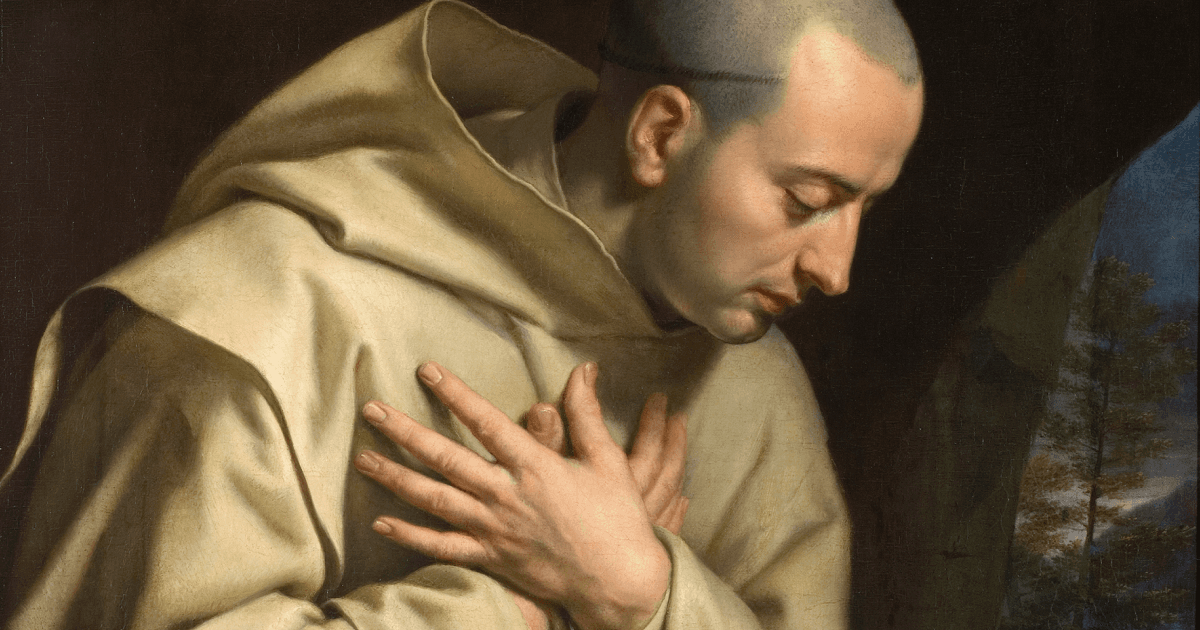
And next, the fruits of the formation programme Bishop Peter asked me to follow. Academically, this focused most on moral theology through a Thomist lens, spiritually as a result of Bishop Peter’s request that I write a 30 page spiritual autobiography from birth, and much more from two long retreats, especially a guided retreat with the Cistercians at Mount St Bernard, where I was told to leave in my suitcase all the spiritual reading I had brought with me, and spend all my time alone with God. It poured with rain all week, so not even walks to break up the days. I was in the desert for two days and at the Cross as a participant by the end of the week.
And the fruits? I am aware that, without conscious effort, my preaching is completely different, much more rooted in sacrament, and that more generally my sense of the unrational but in no way irrational reality of the sacraments has been transforming my mind and more particularly my heart. I am so used to telling people who share their problems with me that I will pray for them. Easily said, easily done. But now, when someone tells me that on the anniversary of their spouse’s tragic death they found the Mass had been booked by someone else, I can offer to go round and say Mass in their home with close family.
The reality of being drawn into the sacrifice of Calvary has never felt more real. This was one of several such experiences. An old friend was facing palliative surgery. I said, “Would they like me to say a Mass for her?” The husband and wife replied, “We have lost our faith, but please, please.” My daughter was facing a ten hour cancer operation which might be too late. She too says she has lost her faith. Would I pray for her at Lourdes, where her faith was once strengthened? When I WhatsApp’d her to say I had concelebrated a Mass for her in the Accueil, she cried.
The mind loses faith quicker than the heart does, and if the Risen Christ can enter a locked upper room, he can bypass a locked mind to reach a yearning heart. That is one of the realities I have learned more compellingly as a priest. As a deacon, I often journeyed with the dying and then had to call in a priest, sometimes one unknown to that person, to anoint. Two of the insistent promptings of the Holy Spirit to my new life related to deathbeds where no priest was available. The greatest privilege of the last year has been to administer the last rites, in communion with a soul beyond speech but not beyond holy comfort and reassurance.
I have struggled most with reconciliation. As a trained counsellor in my university life, I was used to one to one painful conversations and dilemmas. Speaking only for myself, I struggle with the confessional box and grille and prefer to be sitting alongside someone, conscious of body language. So I struggle. I hope that I am getting better at helping penitents to see that the guilt and shame they feel causes them, like Adam and Eve, to hide from God, and to realise he never hides from them, and to help them not look at their own feet, but at his face of love.
I was asked if being “a family man” with four daughters and husbands and ten grandchildren helped with confession. Not one whit that I can see, except perhaps to recognise and insist that refusal to accept forgiveness is one of the greatest of sins.
I am being called on quite a lot to lead parish quiet days and diocesan clergy retreats. The highlight of the year has been to lead a retreat at Douai for men in southern England ahead of ordination to the permanent diaconate. Again, the integration of some Masses with just the candidates and offering the sacrament of reconciliation as part of a five day set of reflections on “the sacramental life of the deacon” was a lot more than the sum of its parts.
For whatever reason, God did not call me to priestly life until I was past retiring age. But what a journey, what a privilege, what a challenge. The holiness of the people of God everywhere I go sustains me. I am surrounded by the love of my four daughters and grandchildren, aged five to 23, all now baptised by me, seven of them in the church where three of my daughters were baptised, all four of them confirmed and two of them married.
To their relief, and mine too, priesthood has not made me a less attentive and engaged father and grandfather, God being able to do with time what he does with loaves and fishes. They can see I am at once changed, my old self, and rejuvenated. My Catholic friends have all been joyful and delighted for me. The nearest to a criticism has been “about bloody time”. My non Catholic friends, of all faiths and none, have shared delight and curiosity, and have also noted rejuvenation. My historian friends worry it is slowing down the completion of my major new biography of Oliver Cromwell, a culmination of decades of study and reflection. My Catholic friends, especially my Irish ones, may well be thinking “good”.
As I approach my second Christmas, expecting to be in Newmarket with a three dimensional model of Bethlehem in the time of Christ made for us by Syrian refugees, and helping at the community Christmas lunch for those otherwise alone or hungry, I will feel God smiling on me, that like so very many others in so many ways, I have answered his particular call. There has never been a greater need for the Catholic Church as the leading moral force in the restoration of our nation. In order to do that it will have to honour its own tradition and truly be itself. Perhaps this is what G K Chesterton meant when he wrote of the “democracy of the dead”.
Fr John Morrill is a priest of the Diocese of East Anglia
.png)


.jpg)