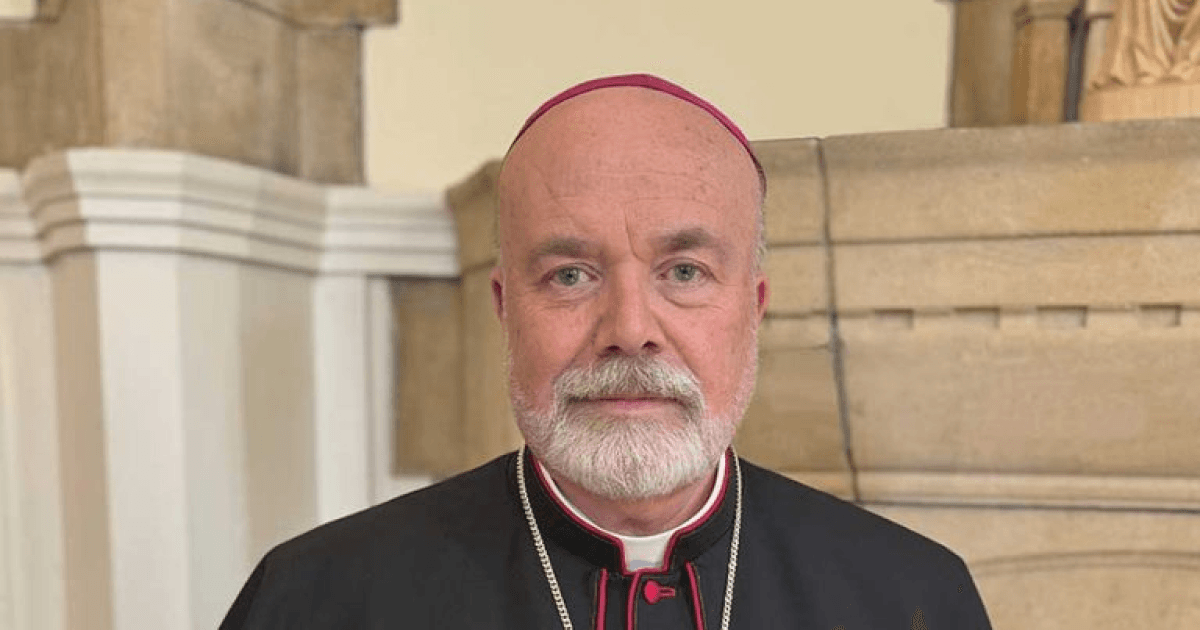


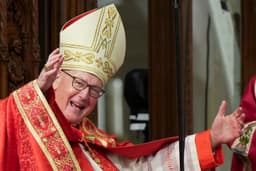
Bishop Marcus Stock of Leeds has called “assisted dying” a euphemism for assisted suicide, arguing that palliative care allows people to “properly be assisted to die with dignity.” The statement comes ahead of the second reading and vote on the Terminally Ill Adults (End of Life) Bill on September 11.
Bishop Stock said that “every day, every moment is precious” and should not be “wasted or cut short”. “And perhaps our time is most to be treasured when it is running out toward the natural end of our lives,” he said.

“Time to change our hearts and minds, come to terms with what we have achieved or left undone, reconcile with others, perhaps to pray, maybe for the first time ever, so that even in our last few moments we experience the peace which comes through God’s mercy and forgiveness.
“Assisted dying and dignity in dying are simply euphemisms for assisted suicide. There are many ways in which people can rightly and properly be assisted to die with dignity. By offering them our love and care, by supporting them and their families with our prayers, and through the services provided by palliative care and hospices.”
The proposed law, introduced by MP for Rochester and Strood Lauren Edwards, would legalise assisted suicide for people aged 18 and over who are expected to die within six months.
He stated that advanced age, sickness or improperly managed pain “should never be the reason for someone to want to commit suicide, least of all with the help of the very healthcare professionals who care for them and the families who love them”.
Reaffirming the Catholic belief in the dignity of all human life throughout its natural span, he stated that “except in cases where our mental health is adversely affecting our capacity to make balanced choices, to intentionally take our own life is a rejection of God’s loving gift of life to us.”
“And is therefore one of the gravest of sins. Living with the fear of death and pain is part of our human condition. But if, in the fullness of our time on earth, that natural fear is met with compassion, prayer and the best medical, pastoral and spiritual care, surely all people can live and die with true dignity.”
Prime Minister Andy Burnham announced last week that he would abstain on the upcoming vote in order not to “unduly influence the debate. Writing in a letter to the Parliamentary Labour Party, he said that he had his own personal views on the issue, but that he believed it to be “a matter for Parliament to decide”.
“I also do not want to unduly influence the debate as Prime Minister and for every colleague to know it is a genuinely free vote. For these reasons, I have taken the decision that it is most appropriate for me not to vote at second reading,” he wrote.
Burnham had previously stated that he favoured addressing the lack of funding for palliative care and social care before a wider debate on assisted suicide. He stated that he found it “very challenging to introduce that wider debate in a context of people not receiving that care and having the peace of mind about that care”.
Archbishop John Sherrington of Liverpool had responded to the Prime Minister’s remarks by saying it was “highly significant” that he had given his support for the greater provision of palliative care. His predecessor Keir Starmer voted in favour of Kim Leadbeater’s private member’s bill, which was nearly identical to the current proposed legislation, which fell in the House of Lords in April.
The previous Bill had passed two votes in the House of Commons, with the second seeing a narrowing in the majority. Whilst it is unclear whether Burnham’s stance will influence the vote, provisions provided for under the Parliament Act would see its passing in the lower house bypass a rejection in the House of Lords.
Bishops across Great Britain have asked Catholics to write to their local MPs to express their opposition to the Bill.