The bishops of England and Wales have released a survey ahead of next year’s synod on youth.
The “Youth Poll on Life, Faith and Vocational Discernment” invites answers from 13 to 29-year-olds of all religions and none.
It is anonymous, though participants must enter their email address.
The bishops say the responses “will be used in a report that will be sent to the Vatican” ahead of the synod, which is scheduled for October 2018.
The poll asks people to say how their lives are, ranging from “horrible” or “stressful” to “good” or “great”, and asks them to name the best and most difficult aspects of their life.
They are also asked how their faith has “helped you to make good life choices” – for instance, through groups that allow one to discuss important decisions, or by “giving me the opportunity to help others”.
The survey is open to those of all religions, and participants are asked what they like most about their religion – for instance, its sacred writings, or “developing a sense of purpose”. They are also asked how much they think the Church is interested in their life, and how much they would like the Church to “tell you how to live well”, “inspire you to expect more from life” or “help you make good life choices”.
Ahead of the 2014 synod on the family, bishops’ conferences around the world sent out similar surveys, which were widely criticised for being overly complex and difficult to understand.
The youth survey can be completed in less than half an hour.
Young people can contribute to the poll at surveymonkey.co.uk/r/cathnews-synod-youth-poll. It closes on June 5.
Irish bishop who fathered a child dies aged 89
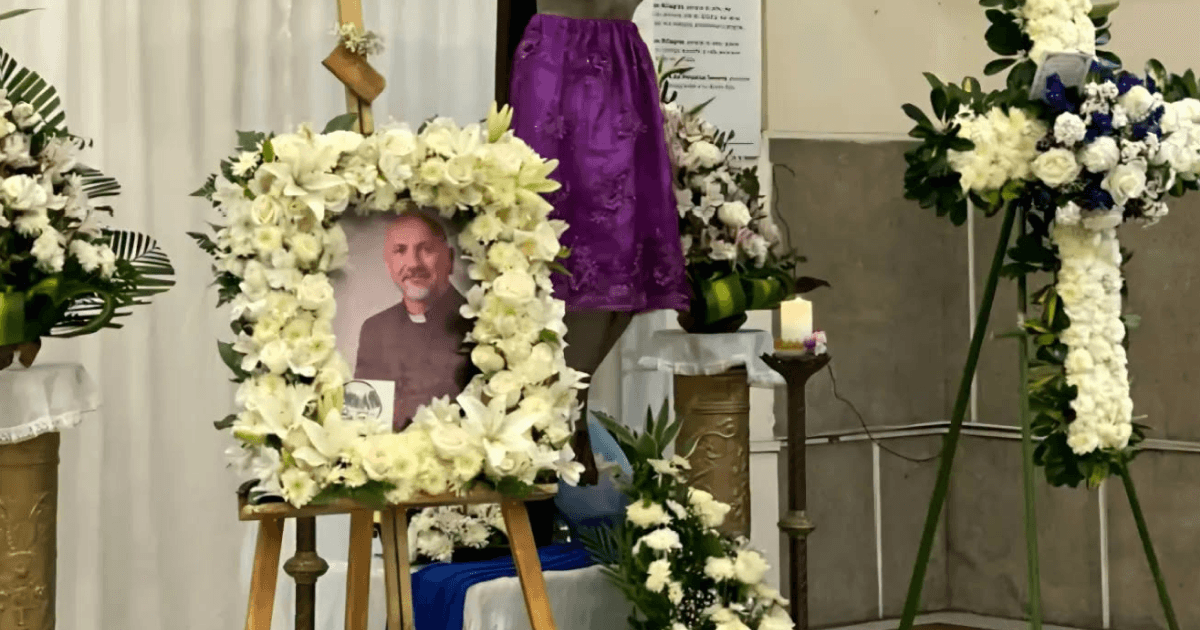
Bishop emeritus Eamonn Casey of Galway has died aged 89.The bishop, who led the Diocese of Kerry before being transferred to Galway, caused great shock in the early 1990s in Ireland when it emerged that he had fathered a child.
Educated in Limerick and St Patrick’s College, Maynooth, Eamonn Casey was ordained a priest in 1951. He became Bishop of Kerry in 1969, and then Bishop of Galway and Kilmacduagh in 1976. He was chair of Trócaire, the official overseas development agency of the Catholic Church in Ireland.
Annie Murphy, the daughter of an American friend, had come to stay with Bishop Casey in Kerry in 1973 to recover from a divorce. Following an affair, their son Peter was born in 1974.
Bishop Casey insisted that the boy be adopted, but his mother refused. Although he paid for Peter’s upkeep, Bishop Casey refused to form a relationship with him.
In 1992 Murphy revealed the story to the Irish Times, leading to his resignation. She later told the story in a book, Forbidden Fruit. Bishop Casey resigned when the affair became public and became a missionary in South America, working with the Missionary Society of St James in Ecuador. He later served as a priest at St Paul’s, Haywards Heath.
His funeral Mass, in a packed Cathedral of Our Lady Assumed into Heaven and St Nicholas in Galway, was concelebrated by 11 bishops and 61 priests. The Irish president, Michael D Higgins, attended, but Bishop Casey’s brother and sister, his son Peter and Annie Murphy were not present.
At the funeral Bishop Brendan Kelly of Achonry said that Bishop Casey “did much good” during his ministry, especially in fighting homelessness among Irish emigrants to England. In his work with Trócaire he was a “defender of the rights of people who were oppressed and poor”.
But the revelation that he had fathered a son was “profoundly upsetting for the Church and for people in general”, Bishop Kelly said.
Michael Kelly, editor of the Irish Catholic newspaper, said it was “the beginning of the end for the Church’s dominance of public life in Ireland”. Writing in the Irish Independent, he said: “It’s impossible now to explain to younger generations the impact the news had.
“I was 13 years old and vividly remember the sense of shock and disbelief among family and neighbours in our close-knit Catholic community in rural Co Tyrone. Inevitably, there were some who viewed it as a media fabrication. But there was no fabrication.”
Mr Kelly said the bishop’s sin paled into insignificance compared with subsequent revelations of child abuse and cover-ups. “Looking back too, I suspect most people will think of Eamonn Casey in a forgiving fashion,” he wrote.
A statement released by the family of Bishop Casey – including his son Peter – praised his “pursuit of social justice for the marginalised” and said he was a “great source of love and support”.
A statement from Trócaire said that for two decades Bishop Casey was the “driving force” behind the charity.
It recalled his attendance at Archbishop Romero’s funeral in 1980. Mourners were attacked by death squads and the bishop narrowly escaped injury.
Trócaire’s executive Éamonn Meehan said: “He spent two hours administering the sacrament of the injured. He was reported to have been the only bishop to have remained at the Cathedral, with other visiting bishops brought away for their own safety.”
‘Three-parent babies’ approved
Doctors in Newcastle have been granted the first British licence to create embryos from two women and one man in an effort to prevent babies dying from genetic diseases.Life spokesman Mark Bhagwandin described the decision by the Human Fertilisation and Embryology Authority as “reckless and irresponsible”. He said that while he was “deeply sympathetic” to the plight of people with mitochondrial-related diseases, “the ends do not always justify the means.”