

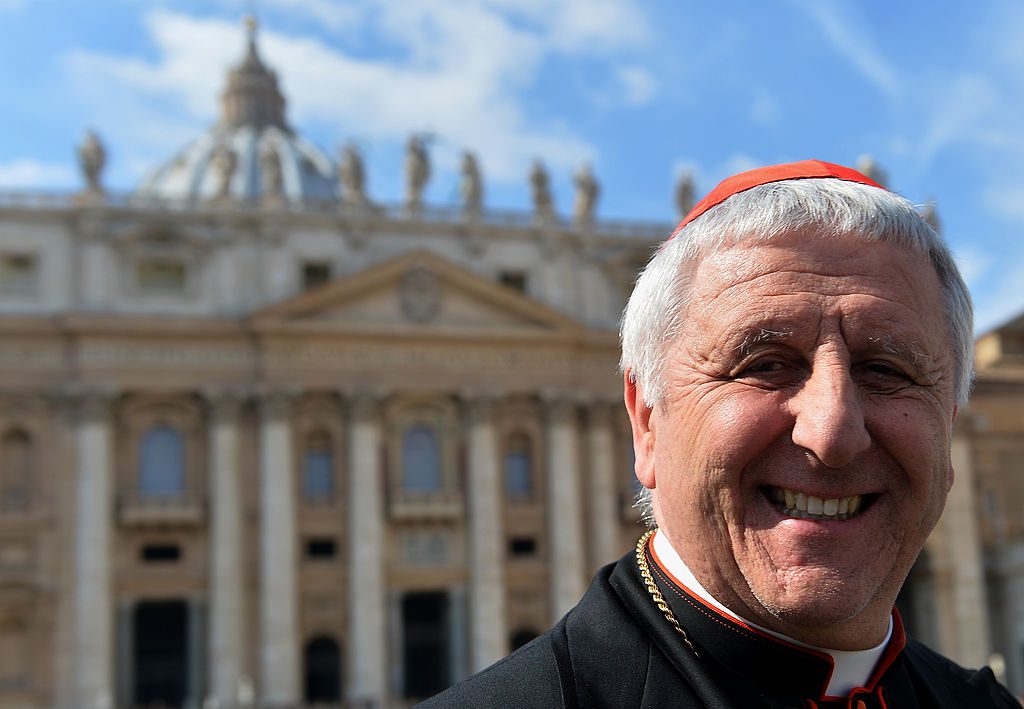
Rome, 16 June 2019 — The head of the Vatican department that drafted a controversial pamphlet on gender theory has defended the document, saying attempts to impose “extreme forms” of gender ideology are reminiscent of totalitarian and dictatorial regimes. The Prefect of the Congregation for Catholic Education, Cardinal Giuseppe Versaldi, made the remark during an exclusive interview with the Catholic Herald on Saturday morning in his office at Piazza Pio XII, just off St Peter’s Square. Cardinal Versaldi told The Catholic Herald the Church desires real dialogue on the question. “If the state imposes a pensée unique even in our schools,” he said, “this ideology that we believe has no scientific basis — and that in any case has assumptions that are meta-scientific — then it is not possible that there should be democracy.” He went on to say, “[I]f we all have to conform to a pensée unique — a single way of thinking — we subtract from those with the primary responsibility for education, ie from families when it comes to minor children, and [from] young people, when they are of age, the possibility of choice,” which is a necessary condition and prerequisite of real liberty. “With choice, however, there must be a pluralism,” Cardinal Versaldi said. “If, on the other hand, we all have to think the same way: that is not only an ethical state [It. stato etico, a philosophical term of art indicating the notion that the state is the supreme end of human endeavor, to which all human activity tends and is to be ordered], but a dictatorial state.” Cardinal Versaldi also explained that he intended the document, titled Male and Female He Created Them: Towards a path of dialogue on the question of gender theory in education, to be a “practical aid” rather than a “theoretical and abstract” address of the issue. “We have received from many episcopal conferences in ad limina visits — but also from teachers, especially in primary and secondary schools — a request for help in dealing with this issue,” the prefect explained, “which is pervading our institutions, especially in the Western world.” Journalists and their editors were surprised the Congregation decided to release a document on such a controversial subject without a press conference. “Above all,” Cardinal Versaldi told The Catholic Herald, “it is a ‘methodological’ document: [designed] to tell teachers how they should comport themselves with those who support these theories.” He told The Catholic Herald, “The nature of this document, the history of its genesis, explain this choice not to hold a press conference,” though he admitted that perhaps his department underestimated the “echo” the document would have. Cardinal Versaldi said the document could have benefited from greater attention to the voices of the people for whom questions of gender identity are a lived reality. “One criticism we’ve had from several different parts,” he said, “is that we did not listen to the people who have difficulties in this field of sexual identity. That is true: we were not, in our preparatory phase, able to hear the people directly involved.” Nevertheless, “Although we could have been more explicit,” Cardinal Versaldi went on to say, “we really recommend respect for people in difficulty, people who may suffer discrimination because of the difference they find compared to normal life in this area.” And therefore, we could have done better, certainly[.]”
1:00 AM
Cardinal Versaldi: Why we produced the gender document
Christopher R. Altieri

9 min read



Already a subscriber? Sign in
5freearticles every month
Continue reading with a free account. No card needed.
- Five free articles every thirty days, on any device you sign in on
- The Catholic Herald newsletter, every morning
- Subscribe whenever you like for everything: every article and the magazine


subscribe to the catholic herald today
Our best content is exclusively available to our subscribers. Subscribe today and gain instant access to expert analysis, in-depth articles, and thought-provoking insights—anytime, anywhere. Don’t miss out on the conversations that matter most.
Subscribe



