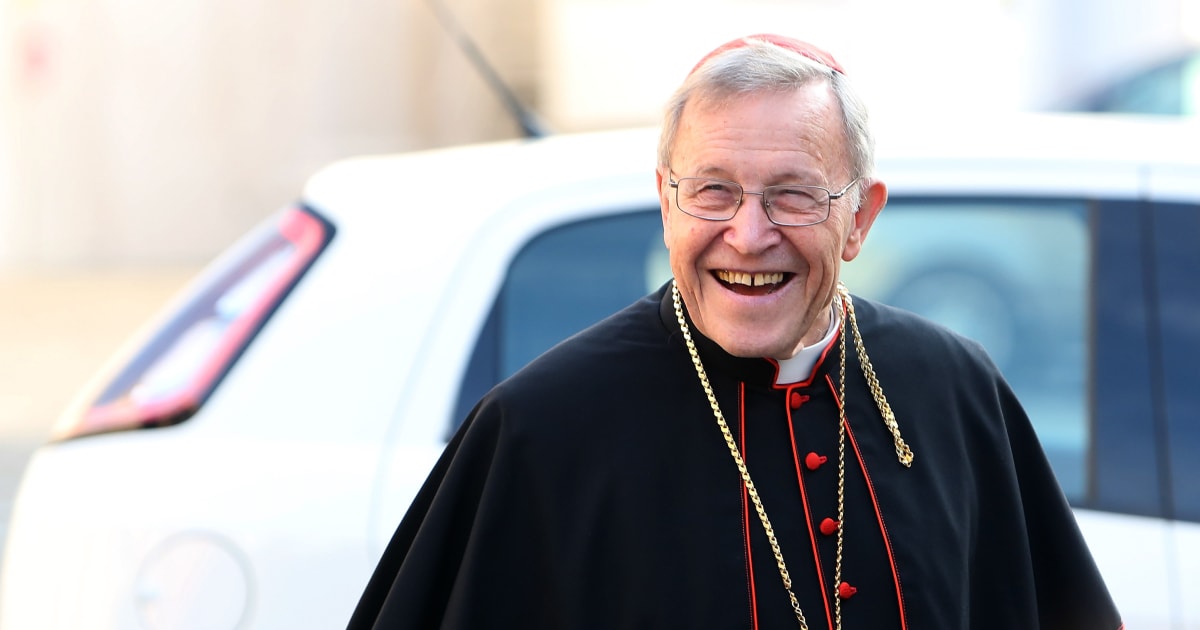


A prominent 93-year-old German cardinal has issued a stark warning that the Catholic Church in Germany is experiencing a “deep crisis”, while strongly cautioning German bishops and reformers against attempting to dictate the direction of the universal Church.
Cardinal Walter Kasper, former president of the Pontifical Council for Promoting Christian Unity and bishop of Rottenburg-Stuttgart, made the remarks in late May 2026 at a conference titled “God in Today’s World”, organised by his former diocese.
Addressing the tendency of some in Germany to lecture other parts of the world Church on reform initiatives, Cardinal Kasper said: “The best way to make oneself unpopular around the world is to give advice from Germany on how to proceed with Church reforms.”
He continued: “Suggestions along the lines of ‘We’ll tell you how to proceed’ are no longer accepted by anyone, including in Africa, today.” The cardinal described such an attitude as arrogant and counterproductive.
Cardinal Kasper was blunt about the situation in Germany: “In Germany we are currently in the midst of a deep crisis.” He criticised the “pessimism and scepticism that has become so common in Germany” and contrasted Europe’s religious decline with the vitality of the faith in Africa, where “there are now more Catholics in Africa than in all of Europe”.
He described Europe’s situation as a unique “crisis of God”, saying: “This crisis is a unique phenomenon in Europe.” The cardinal urged a refocusing of the Church’s mission on the proclamation of faith in God, calling for “an enlightenment of the Enlightenment”, which he believes is already underway, particularly noting signs of Christian revival in France.
Cardinal Kasper, who has long been associated with progressive theological positions, including his influential role in the debates surrounding Amoris Laetitia, has nevertheless been critical of certain aspects of the German Synodal Way. In 2022 he warned that plans for a permanent “synodal council” giving lay people governing power alongside bishops would “break the neck of the Church”.
His latest intervention comes as the German Church continues to suffer steep institutional decline. Mass attendance has collapsed in many dioceses, priestly vocations remain critically low, hundreds of churches have been closed or sold, and large numbers of Catholics formally leave the Church each year. By contrast, the Church in Africa is experiencing robust growth in Baptisms, vocations and active practice of the faith.
Cardinal Kasper’s call to place “the proclamation of faith in God at the centre of the Church’s work” will resonate with many traditional Catholics who have long argued that Germany’s difficulties stem not from insufficient structural reform but from decades of theological ambiguity, liturgical experimentation and accommodation to secular culture. His remarks highlight a growing recognition even among more liberal voices that the German Church’s current trajectory is unsustainable.
The conference marked the 25th anniversary of Cardinal Kasper’s elevation to the College of Cardinals. As one of Germany’s most senior living prelates, his assessment carries significant weight. His warning against German exceptionalism and his emphasis on the need for genuine evangelisation rather than internal power rearrangements are likely to fuel further debate as the German bishops continue to navigate the aftermath of the Synodal Way.