


August 14, 2026

Bishop Curry urges protection of Taybeh Christians from settlers

Corrie Douglas-Young
More
Related
Min read
share

Bishop James Curry has called on the Israeli government to “find a way of protecting the legitimate communities from settler violence” as it declared the last Christian town in the West Bank a closed military zone.

The Israeli military said in a statement that it had closed the village of Taybeh to “protect the citizens of the area and to maintain order” following repeated attacks by settlers. However, Bishop Curry said it was “far from clear” that the move would achieve that objective.

Bishop Curry, who is the Lead Bishop for the Holy Land for the Bishops’ Conference of England and Wales, said: “The Israeli government must find a way of protecting the legitimate communities from settler violence whilst allowing citizens to go about their normal business. This ban will lead to a vital loss of income from tourism and pilgrimages and, thereby, international scrutiny on the situation.”

The town has suffered repeated attacks from Israeli settlers, including arson and home break-ins. In June, Israeli settlers prevented locals from putting out a large blaze near the village, with a UN inquiry finding that Israeli authorities had been directly involved in settler attacks that killed Palestinians.

The bishop said: “The problem of settler intimidation is a very real one. When I visited the village as part of the Holy Land Coordination in January, the community reported ongoing attacks and intimidation, a growing number of checkpoints and endless financial pressures. Families were leaving because they simply could not see how they could raise their children in safety and security.”

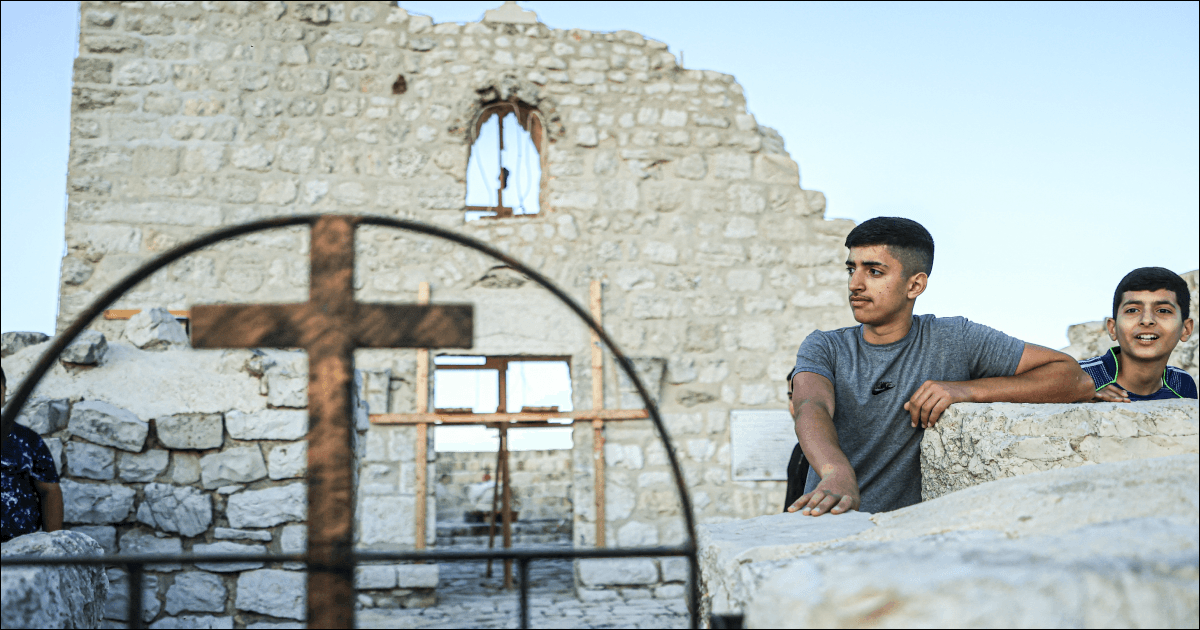
On August 5, Israeli settlers broke into the house of a Catholic family in Taybeh, and according to the parish priest, Fr Bashar Fawadleh, they occupied the land, brought a flock of sheep right up to the house and cut through the fencing. The attacks have also targeted the local church. Last year, settlers set fire near the Church of St George, the site of which dates to the 5th century, and the Byzantine-era cemetery.

“It was unacceptable then and it is unacceptable now,” Bishop Curry said. “The universal Church has been very clear on this – human dignity cannot apply to one person and not the other.”

Following his visit to the West Bank, Bishop Curry shared the accounts of the attacks with Catholic MPs and All-Party Parliamentary Groups. However, he stated that while there was an understanding of the severity of the situation, he did not believe that the UK Government was acting with “sufficient urgency”.

The bishop criticised what he called “grave human rights abuses” in the West Bank that he said take place “often without accountability and sufficient pressure being placed on the Israeli authorities to protect communities from violence”. “These attacks constitute a serious breach of international law and stand in violation of freedom of religion,” he said, urging Catholics to write to their local MP asking them to act on the situation in Taybeh and the wider West Bank.

“The Christian presence in the Holy Land is a vital part of the region’s DNA and has survived for more than 2,000 years. It would be a tragedy for Palestinians and Israelis alike if it were to disappear altogether,” he said. Taybeh is mentioned in the Bible, referred to as Ephraim, where Jesus and his disciples sought refuge.

Fr Fawadleh, parish priest to the village, said the locals needed help to sustain their lives in Taybeh and “to continue bearing witness to Jesus Christ and his disciples”.

“Preserving the Christian presence here in Taybeh is a shared responsibility. Given everything that is happening, some residents are reaching a breaking point where they want to leave their land and abandon everything.”

He said the attacks were a “deliberate strategy of harassment designed to create a climate of fear and pressure Palestinian families into leaving their land” and asked the global Church for prayers and to support the Latin Patriarch of Jerusalem, Cardinal Pierbattista Pizzaballa.

Continue reading with a free account

Create a free account to read up to five articles each month
Create free account

You have # free articles remaining this month.

Subscribe to get unlimited access.
Sign up

subscribe to the catholic herald today

Our best content is exclusively available to our subscribers. Subscribe today and gain instant access to expert analysis, in-depth articles, and thought-provoking insights—anytime, anywhere. Don’t miss out on the conversations that matter most.
Subscribe