

February 12, 2026

CDF Rejects Blessings for Same-sex Unions

Christopher Altieri
More
Related
Min read
share
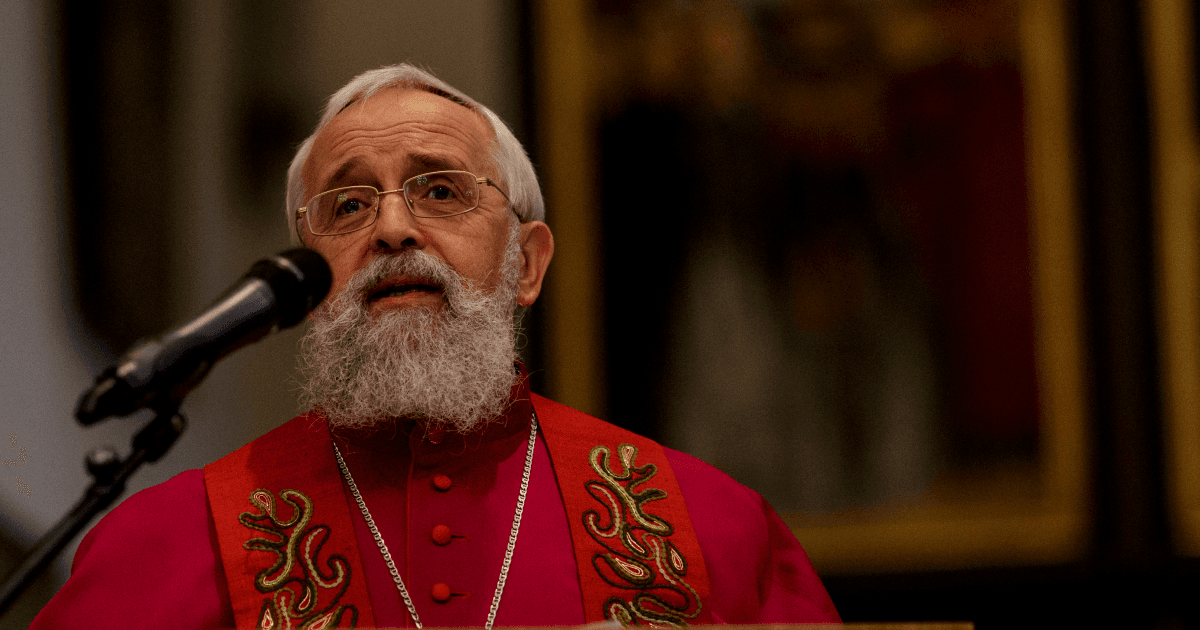
Cover image by Jim McIntosh /Flickr via Wikimedia Commons CC BY 2.0
The Vatican’s doctrinal office issued a statement on Monday saying the Catholic Church has no power to bless homosexual unions. The statement was in answer to a precise question, or dubium: “Does the Church have the power to give the blessing to unions of persons of the same sex?” CDF gave its reply in one word: “Negative.”

Pope Francis approved the response, which came from the Congregation for the Doctrine of the Faith and was signed by the Prefect, Cardinal Luis Ladaria SJ, and the Secretary, Archbishop Giacomo Morandi.

Pope Francis also approved an explanatory note that accompanied the reply – a responsum ad dubium – which articulates the rationale behind the answer. “Blessings belong to the category of the sacramentals,” the explanatory note says, “whereby the Church ‘calls us to praise God, encourages us to implore his protection, and exhorts us to seek his mercy by our holiness of life.” Sacramentals “have been established as a kind of imitation of the sacraments,” and “are signs above all of spiritual effects that are achieved through the Church’s intercession.”

“Consequently,” the explanation continues, “in order to conform with the nature of sacramentals, when a blessing is invoked on particular human relationships, in addition to the right intention of those who participate, it is necessary that what is blessed be objectively and positively ordered to receive and express grace, according to the designs of God inscribed in creation, and fully revealed by Christ the Lord.”

“Therefore,” the CDF goes on to explain, “only those realities which are in themselves ordered to serve those ends are congruent with the essence of the blessing imparted by the Church.”

“For this reason, it is not licit to impart a blessing on relationships, or partnerships, even stable, that involve sexual activity outside of marriage (i.e., outside the indissoluble union of a man and a woman open in itself to the transmission of life), as is the case of the unions between persons of the same sex.”

The explanation further clarified that the response “does not preclude the blessings given to individual persons with homosexual inclinations, who manifest the will to live in fidelity to the revealed plans of God as proposed by Church teaching.”

“Rather,” the letter continues, “it declares illicit any form of blessing that tends to acknowledge their unions as such.”

The explanatory letter goes to some length to say that the response declaring the unlawfulness of blessings of unions between persons of the same sex ought not be construed as “a form of unjust discrimination, but rather a reminder of the truth of the liturgical rite and of the very nature of the sacramentals, as the Church understands them.”

The explanatory note reiterates that the Christian faithful and their pastors “are called to welcome with respect and sensitivity persons with homosexual inclinations, and will know how to find the most appropriate ways, consistent with Church teaching, to proclaim to them the Gospel in its fullness.”

“At the same time,” the letter says, “they should recognize the genuine nearness of the Church – which prays for them, accompanies them and shares their journey of Christian faith – and receive the teachings with sincere openness.”

Though neither the response proper nor the explanation mentions who raised the doubt, the letter explanatory made note of “plans and proposals for blessings of unions of persons of the same sex” that are “being advanced” within “certain ecclesial circles”

German bishops have in recent years become increasingly outspoken in their calls for open discussion of changing Church teaching on homosexual acts. Some, including Cardinal Reinhard Marx of Munich and Freising – the former president of the German bishops’ conference – Bishop Georg Bätzing of Limburg – the current German bishops’ conference president – Bishop  Franz-Josef Bode of Osnabrück, and Bishop Heinrich Timmerervers of Dresden-Meißen have voiced support for official Church approval of same-sex unions.

The issue is slated for discussion along the “Synodal Way” of the German bishops, which Bishop Bätzing has reportedly touted as a model for “synodality” throughout the whole Church.

Cover image by Jim McIntosh /Flickr via Wikimedia Commons CC BY 2.0
The Vatican’s doctrinal office issued a statement on Monday saying the Catholic Church has no power to bless homosexual unions. The statement was in answer to a precise question, or dubium: “Does the Church have the power to give the blessing to unions of persons of the same sex?” CDF gave its reply in one word: “Negative.”

Pope Francis approved the response, which came from the Congregation for the Doctrine of the Faith and was signed by the Prefect, Cardinal Luis Ladaria SJ, and the Secretary, Archbishop Giacomo Morandi.

Pope Francis also approved an explanatory note that accompanied the reply – a responsum ad dubium – which articulates the rationale behind the answer. “Blessings belong to the category of the sacramentals,” the explanatory note says, “whereby the Church ‘calls us to praise God, encourages us to implore his protection, and exhorts us to seek his mercy by our holiness of life.” Sacramentals “have been established as a kind of imitation of the sacraments,” and “are signs above all of spiritual effects that are achieved through the Church’s intercession.”

“Consequently,” the explanation continues, “in order to conform with the nature of sacramentals, when a blessing is invoked on particular human relationships, in addition to the right intention of those who participate, it is necessary that what is blessed be objectively and positively ordered to receive and express grace, according to the designs of God inscribed in creation, and fully revealed by Christ the Lord.”

“Therefore,” the CDF goes on to explain, “only those realities which are in themselves ordered to serve those ends are congruent with the essence of the blessing imparted by the Church.”

“For this reason, it is not licit to impart a blessing on relationships, or partnerships, even stable, that involve sexual activity outside of marriage (i.e., outside the indissoluble union of a man and a woman open in itself to the transmission of life), as is the case of the unions between persons of the same sex.”

The explanation further clarified that the response “does not preclude the blessings given to individual persons with homosexual inclinations, who manifest the will to live in fidelity to the revealed plans of God as proposed by Church teaching.”

“Rather,” the letter continues, “it declares illicit any form of blessing that tends to acknowledge their unions as such.”

The explanatory letter goes to some length to say that the response declaring the unlawfulness of blessings of unions between persons of the same sex ought not be construed as “a form of unjust discrimination, but rather a reminder of the truth of the liturgical rite and of the very nature of the sacramentals, as the Church understands them.”

The explanatory note reiterates that the Christian faithful and their pastors “are called to welcome with respect and sensitivity persons with homosexual inclinations, and will know how to find the most appropriate ways, consistent with Church teaching, to proclaim to them the Gospel in its fullness.”

“At the same time,” the letter says, “they should recognize the genuine nearness of the Church – which prays for them, accompanies them and shares their journey of Christian faith – and receive the teachings with sincere openness.”

Though neither the response proper nor the explanation mentions who raised the doubt, the letter explanatory made note of “plans and proposals for blessings of unions of persons of the same sex” that are “being advanced” within “certain ecclesial circles”

German bishops have in recent years become increasingly outspoken in their calls for open discussion of changing Church teaching on homosexual acts. Some, including Cardinal Reinhard Marx of Munich and Freising – the former president of the German bishops’ conference – Bishop Georg Bätzing of Limburg – the current German bishops’ conference president – Bishop  Franz-Josef Bode of Osnabrück, and Bishop Heinrich Timmerervers of Dresden-Meißen have voiced support for official Church approval of same-sex unions.

The issue is slated for discussion along the “Synodal Way” of the German bishops, which Bishop Bätzing has reportedly touted as a model for “synodality” throughout the whole Church.

subscribe to
the catholic herald

Continue reading your article with a subscription.
Read 5 articles with our free plan.
Subscribe

subscribe to the catholic herald today

Our best content is exclusively available to our subscribers. Subscribe today and gain instant access to expert analysis, in-depth articles, and thought-provoking insights—anytime, anywhere. Don’t miss out on the conversations that matter most.
Subscribe