April 20, 2026

Church halts Fr Walter Ciszek’s path to beatification

The Catholic Herald
More
Related
Min read
share

The Vatican has halted the sainthood cause of a renowned Jesuit priest, author and survivor of Soviet imprisonment after determining that documentation gathered over decades did not support advancing his case for beatification, according to Church officials and recent Catholic news reports.

The decision concerns the canonisation process of a priest widely known for ministering to fellow prisoners during more than two decades of incarceration in the Soviet Union, an experience he later documented in widely read spiritual works. Church authorities indicated that the suspension followed extended study and evaluation conducted under the procedures governing causes for sainthood.
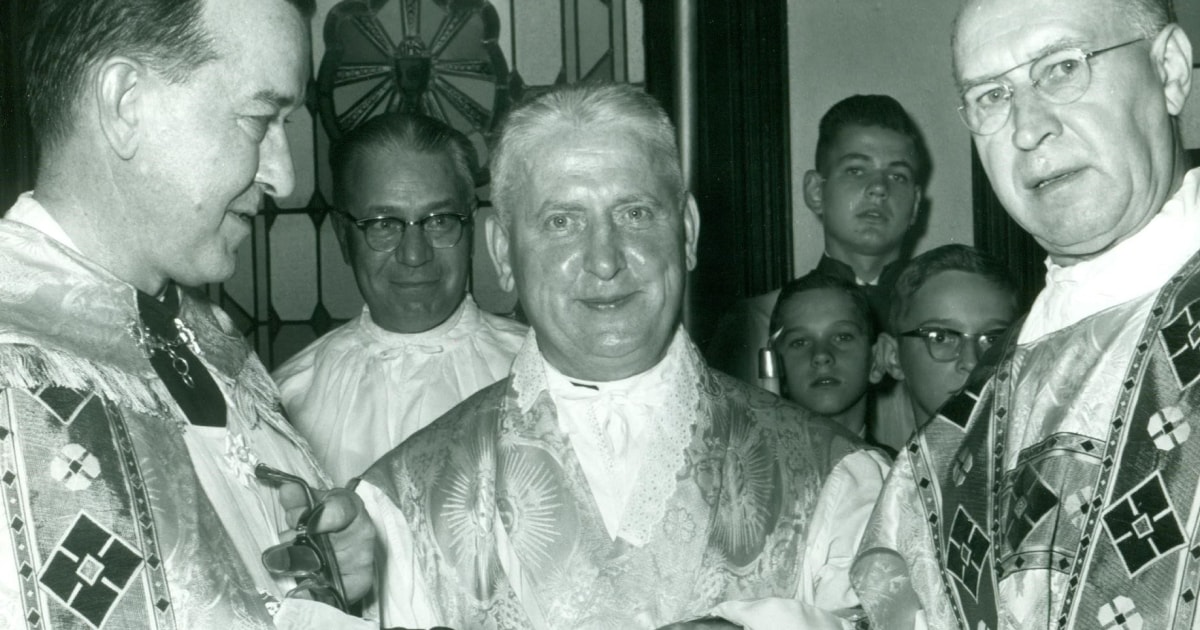
That priest, Fr Walter Ciszek SJ, was a Pennsylvania-born Jesuit whose life became closely associated with Christian witness under communist persecution. Born in 1904 in Shenandoah, Pennsylvania, he entered the Jesuit novitiate in 1928 and was ordained in 1937 after training to celebrate the liturgy in the Russian rite.

According to Church sources, Ciszek entered the Soviet Union during the turmoil of the Second World War in order to minister to Catholics living under communist rule. Soviet authorities arrested him in 1941 on suspicion of espionage. He subsequently endured years of solitary confinement, interrogation and forced labour near the Arctic Circle, remaining in captivity until 1963. During that time, he is reported to have celebrated Mass secretly and heard confessions among fellow prisoners despite the risks involved. His release came through a prisoner exchange involving the United States and the Soviet Union.

After returning to the United States, Ciszek wrote extensively about his experiences and spiritual reflections, most notably in the books He Leadeth Me and With God in Russia, works that have continued to circulate widely among clergy and laity interested in the Church’s witness under persecution. He died at Fordham University in New York on December 8, 1984, and in 1990 he was formally declared a Servant of God, marking the first stage in the canonisation process.

A senior Church figure associated with promoting the cause – Mgr Ronald Bocian of the former Walter Ciszek Prayer League – confirmed in an April 9 letter that “the formal canonization process has been stopped”. He explained that diocesan authorities had been informed that the documentation compiled over many years did not support advancing the cause further. The statement added that the decision followed “years of careful study and discernment at the level of the Holy See”, which bears responsibility for evaluating each case according to established norms.

Mgr Bocian noted that while the development may cause disappointment among those devoted to Ciszek’s memory, it “does not diminish the enduring spiritual value of his life, witness, and legacy”. He also indicated that the prayer league supporting the cause will be reorganised as the Father Walter J. Ciszek Society, continuing efforts to promote knowledge of his writings and spiritual example.

The Diocese of Allentown, Pennsylvania, which had oversight of the cause at local level, confirmed the decision in a statement acknowledging the reaction of the faithful while emphasising that the Church evaluates each cause with “thoroughness, integrity, and fidelity to its norms”.

No specific flaws in the cause appear to have been publicly detailed in the reports, such as doctrinal issues, moral concerns about Ciszek’s life or theological problems with his writings. The halt has instead been presented as tied to shortcomings in the historical, testimonial and theological documentation gathered, rather than to any scandal or disqualification of his personal witness.

Church officials noted that the suspension of Ciszek’s cause is the second such decision reported this month. Earlier in April, the Vatican also halted the cause of Jorge Novak, bishop of Quilmes in Argentina, reportedly because of a possible flaw in canonical procedure rather than a moral judgement on his life or ministry.

The review of sainthood causes forms part of a broader process within the Catholic Church aimed at ensuring that candidates proposed for veneration meet rigorous historical and theological standards. Such evaluations often extend over decades, involving the examination of extensive documentation, witness testimony and archival material before a final determination is made by the Holy See.

Continue reading with a free account

Create a free account to read up to five articles each month
Create free account

You have # free articles remaining this month.

Subscribe to get unlimited access.
Sign up

subscribe to the catholic herald today

Our best content is exclusively available to our subscribers. Subscribe today and gain instant access to expert analysis, in-depth articles, and thought-provoking insights—anytime, anywhere. Don’t miss out on the conversations that matter most.
Subscribe