The latest statistics concerning the number of abortions which took place in England and Wales in 2023 were recently released and their contents are nothing short of harrowing. A total of 277,970 abortions were carried out in 2023, the highest number ever since the Abortion Act came into effect in 1967. This represents an increase of 26,593 compared with 2022, and in total, since 2016, 1.75 million babies have been killed through abortion. Abortion is, by number, the leading cause of death in England and Wales, far outstripping deaths from dementia and Alzheimer’s disease, which led to 66,876 deaths in 2023. Tragically, 195,296 people should be turning 18 this year, yet their lives were terminated before they were even born.
Perhaps most shocking about the recent statistics is the huge spike in the number of abortions which have taken place since 2021, a trend which could easily have been predicted following the legalisation of at-home abortion pills during the Covid-19 era. At-home abortions are now the most common method of termination, accounting for 72 per cent of all abortions in 2023. Of all places, the home is becoming increasingly dangerous for children, and this should break our hearts.
One aspect of this which strikes me as particularly heinous is the routine way in which abortion is discussed, just as I have, in the language of statistics. These numbers become so familiar, and each year we become accustomed to making the requisite comments about how lamentable this whole sorry affair is. We round the numbers down to the nearest thousand, not realising that in so doing we inadvertently dismiss the human faces behind the numbers. We forget that we are discussing individual lives, each and every one precious, loved and worthy of dignity. To rub salt in the wound, such killings are hidden in the euphemisms of “healthcare” or “choice”, which have become effective at shutting down dissent or opposition.
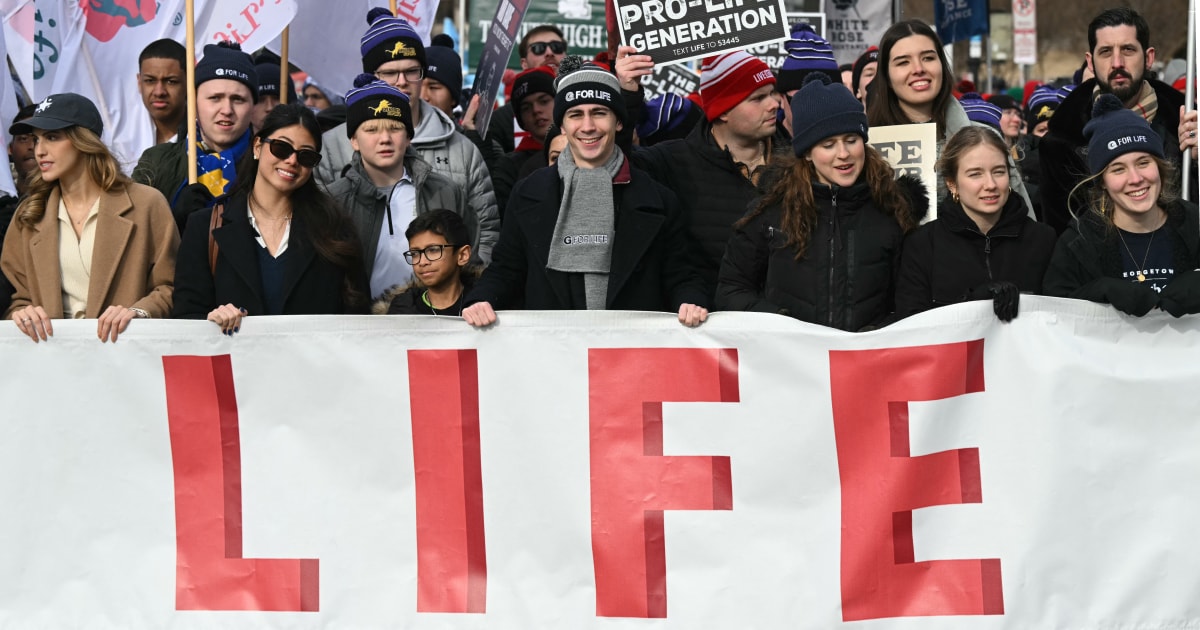
The pro-life movement in the United Kingdom has much to commend it, not least the fact that these organisations and individuals persist in the face of a particularly unpopular and unfashionable fight. Those people who have played their part in seeking to turn the tide on this culture of death deserve admiration and respect. Yet it seems to me that much of their effort, and indeed the efforts of well-meaning Christians, has been focused on overtly stressing their doubtless sincere desire to offer compassion and gentleness to the women who have abortions and advocate for abortion’s legality and wide accessibility. Compassion and charity are good things, and it is unquestionably the case that many women have been lied to and deceived by medical professionals and others about the reality of abortion. But in today’s age of ultrasound and scientific innovation, the reality of a baby’s life in the womb is beyond doubt; though such incontrovertibility has not dampened the fervour with which pro-abortion campaigners have lobbied for their cause.
As Christians, we should strive to engage with the world around us in a way that models charity, is rich in mercy, and which points people towards the forgiveness and restoration found in Jesus Christ. Yet it is also the case that we have a responsibility to confront evil where it exists and condemn it for what it is. In the face of ever-rising abortion rates, we have become exhausted and dulled to the gravity of this injustice and lost a sense of moral clarity and the confidence to provide a stark, bold, uncompromising confrontation, especially since the zealotry of our opponents has only increased. It is clear that the witness of Holy Scripture and the certainty of the Church on the matter of abortion constitute solid ground for a strengthened, emboldened and more outspoken rebuke of the evil of abortion and a more defiant advocacy on behalf of the millions of victims, many of whom, if they were alive today, would otherwise have been our friends, neighbours and colleagues.
The mantra of “safe, legal and rare” – a slogan from the Clinton administration – has long evaporated and has now been exchanged for “shout your abortion”, redefining the pro-abortion campaign as pridefully and unapologetically supportive of abortion and aiming to normalise and celebrate it. It has also become common for advocates of abortion to accept that the child in the womb is a living human separate from the mother, but nevertheless insist on a mother’s right to kill it, likening the baby to a parasite. Not only is this dehumanising language morally repugnant and intuitively nonsensical, but there is compelling scientific evidence that, conversely, the mother derives significant symbiotic health benefits from her unborn child, including the sharing of stem cells which can heal broken tissue in the mother’s body and protect her from various cancers.
In an age of such brazen evil, which only seems to be increasing, a far more muscular opposition to abortion is necessary. I do not use the term lightly, but the open, unashamed celebration of the killing of children is a categorical evil which must be opposed with strength and determination. The Church has always been clear on this issue. The Didache, one of the earliest Christian documents, often dated to the first century, demonstrates consistent opposition to abortion from the earliest days of the Church. In discussing forbidden sins, the Didache states clearly: “you shall not murder a child by abortion, nor kill that which is begotten” (Didache, Chapter 2). This teaching, of course, builds upon a raft of scriptural admonitions against the killing of the innocent.
Throughout the history of the Church, the teaching on abortion has likewise been consistent. Pope Paul VI, in his encyclical Humanae Vitae, writes on birth control methods that “all direct abortion, even for therapeutic reasons, are to be absolutely excluded as lawful means of regulating the number of children”. The Catechism of the Catholic Church states clearly that “human life must be respected and protected absolutely from the moment of conception”. In 2018, Pope Francis condemned abortion as the suppression of “innocent and helpless life in its blossoming” and went as far as comparing it to “hiring a hitman”. While some Protestant denominations have failed to uphold orthodoxy, even the Church of England retains theoretical “principled opposition” to the matter, and statistics indicate that in the United States 73 per cent of white Evangelical Protestants think abortion should be illegal in all or most cases.
Scripture provides sufficient clarity on the matter, often using stark and abrasive language. In Matthew 18, Jesus, having elevated the dignity of children by proclaiming that whoever takes the lowly position of a child is the greatest in the kingdom of heaven, proceeds to say: “If anyone causes one of these little ones – those who believe in me – to stumble, it would be better for them to have a large millstone hung around their neck and to be drowned in the depths of the sea.” (Matt 18:6) .Jeremiah 7 also brings strong condemnation against the killing of children. Here, God proclaims that the people of Judah have committed evil in his sight by burning their sons and daughters in the fire upon an altar (Jer 7:31). To such atrocity, God responds by asserting that this kind of abomination “I did not command, nor did it come into my mind” (Jer 7:32). The text continues to describe God’s fierce rebuke of such actions: he will bring to an end the sound of gladness, and the land will become a waste (Jer 7:34).
The voice of Scripture and the voice of the Church speak in harmony on the grave evil of abortion and the harming of children, and crucially they do so with muscularity. The Didache rings with clarity; Pope Francis likened the doctors who perform abortions to hitmen; and Our Lord suggested that the fate of drowning in the sea would be better for those who scandalise children, let alone murder them. Our contemporary opposition to abortion simply does not match up. We are not taking this injustice seriously enough. We do not appear to recognise the gravity of what we are facing. We have, indeed, become numb to the statistics or frightened into submission.
There may be some reading this who feel I have left unaddressed the other side of the issue: the women who have been deceived or abused, or the legitimate risks to health that pregnancy can cause. Let me be clear: while it is necessary for us to speak plainly about the wickedness of abortion, including the doctors who knowingly participate in killing children, or those men and women who procure abortions in full knowledge of what they are doing, there must always remain space for compassion. No one should diminish the genuine pain or fear that some women experience in the very exceptional circumstances when pregnancy threatens her life or when a woman has conceived a child through sexual abuse. These are, of course, harrowing circumstances but, truthfully, they are astonishingly rare. Out of the 277,970 abortions in 2023, only five were carried out in order to save the life of the mother (this equates to less than 0.002 per cent).
Abortion rates are rising. Its advocates are becoming more zealous and emboldened in their promotion of abortion. For them, it is not a necessary evil; it is a moral good. I am reminded of the words of Isaiah: “Woe to those who call evil good and good evil, who put darkness for light and light for darkness, who put bitter for sweet and sweet for bitter” (Isa 5:20). It is a commendable instinct of the pro-life movement to approach mothers with charity and compassion; I sincerely desire that disposition of compassion to continue. However, the brazen nature of the evil requires a firmer condemnation, a more muscular opposition alongside the proclamation of the Gospel of hope. If the Church is to be believed when she doctrinally preaches the severity of abortion, ought her actions not to match her words? Ought her sorrow not to be deeper, her advocacy more urgent, her indictments against the agents of death sharper?
We must be bolder in our commitment to oppose abortion. In this mission, we have scientific evidence, the scriptural witness and the incontrovertible tradition of the Church on our side. There is no disputing that a baby is a baby: it is a living human being, bearer of the divine image and therefore worthy of dignity. The pro-abortion lobby asserts the morality of its position by proclaiming: “My body, my choice.” In the epitome of pride, they defend the disposal of another life, the expenditure of another person, for their own advancement, their own success, their own comfort.
In Our Lord, we have a different model. We have one who says: “This is my body, given for you.” In him we see the extraordinary power of sacrifice, the willingness to give up one’s life for the sake of another. Abortion is the great perversion of the Eucharist. As the anti-sacrament, it explains the religious fervour with which its celebrants attempt to defend its legality, acceptability and moral goodness. For the sake of the Gospel, and for the sake of many souls, it is time that Christians find their backbone and strengthen our commitment to opposing abortion, condemning it for what it really is: the greatest moral tragedy of our time.