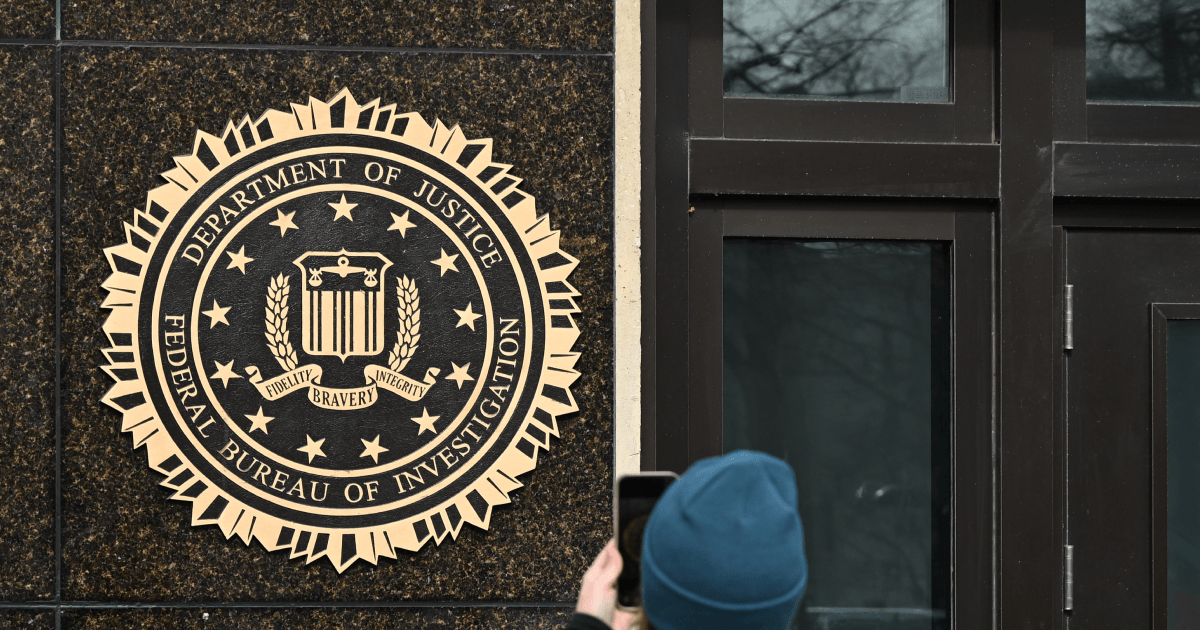

The Department of Justice published a report Thursday investigating the circumstances that led to the 2023 “Richmond Catholic Memo”, a leaked memo highlighting “non-mainstream Catholics” as potential violent extremists.
Following the election of President Donald Trump in 2024, he issued an executive order creating a “policy of the United States to identify and take appropriate action to correct past misconduct by the Federal Government related to the weaponisation of law enforcement and … the Intelligence Community”.
That executive order led to the creation of the “Weaponization Working Group” to investigate how the Richmond Catholic Memo came about. A 231-page report detailing the creation of the memo was released by the Department of Justice on August 27, 2026.
“The weaponisation of our Government undermines our Democracy and reduces the People’s trust in our Nation’s institutions that are designed to serve and protect them,” said Associate Attorney General Stanley E Woodward Jr in a press release announcing the publication of the report.
Woodward continued: “The Richmond Memo was a clear abuse of power, targeting conservative and religious beliefs disfavoured by agents of Government who lacked necessary oversight. No more. Under Attorney General Blanche’s leadership this Department will have zero tolerance for weaponisation.”
The Richmond Catholic Memo stemmed from the arrest of a man who attended an SSPX chapel in Richmond, Virginia, but who was not himself Catholic. The man, who had been released from state prison about a year and a half before his arrest in 2022, was found to have numerous Molotov cocktails and a 3D-printed gun.
When the FBI interviewed the priest, he was reportedly nervous, which prompted the FBI’s deeper investigation into the SSPX and other Catholic traditionalist groups – both those in communion and not in communion with the Church.
The 2023 memo identified specific chapel locations, as well as the SSPX seminary and an FSSP parish in Virginia, as potential locations for extremist behaviour.
The memo defined “radical traditional Catholics” as being “typically characterised by the rejection of the Second Vatican Council (Vatican II) as a valid church council,” a dislike of Pope St John Paul II and Pope Francis, and “frequent adherence to anti-Semitic, anti-immigrant, anti-LGBTQ, and white supremacist ideology”.
“Conservative family values/roles” and a rejection of modernity were also listed as characteristics typical of “nonmainstream Catholics” by the FBI. Traditionalist Catholicism, said the memo, is “comparable to Islamist ideology”.
The memo was withdrawn shortly after it leaked, as it “did not meet FBI standards, including by improperly suggesting that certain domestic terrorist and religious viewpoints aligned without supporting evidence and by creating the impression that the FBI conducts investigative activity based on religious affirmation”.
Those who were responsible for the memo “have been terminated from their positions”, said the report.
“Weaponisation will never be tolerated at this FBI,” said FBI Director Kash Patel in Thursday’s press release.
He continued: “Even while those who developed the unacceptable Richmond Catholic memo under the previous administration have been held accountable, releasing information to the public about what occurred under the prior regime is an important part of the process. I want to thank the Weaponisation Working Group for their partnership as well as Attorney General Todd Blanche for his leadership addressing these abuses and making sure they never happen again.”
The Catholic Herald reached out to the Diocese of Richmond for comment but did not hear back.