


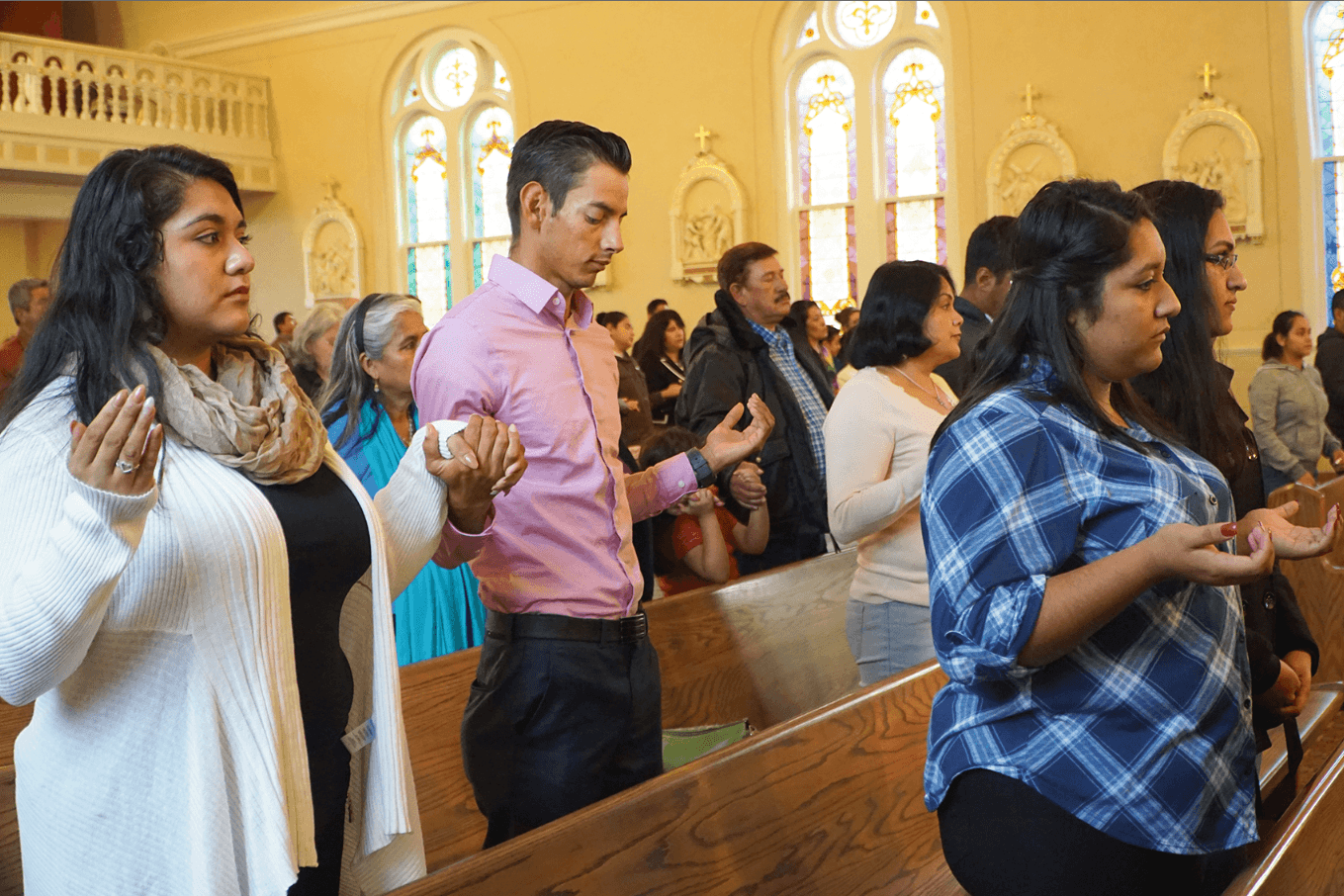
Many years ago, when my father found himself in an international setting, someone asked him – I believe it was a Hungarian linguist – what the Irish language sounded like. Pa decided to recite something that everyone could follow, even in an unknown tongue. So he said the Lord’s Prayer in Gaelic, beginning “Ár n-Athair atá ar neamh, Go naofar d'ainim, Go dtagfadh do ríocht, Go ndéantar do thoil ar an talamh mar a dhéantar ar neamh.” The listener could follow every word of this universal prayer – in Hungarian. There have been various attempts, over the years, to “update” the Lord’s Prayer by modernising the language, and some Christian denominations have even considered the possibility of making it “gender neutral”, commencing with “Our Parent, who is in heaven …” And now Pope Francis has approved the Italian bishops’ proposal to alter the line “lead us not into temptation” because it implies that God might be the cause of putting temptation in our way. This line is to be replaced in the Italian version by “Do not let us fall into temptation.” It’s not a major alteration to the text, and yet I think it’s ill-advised. The Lord’s Prayer is, in its composition, akin to a poem. It has a very distinct rhythm and cadence. It is structured in such a way that people can say it easily in unison, and can accept, without quibble, archaic verbal forms such as “art”, and the use of the now defunct, in English, second person singular, “Thy”. I have heard it recited in so many settings. In Ireland, I have heard it at Alcoholic Anonymous meetings where people may conceive of their “higher power” as being anything from Nepalese spirituality to angelic forces, and yet, they can identify with the poetic spirituality of the Lord’s Prayer. “Give us this day our daily bread” reminds all that every life is lived a day at a time. Lapsed Catholics who only appear in church for weddings and funerals have told me that it is the last remnant of faith that comes flowing back to them, and in which, almost automatically, they can join in. The Lord’s Prayer has lasted so long, and reached so far, that I would say, meddle with it at your peril. Or at the peril of losing touch with the faithful for whom it has meant so much. The interpretation of “lead us not into temptation” as being some kind of accusation against the Lord can be seen as logical. But isn’t it also somewhat literal-minded? Sometimes you have to allow for poetic licence, and most people already grasp that it means “do not let us fall into temptation” – without a change of wording. In a poem-prayer of just 57 words, there is an exact balance and rhythm. In Irish, in English, in Hungarian alike.
2:00 PM
Don't alter the Our Father
many years ago, when my father found himself in an international setting, someone asked him – i believe it was a hungarian linguist – what t...
Mary Kenny

4 min read



Already a subscriber? Sign in
5freearticles every month
Continue reading with a free account. No card needed.
- Five free articles every thirty days, on any device you sign in on
- The Catholic Herald newsletter, every morning
- Subscribe whenever you like for everything: every article and the magazine

subscribe to the catholic herald today
Our best content is exclusively available to our subscribers. Subscribe today and gain instant access to expert analysis, in-depth articles, and thought-provoking insights—anytime, anywhere. Don’t miss out on the conversations that matter most.
Subscribe



