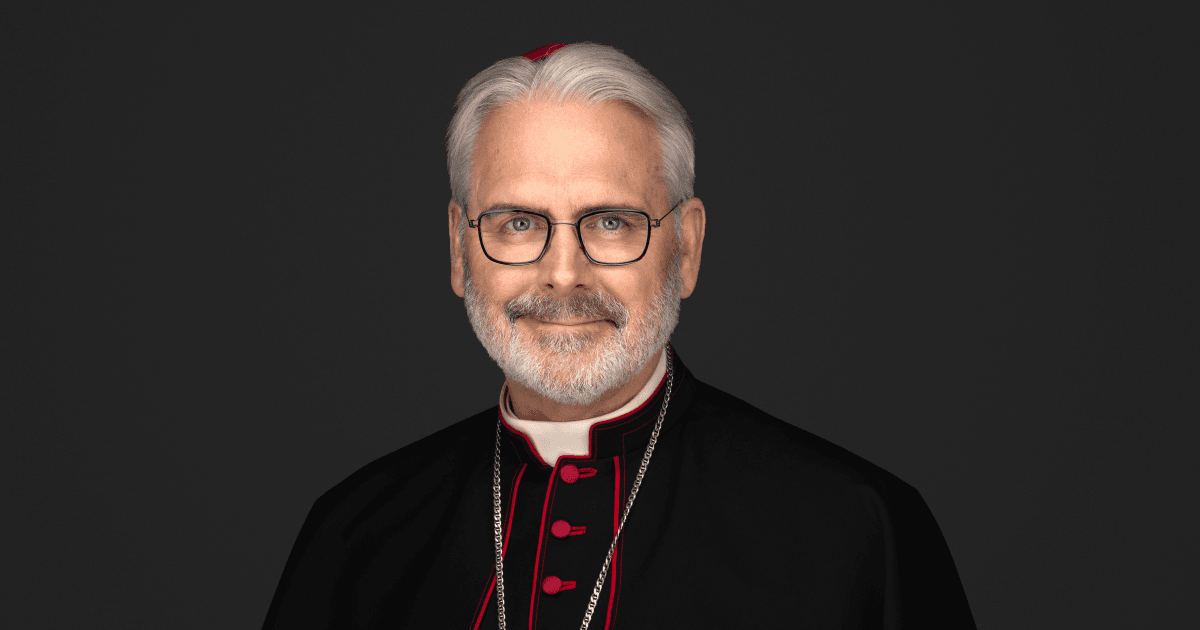
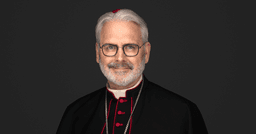
The German Bishops’ Conference has elected Bishop Dr Heiner Wilmer SCJ, a member of the Dehonians, as its new chairman during its spring plenary assembly in Würzburg.
The election took place on February 24 during the conference’s gathering at the Burkardushaus in Würzburg, which ran from February 23 to 26. Fifty-six members participated in the assembly. He succeeded Bishop Georg Bätzing, whose term concluded with the vote. The opening session on February 23 was attended by the apostolic nuncio to Germany, Archbishop Dr Nikola Eterović, along with Archbishop Samuel Kleda and Pauline Maiday from the Diocese of Douala in Cameroon.
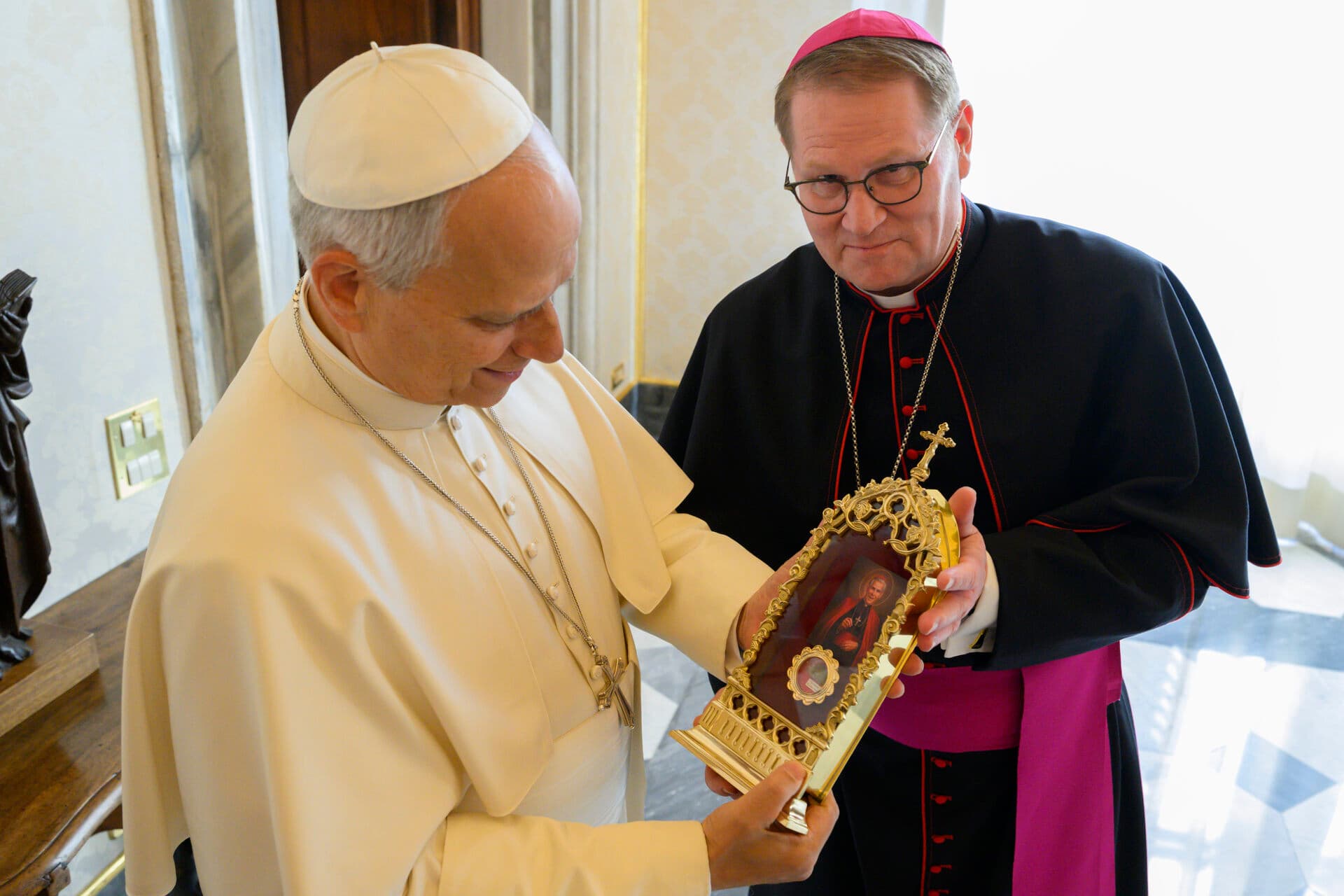
Bishop Wilmer has been regarded as one of the more progressive voices within the German episcopate. He has been a supporter of the German Synodal Way, the reform process launched in 2019 which has addressed questions of Church governance, sexual morality, priestly life and the role of women.
In an October 2021 homily, he called for “a fresh perspective on sexuality”, saying that traditional formulations were often experienced by believers as burdens rather than liberating truths. He has suggested that moral theology must take greater account of personal conscience and the human sciences, remarks critics have interpreted as signalling openness to changes in settled teaching.
In January 2022, after the Vatican’s declaration that the Church lacked the authority to bless same-sex unions, Bishop Wilmer released a public statement insisting that discussion of blessings for same-sex couples should continue and not be treated as taboo. He said the Church needed to “acknowledge the lived realities of same-sex partnerships today”, language aligning him with many of the Synodal Way’s reform proposals.
Later that year, in September 2022, he voted in favour of a Synodal Way text seeking an explicit revision of Catholic sexual morality. The document called for acceptance of homosexual acts and recognition of what it termed diverse gender identities. The text failed to secure the necessary two-thirds majority of bishops, but Bishop Wilmer publicly expressed regret at the outcome, saying he struggled with the fact that the required majority had not been achieved and describing the result as a “real disappointment”.
In 2022 he also supported OutInChurch, a movement of homosexual Church employees who came out publicly and called for reform of Church teaching and employment practices. He argued that no one should fear dismissal or discrimination because of sexual orientation or identity and indicated that Church structures must adapt to ensure inclusion.
When the Dicastery for the Doctrine of the Faith published Fiducia Supplicans in December 2023, permitting non-liturgical blessings for couples in irregular situations, including same-sex couples, Bishop Wilmer described the document as “good news” and “direction-setting”. He said it marked a significant step in recognising pastoral realities while maintaining the sacramental doctrine of marriage. In 2023 he further described the Roman permission as “groundbreaking”.
In September 2024 he appointed three individuals in the Diocese of Hildesheim to form a pastoral care team for homosexual and transgender persons. The team was tasked with advising on cases including the Baptism of children of lesbian couples, blessing ceremonies for transgender individuals marking their transition and accompanying families with non-binary children. The initiative was presented as part of a broader commitment to ensure diocesan structures reflected what he has termed the diversity of contemporary society.
On the question of women’s leadership and ordination, Bishop Wilmer has called for expanded roles for women in decision-making positions within the Church. He said in 2014: “And women urgently need to assume leadership and responsibility. We can no longer simply say: the question of whether women are admitted to ordination is settled.”
Regarding priestly celibacy, he told the Süddeutsche Zeitung in June 2019 that he was “passionately happy” as a celibate religious, but suggested that celibacy might gain greater credibility if it were not universally mandatory for diocesan clergy. He has spoken of the possibility that compulsory celibacy can contribute to isolation and has supported discussion about whether the discipline should remain obligatory.
In a 2018 interview with the Kölner Stadt-Anzeiger, Bishop Wilmer said that abuse of power was “in the DNA of the Church” and called for structural rethinking, including a clearer separation of powers. He spoke of “structures of evil” within the ecclesial community and criticised what he described as episcopal arrogance and entitlement. He has frequently linked the abuse crisis to systemic questions of governance and argued that structural reform is necessary to restore credibility.
He has also argued that Catholic sexual morality requires renewal to ensure that no one is hurt or discriminated against by Church teaching. In September 2022 he said: “It cannot be that people are hurt or discriminated against by Church teaching,” and that it could not accord with the will of Jesus Christ for people to experience discrimination as a result of doctrinal positions.
His election as chairman places him at the forefront of the German episcopate as debates over doctrine and the Synodal Way continue within Germany.
In 2023 his name circulated in Rome as a possible prefect of the Dicastery for the Doctrine of the Faith. That prospect was understood to have met resistance from figures including Cardinal Müller, who feared that his theological outlook would sit uneasily with the dicastery’s mandate to safeguard Catholic doctrine. The appointment did not materialise. His election as chairman of the German Bishops’ Conference establishes him as the conference’s public representative.
Bishop Wilmer has described his task as one of fostering unity within a divided Church. In a March 2023 letter titled “How we in the Diocese of Hildesheim will continue to learn synodality”, he acknowledged that divisions in German Catholicism “seemed to deepen more and more” along the Synodal Way, with factions becoming increasingly intolerant.
He has been a proponent of the MHG study, the external report into clerical sexual abuse in Germany published in 2018. The report argued that structural elements within the Church, including hierarchical authority and celibacy, required examination in light of the abuse crisis. Bishop Wilmer has treated the study as a catalyst for reform, linking the crisis to questions of power, sexuality and ordained ministry.
Examining the latest figures for ordained ministry, 29 priestly ordinations across 27 dioceses in 2024, one of the lowest totals in German history, the picture becomes clear. The election of Bishop Heiner Wilmer, one of the most visible champions of the German Synodal Way, as chairman of the conference ensures that these numbers will now be read in light of the reform project he has consistently promoted. It is a sad contrast: a Church that ordained 557 men in 1962 now produces fewer than 30. The explanation cannot be dismissed as demographic drift or vague cultural fashion. There has been a decline, it is dramatic, and it has unfolded in parallel with decades of theological experimentation culminating in the Synodal Way.
The policies that Bishop Wilmer espouses through the Synodal Way have placed clerical celibacy, hierarchical authority and moral teaching under sustained public critique. It should surprise no one that young men are reluctant to offer their lives to a vocation whose theological foundations are persistently questioned by their own shepherds.
The numbers stand as an indictment. The Synodal Way in Germany appears unsure of her doctrine and, importantly, how to inspire commitment. A priesthood presented as structurally suspect will struggle to attract candidates, as the MHG study suggested. The decline in ordinations is not an unfortunate side note to the German reform experiment; it is one of its most telling fruits.
The election of Bishop Wilmer as chairman of the German Bishops’ Conference signals continuity in the theological and pastoral direction taken by many within the German episcopate. The coming years are likely to test how debates about reform, governance and doctrine develop within Germany and in relation to the wider Church.