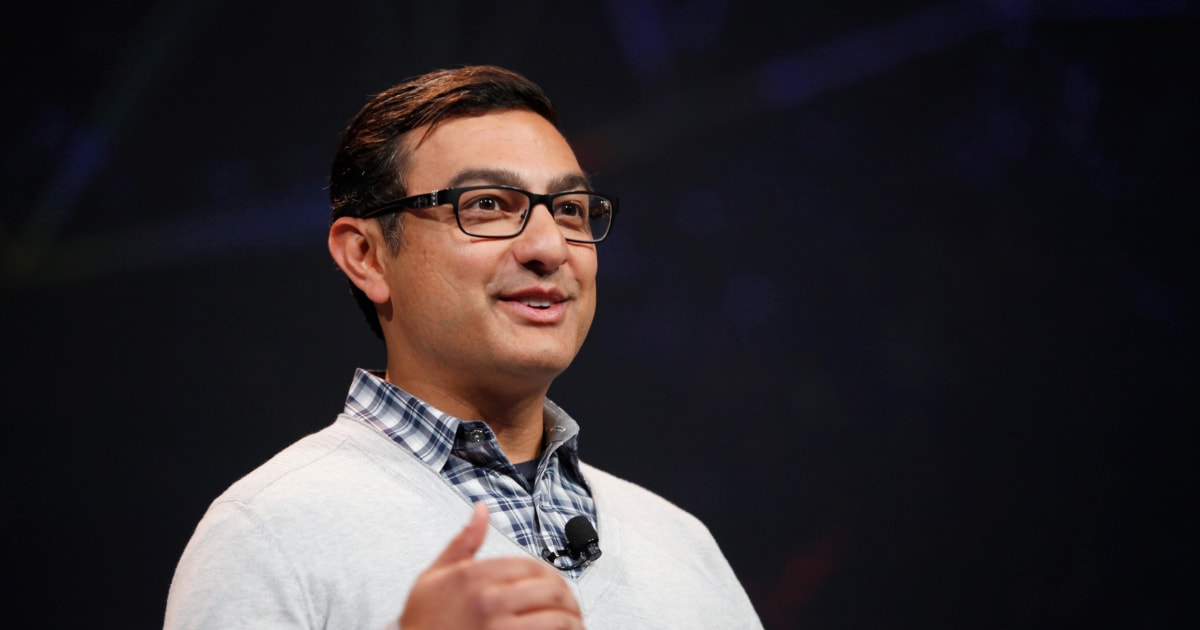

Vic Gundotra, the former senior vice-president of Google and a convert to Catholicism, has spoken publicly about how artificial intelligence now forms part of his daily spiritual life, telling Catholic business leaders that the technology can deepen engagement with Scripture while also posing serious risks if misunderstood.
Gundotra addressed the recent Legatus Summit, a Catholic business leadership conference held in California from January 29 to 31, where he outlined practical ways in which AI can be used in prayer and study. Speaking alongside the event in a podcast interview with Legatus president Stephen Henley, he also reflected on his personal journey from Jehovah’s Witness elder to atheist and eventually to the Catholic Church.
Each morning, Gundotra told delegates, he spends an hour reading the Mass readings and poses a question to an AI chatbot: “What do most people miss from this reading?” He encouraged those present to experiment with what he described as “deep research” techniques, allowing the system more time to generate slower, more detailed responses rather than prioritising speed.
He said that on most days he is struck by the insights returned, including perspectives on biblical passages he has read repeatedly over many years. He attributed this to AI’s ability to draw on centuries of Christian commentary and theological writing, synthesising material from across the Church’s intellectual tradition.
Gundotra did not minimise the scale of the technological shift now under way. He described artificial intelligence as the most significant innovation of his lifetime, comparing it to the invention of fire and the wheel. At the same time, he warned that the technology is a “double-edged sword” and cautioned that some may be tempted to treat it with a reverence that properly belongs to God alone.
“There will be people who think AI is their God,” he said, adding that its apparent power can create the illusion of something transcendent when in reality it remains a human-made tool.
Gundotra’s path to Catholicism was neither straightforward nor without personal cost. Raised as one of Jehovah’s Witnesses, he became deeply involved in the community and eventually served as an elder. Over time, however, he began to harbour doubts about certain teachings. Within Jehovah’s Witnesses, questioning doctrine can result in “disfellowshipping”, a disciplinary measure that may lead to social and familial separation.
He described the prospect of leaving as a profound struggle, noting that members who depart can lose friendships and family ties. When he first voiced serious concerns to his wife, he recalled that she wept at the thought of losing her community. Ultimately, the couple decided to leave the movement, after which Gundotra entered a period of atheism.
His return to the Christian faith began during what he described as a low point in his life. While working in the technology sector, he reached out in the early hours of the morning to a former colleague from Microsoft. The friend replied immediately, explaining that he was awake because he had “adoration duty”, a reference to Eucharistic adoration. The exchange prompted further conversations and marked the beginning of Gundotra’s exploration of Catholicism.
He said he was particularly struck by reading the early Church Fathers, figures largely absent from his previous religious formation. Encountering references to St Clement in the New Testament led him to investigate further and read Clement’s writings, an experience he described as deeply moving.